Era of electric vehicles to begin
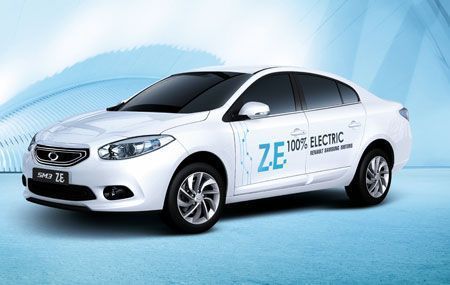
Renault Samsung Motor’s SM3 Z.E.
By Kim Tae-jong
Despite the cost advantages of battery-powered vehicles, commercial use has been stalled largely because of high prices and lack of infrastructure, such as charging stations.The electric vehicles (EVs) era is about to begin in Korea, with automakers ready to launch commercial models.
But automakers are beginning to overcome these obstacles by targeting drivers in 10 cities that the Ministry of Environment has specially designated to cater to electric vehicles. Now, they can expect subsidies and better infrastructure in those cities including Seoul, Jeju Island Daejeon, Gwangju, Changwon, Pohang and Ansan.
Jeju Island especially has emerged as an ideal place for EVs, with 60 charging stations, the most of any city. There are plans to offer an additional 8 million won subsidy to EV buyers.
In a bid to gain early market dominance, Renault Samsung Motors (RSM) last week began taking orders for the SM3 Z.E. sedan, due on sale in October.
GM Korea will also launch the Spark EV this year, while Kia Motors plans to sell the Ray EV to ordinary drivers. The Ray EV has so far been available only to government organizations.
BMW Korea will also join the local EV market next May, with the launch of i3 compact EV.
SM3 Z.E.
RSM’s SM3 Z.E. (zero emission) is a new variant of the automaker’s flagship compact sedan.
The company says the vehicle can travel more than 135 kilometers on one charge. Its electric motor can generate up to 70 kilowatts, delivering a maximum speed of 135 kilometers an hour.
The vehicle is designed for both regular alternate current (AC) and direct current (DC) fast charging. It can be recharged in just 30 minutes through fast recharging, and in six-nine hours using a regular home outlet.
The official price is 45 million won, much costlier than the vehicle’s gasoline-powered siblings, whose top model costs 19.78 million won.
But the final price should be much lower, as the environment ministry will give a 15 million won subsidy to EV buyers. On Jeju Island, the price can be reduced further to 19 million won, as the municipal government will provide an additional 8 million won subsidy.
Spark EV
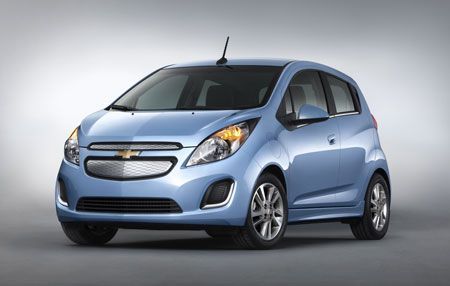
Chevrolet Spark EV
GM Korea will launch the Spark EV in the third quarter, but the price has not yet been decided.
The initial price is expected to be about 40 million won, which means that with subsidies, the sub-compact should be available at about 18 million won.
In comparison, Chevrolet recently put a $27,495 price tag on its Spark EV model at $27,495, which went on limited sale in California and Oregon last month. If a buyer qualifies for the full $7,500 federal tax credit, the price drops to $19,995.
Linked to a coaxial drive unit, the electric motor churns out more than 97 kilowatts, enabling the car to go from 0 to 100 kilometers an hour in under 8.5 seconds.
The Spark EV can be recharged through the AC and DC fast charging. With fast charging, it can be recharged to 80 percent capacity in just 20 minutes. Charging takes six-eight hours using a regular 220V outlet.
Ray EV
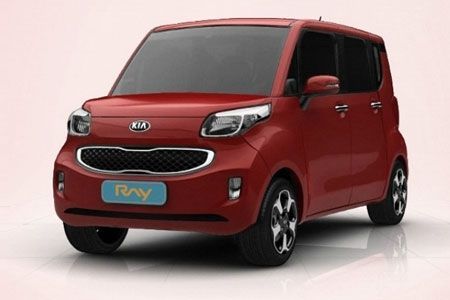
Kia Motor’s Ray EV
Kia Motors is the first local automaker to start selling an EV, although it has been limited to the public sector, including municipal governments.
Since the Ray EV made its debut in December 2011, about 800 have been produced. The automaker has the capacity to mass-produce the vehicle, which is manufactured on the same assembly line as the original Ray boxcar.
The Ray EV can travel up to 139 kilometers on one charge, which takes 25 minutes on a fast recharger and six hours on a regular home outlet. The motor can generate 50 kilowatts with a 130 kph maximum speed.
The price is 45 million won, but this is expected to fall so the model can compete with other EVs.
BMW i3
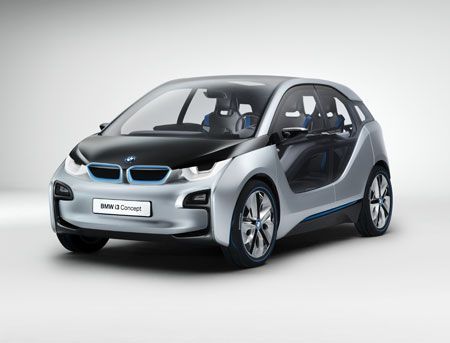
BMW i3
BMW has stressed that the i3 will be as much fun to drive as a conventional BMW, which the luxury vehicle manufacturer promotes as offering “sheer driving pleasure.”
The i3 has been developed on a new platform under the sub-brand i, different from other automakers, which tend to modify existing models for electric propulsion.
The i3 can generate 126.8 kilowatts with 25.5 kilogram-meters maximum torque. It can travel at up to 150 kilometers an hour, taking under eight seconds to reach 100 kilometers an hour.
BMW has also solved one big disadvantage of EVs — concerns about distance limitations. The i3 can travel up to 160 kilometers on one charge and up to 300 kilometers when equipped with an optional range extender. This motorcycle-like gasoline engine helps maintain the charge when the car runs low.
The i3 price is expected to be about 50 million won before subsidies.