ECCK concerned over intervention
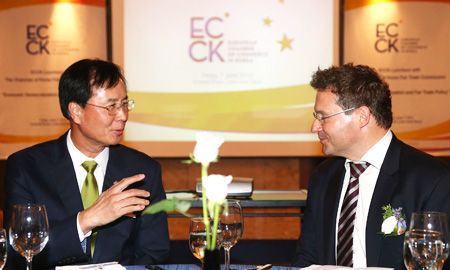
Fair Trade Commission Chairman Noh Dae-lae, left, talks with Thilo Halter, chairman of the European Chamber of Commerce in Korea (ECCK), during a luncheon held by the ECCK at the Lotte Hotel Seoul, Friday. Noh said the government’s economic democratization policy was designed to eradicate unfair deals between conglomerates and small companies, while the European businesspeople expressed concern about excessive government intervention. / Yonhap
By Yi Whan-woo
European businesses operating in Korea have voiced concerns about the extent of bureaucratic control over markets here due to the Park Geun-hye government’s drive toward economic democratization.
At a luncheon meeting with Fair Trade Commission (FTC) Chairman Noh Dae-lae, Friday, the European Chamber of Commerce in Korea (ECCK) asked the chairman whether he believes that there are risks that could result from the government’s excessive intervention, citing “Model Contract Guidelines” introduced to protect small companies.
In response, Noh said that the policy of economic democratization was designed to eradicate unfair deals between conglomerates and small companies, stressing that a key principle is to let markets decide.
"I will eliminate wrong practices that threaten a fair reward system," Noh told European business leaders during the meeting, referring to exclusive inter-affiliate deals within conglomerates and embezzlement perpetrated by owners of conglomerates.
He also said that his watchdog will prevent conglomerates, known as chaebol, from abusing their corporate resources for the benefit of the relatives of the company’s owners.
Chaebol are credited with driving the country's economic growth over the past few decades by spearheading exports. However, they have long been criticized for awarding lucrative business deals to their affiliates, which critics claim distorted fair market competition and denied smaller companies business opportunities.
Noh's comment came after President Park Geun-hye pledged to transform Asia's fourth-largest economy from one that relies heavily on the exports of large conglomerates to one in which both big and small firms can coexist.
The National Assembly has passed a bill calling for stricter punishments of chaebol that abuse their power over smaller firms, such as forcing price cuts on suppliers.
Under the bill, conglomerates will be required to pay up to three times the amount of damage they cause as compensation to their subcontractors if they engage in unfair business practices.
Such practices include stealing technologies developed by smaller firms, canceling or returning orders in unfair ways and twisting the arms of subcontractors in order to cut supply prices.
Noh also reiterated calls to impose a ban on new cross shareholding among chaebol affiliates to ensure that corporate governance practices will not worsen.