INTERVIEW Foreign investors advised to consult eligibility for cash grant

Oh Sang-bum, partner at Samjong KPMG, speaks during an interview with The Korea Times at the accounting firm's Seoul office in Seoul on May 11. Courtesy of Samjong KPMG
Non-tax incentive draws renewed interest ahead of global minimum tax implementation
By Anna J. Park
International tax expert Oh Sang-bum advises foreign investors planning to make direct investments in Korea to closely review their eligibility for “cash grants” provided by the Korean government.
Cash grants are a form of non-tax incentive offered by the government to attract more foreign direct investment (FDI). Since its introduction in Korea in 2003, foreign investments that satisfy certain conditions ― such as job creation, advanced-technology transfer or strategically important impact on the economy ― have been awarded generally 10 to 40 percent of cash reimbursement for their investment activities.
“While the cash grant system has been in practice in the country during the past decades, this non-tax incentive for FDI is receiving renewed attention lately, as countries face an implementation of a global minimum 15 percent tax imposed on multinational businesses next year,” Oh, a partner at Samjong KPMG who leads the global tax division, told The Korea Times during a recent one-on-one interview at the accounting firm's Seoul office.
In October 2021, 137 countries, including Korea, endorsed the landmark international tax scheme of the Organization for Economic Co-operation and Development (OECD), aiming to ensure that multinational corporations pay a minimum of 15 percent additional tax across their operational jurisdictions. The OECD released “Pillar Two model rules,” or the “Global Anti-Base Erosion Rules” (GloBE) at the end of 2021, followed by another release of commentary in March 2022, to provide legislative guidelines for countries.
Accordingly, the Korean government enacted new global minimum tax rules in December 2022 to align with the OECD tax scheme. The rules will go into effect in Korea in January 2024. Countries like the U.K., EU member states, Japan and Australia have also taken domestic legislative procedures to adopt the global minimum tax rules.
Under the new international taxation system, when a government gives large tax breaks to multinational corporations resulting in corporate tax rates lower than 15 percent, an ultimate parent company would be then subject to top-up taxes in their country. This neutralizes the effectiveness of general tax incentives by countries.
“With the slated adoption of the global minimum tax rate, government-led tax benefits will mostly lose effective power in attracting FDI,” Oh said, adding that this has led to increased interest in the non-tax benefits for foreign investors.
“Cash grants are not deemed as tax incentives. Thus, it can provide actual benefits to foreign investors.”
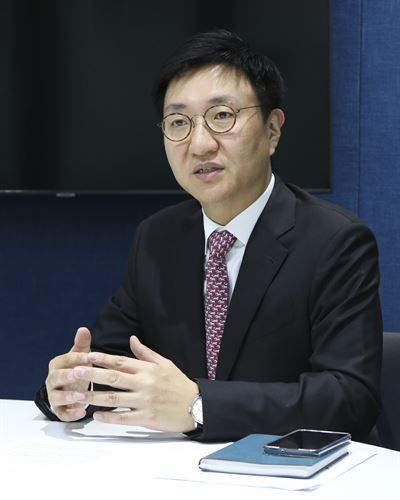
Oh Sang-bum, partner at Samjong KPMG, speaks during an interview with The Korea Times at the accounting firm's Seoul office in Seoul on May 11. Courtesy of Samjong KPMG
Currently, the Korean government allocates a total of 50 billion won ($37 million) annually to reimburse qualified FDI with cash grants. The government increased the aggregate amount of the annual cash incentives to 50 billion won ($37 million) in 2019 ― a drastic hike from the previous year's 6 billion won ― to compensate for the major abolishment of corporate tax breaks for foreign investors that year.
“Cash grants will be given for FDI meeting various criteria. For instance, investments that bring forth positive impacts to the Korean economy, such as new growth engine industry, key technology transfer, new employment and adequacy of locations, will be assessed to be selected for the cash grants,” he said.
Despite its advantages, the cash reimbursement system is not very well known to foreign investors. The tax expert, with over 25 years of experience in crossover M&As and foreign investment deals, advises those who consider making direct investments in Korea to consult with tax advisory firms.
Actually, Samjong KPMG, one of the top four accounting firms in Korea, operates a strong global tax division. Oh said out of Samjong's over 4,000 employees, about 500 professionals are devoted to providing tax services, and one-fifth of them have expertise in global investment advisory and international taxation. The firm possesses taxation experts of cash grant procedures, with some serving the state-led committees and organizations related to the cash reimbursement system for foreign investors.
“We see many successful cases of foreign investors from the U.S., Japan, and European countries who are rewarded with the cash grants. I hope foreign investors who consider making direct investments in Korea hold prior consultations with experts, so that they can receive all the non-tax benefits for which they qualify,” he said.