Internet-only banks closer to allowing foreign customers

KakaoBank's Pangyo office in Seongnam, Gyeonggi Province / Courtesy of KakaoBank
Korea set to enable online banking with residence cards
By Park Jae-hyuk
Korea has made slow but tangible progress in its efforts to allow foreign residents to use internet-only banks that do not have offline branches, multiple documents from the National Assembly and the government showed Tuesday.
The country's lawmakers and ministries have made continuous efforts to remove barriers blocking foreign nationals from making transactions with internet-only banks. The Financial Services Commission (FSC) revised identification guidelines for non-face-to-face transactions, allowing foreign financial customers to use their residence cards to open bank accounts online, which took effect in January 2020, but banks' systems still have not been updated to accept their IDs.
A recent document from the Ministry of Justice showed that the ministry's immigration policy division has pushed ahead with the establishment of a residence card authentication system with a 1.27 billion won ($1 million) budget.
According to the document, the justice ministry started the project in July 2019, months before the FSC announced the revision of its identification guidelines in December that year.
“Because foreign customers have been unable to make non-face-to-face financial transactions, such as online banking that offers better interest rates and more convenient services, the improvement in our authentication system was necessary for them to make contactless transactions,” the ministry said in the document.
The current non-face-to-face identification system for financial institutions only accepts residence registration of Korean nationals and drivers' licenses, but not foreign customers' residence cards.
The establishment of the new system is expected to gain momentum, once a revision to the Immigration Control Act is passed at the National Assembly, given that the revised bill was proposed to incentivize updating the system.
Proposed in June by 10 lawmakers including Rep. Song Ki-hun of the ruling Democratic Party of Korea, the revision seeks to enable the justice minister to verify the authenticity of identification cards issued for foreign nationals, when there is any request based on relevant laws. It also seeks to enable the establishment of an information system needed for authentication.
“This is intended to allow foreign nationals to be provided with similar financial services to those for Koreans,” the lawmakers said in the proposal.
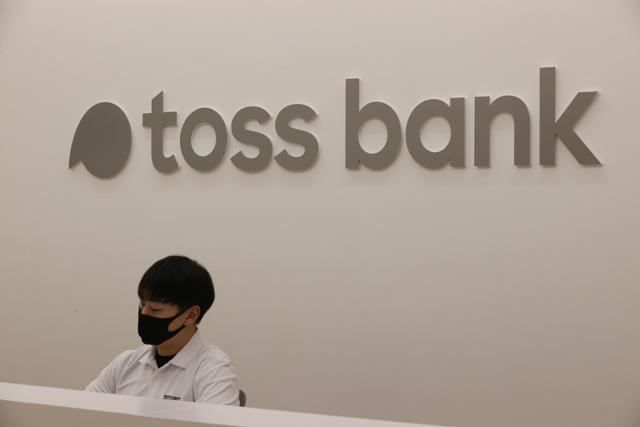
Toss Bank headquarters in Seoul / Yonhap
Alternative methods
The establishment of the new system and the passage of the revision bill, however, seem to be taking quite a long time, so internet-only banks themselves are looking for various alternative methods for foreign consumers to use their services as soon as possible.
Toss Bank said it decided to use the immigration service website, Hi Korea, when authenticating residence cards of foreign customers, as soon as the bank goes into operation next month.
“We have already used Hi Korea when checking the authenticity of residence cards of foreign users of the Toss mobile money transfer app,” a Toss Bank spokesman said. “By checking the authenticity manually, we will enable foreign residents to use our banking services, while preventing unregistered ones from opening accounts.”
After getting the final approval for its banking license from the FSC in June, Toss Bank vowed to do its best to enable more loans to be extended to financial consumers who have been marginalized by other banks, including Korea's residents of foreign nationality.
If it succeeds in attracting customers from among the 2 million foreign residents in Korea, the nation's third internet-only bank may threaten the leading status of KakaoBank, which is the country's largest financial company in terms of market cap.
A KakaoBank official said the bank is also considering various ways to attract foreign financial customers.