Financial accidents at major banks increase
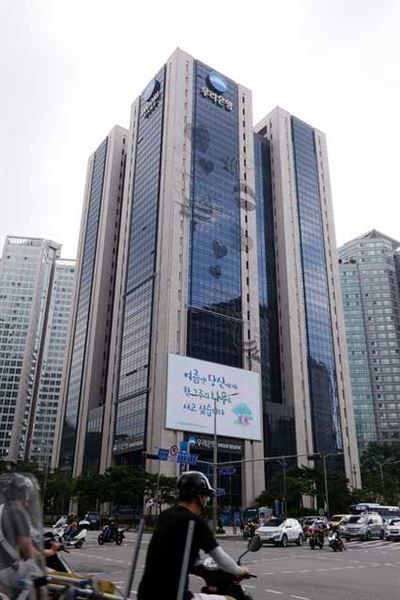
Woori Bank headquarters located in central Seoul. / Korea Times file
By Anna J. Park
The country's leading private lenders are alleged to have applied insufficient measures to prevent the occurrence of financial problems over the last couple of years, according to a claim by an opposition lawmaker, Monday.
Documents provided by the Financial Supervisory Service (FSS) to main opposition party lawmaker Rep. Lee Young showed Korea's top banks were found to have detected various financial irregularities. The documents showed Woori Bank had a total of 33 cases of financial irregularities.
KB Kookmin Bank and Shinhan Bank tied for second place on the “dishonorable list,” with 27 cases of financial irregularities each during the five years, followed by Hana Bank with 22 cases and NongHyup with 19.
Rep. Lee is a member of the National Policy Committee, which is a National Assembly committee overseeing local financial institutions. When asked about receiving the top spot on the disreputable list, an official from Woori Bank said the financial institution went through significant improvements over the past few years.
“The list was based on the past five years' track record, but the number of financial crimes or accidents happening at Woori Bank has dropped significantly lately,” the official from the bank said during a phone interview, stressing that Woori Bank recorded the lowest number of financial crimes among major banks during the first half of this year.
“The bank has strengthened internal monitoring and employee education, as well as adopted various safety systems to prevent further problems,” the official explained.
In terms of the amount of losses incurred, Industrial Bank of Korea (IBK) topped the list with 133 billion won, followed by Korea Development Bank (KDB) with 129 billion won, NongHyup Bank's 67 billion won and Woori Bank's 49 billion won.
An IBK official explained, however, that over 97 percent of the losses came from one case where the state-run bank was swindled by an export company's document fraud.
“The case wasn't about an individual employee's embezzlement or malpractice; rather the bank suffered losses from an external company's fraud. The case is still pending in the supreme court,” the official said. “In order to prevent similar cases happening ever again, the bank has strengthened its internal control system as well as employee education.”
Korea's 20 banks reported a total of 186 financial irregularities over the past five years, resulting in 488 billion won ($419 million) worth of losses, and four major local banks ― Shinhan, KB Kookmin, Woori and Hana ― made up almost 60 percent of the total number. Both the financial institutions themselves and customers incurred losses.
By category, embezzlement was the most frequent type, taking up 48.4 percent of the cases, followed by swindling at 30.6 percent, breach of duty at 14 percent and robbery at 4.3 percent. By the total amount of losses, swindling inflicted the largest portion of over 82 percent of the sum, followed by breach of duty at 12.3 percent and embezzlement at 4.9 percent, respectively.
“Most of the banks' negative issues were caused by some bank employees' moral hazard,” Rep. Lee said. “Banks should come up with stronger measures including severe penalties to set up strict internal control and prevent these outstanding issues.”