Citibank Korea CEO decides to step down
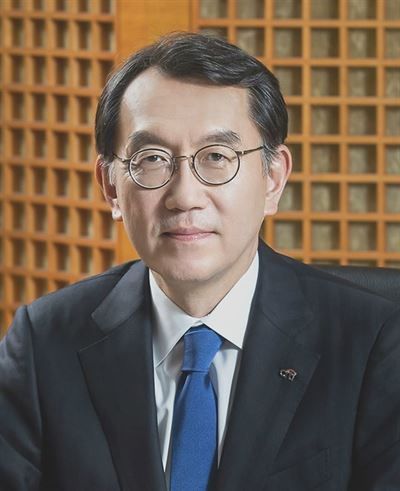
Citibank Korea CEO Park Jin-hei
By Park Jae-hyuk
Citibank Korea CEO Park Jin-hei told The Korea Times, Sunday, that he decided to step down voluntarily this month without seeking to serve a third term.
The 62-year-old, who has led the U.S. banking giant's local subsidiary since 2014, was supposed to finish his second term in October. Following his decision, the bank plans to appoint an acting CEO at a board of directors' meeting, Tuesday. It will appoint a new CEO as soon as possible.
Park said he has yet to make any specific plans for his retirement.
He had worked at the Korea Development Institute and Samsung Securities.
After he was appointed as Citibank Korea CEO, the commercial bank turned a profit in 2015. Recognized for his efforts to cut costs through the merger of 70 percent of bank branches and to pursue digitization, he began his second term in 2017.
Park's decision to resign coincides with the bank experiencing a deterioration in profits.
Citibank Korea posted 30.3 billion won ($25 million) in net profit during the second quarter, down 72.4 percent from a year earlier.
The bank attributed the decrease in its income to the one-time gain from the sale of its headquarters building in the second quarter last year and the COVID-19-related loan loss provisions. According to the bank, its loan loss provisions for the second quarter reached 65.5 billion won.
“Our second-quarter results reflected the challenges of COVID-19, such as interest rate reduction and increased cost of credit. However, we are seeing some encouraging signs in our core businesses from markets, wealth management and unsecured personal loan businesses,” Park said in a press release.
“We will continue to focus on maintaining good momentum across all our core businesses, keeping resources to support clients and employees as well as communities, and risk management and digital excellence to deliver our objective of 'be the best for our clients.'”
In contrast, Standard Chartered (SC) Bank Korea, another foreign-headquartered commercial bank here, posted a net profit of 88.3 billion won during the same period, up 18.84 percent from a year earlier.
“Rather than being satisfied with the short-term earnings increase which resulted from the changes in the market conditions, we should strengthen our overall sales capacity and secure long-term sources of income,” SC Bank Korea CEO Park Jong-bok said in a press release.
“Given that the business conditions for the latter half are expected to be tougher and uncertain, we will be more resilient and will seek ways to maximize our strengths.”
Meanwhile, the Citibank Korea chief's latest decision on his retirement has also led market observers to pay keen attention to other leaders of financial groups and banks, who are set to end their terms in the near future.
According to industry officials, there are seven chief executives of financial firms whose terms will end within this year. In addition to the Citibank Korea CEO, they are Korea Development Bank Chairman Lee Dong-gull, Suhyup Bank CEO Lee Dong-bin, KB Financial Group Chairman Yoon Jong-kyoo, KB Kookmin Bank CEO Hur Yin, Shinhan Bank CEO Jin Ok-dong and Daegu Bank CEO Kim Tae-oh.
Most of them are expected to serve another term considering commercial banks have seen record earnings over the past few years, but some of them could be replaced to take responsibility for the recent private equity fund (PEF) fiascos and to carry out organizational reform.