Debate heats up again over law governing Samsung Life

Samsung Life Insurance headquarters / Yonhap
Samsung Life pressured to sell stake in Samsung Electronics with proposed revisions that change book value accounting to market value standard
By Anna J. Park, Kim Bo-eun
Attention is growing over whether Samsung Life Insurance will be cornered to sell Samsung Electronics stocks it possesses, as ruling party lawmakers' proposed revisions to related regulations appear likely to be passed at the National Assembly.
The revisions to the current Insurance Business Act was proposed by the ruling Democratic Party of Korea (DPK) lawmakers, including Park Yong-jin and Lee Yong-woo in June 16 and June 18, respectively. Their bill states that an insurer's asset prices should be calculated according to market value and not book value, when calculating the cap of the firm's total capital assets such as stocks and bonds.
This is not the first time such revisions have been proposed ― they were first proposed during the 19th Assembly back in 2016, and again submitted during the 20th Assembly, yet opposition barred progress from being made. Rep. Park said the bill is necessary in terms of risk management, explaining that insurers were the only financial companies excluded, from a shift to accounting standards based on market value from original book value after the Asian Financial Crisis in 1997.
As the bill is likely to be passed this time, based on the DPK dominating seats in the 21st National Assembly, the insurer most likely to be affected by the revisions would be Samsung Life. Its stocks account for 14 percent of the company's total assets; this is a stark contrast when compared to other life insurers, which have on average only around 0.7 percent of their assets as stocks. One of the reasons behind Samsung Life's high stock ratio in their total assets is that the insurer holds a bulk of Samsung Electronics stocks.
“Under the current Insurance Business Act, an insurer cannot hold more than 3 percent of their affiliate stocks. Yet, Samsung Life currently holds 8 percent of Samsung Electronics shares, which amounts to about 24 billion won to 30 trillion won ($20 billion to 25 billion),” Rep. Park said. “This is only possible, because insurers' assets are calculated with book value, not market value.”
Under the book market accounting, Samsung Electronics shares owned by Samsung Life account for about 547 billion won, which is only about 0.18 percent of the insurer's total 30.9 trillion won value, as book value accounting allows the shares to be kept at the prices when they were acquired decades ago. The lawmaker said the current accounting practice should be changed, saying if the IT giant experiences a crisis, it will affect not only Samsung Life, but spread to more entities.
Headache for Samsung Life, yet FSC and market insiders back the revisions
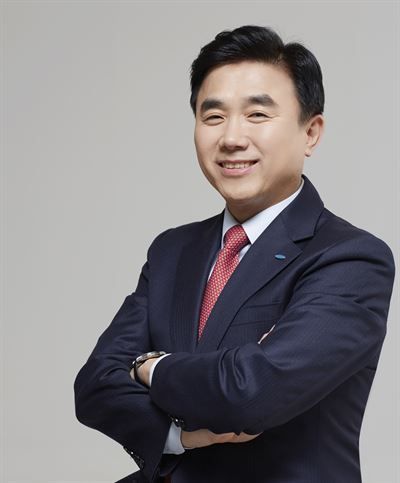
Samsung Life CEO Jeon Young-muk / Courtesy of Samsung Life Insurance
The law poses a headache for Samsung Life as it will need to find a substitute to invest in, once it sells over 23 trillion won worth of Samsung Electronics stocks. It will also lose out on the dividends it has been receiving from Samsung Electronics stocks. This amounted to 719.6 billion won last year.
An official from Samsung Life Insurance said the company doesn't yet have a specific stance on the matter.
“Since the revisions have yet to be passed in the Assembly, we believe it's still too early to comment on the firm's position about the bill,” the official said.
However, the nation's financial authorities seem to be siding with the revisions set forth by the 11 ruling party lawmakers. Financial Services Commission (FSC) Chairman Eun Sung-soo said during a National Assembly committee meeting on July 29 that regulations on insurance companies' asset risk assessments should be revised to a market value standard, from the current book value standard.
“It is not desirable for a company to put its assets in one big basket,” Eun said during the committee meeting. “Regarding the ongoing controversy surrounding book value and market value standards, I believe a market value standard is more suitable in assessing risks,” the FSC chief added.
Eun further said given that the International Financial Reporting Standard (IFRS) 17 will come into force in Korea in 2023, it would be desirable for Samsung Life to voluntarily sell its stake in Samsung Electronics gradually, before receiving any market pressures to do so.
An insurance market insider also told The Korea Times on condition of anonymity that the revisions' direction is more in line with the international market.
“I think the lawmakers' proposal is in line with market principles,” the expert said. “Once IFRS 17 begins to take effect in Korea in 2023, assessing risks on the market value is the right direction.”
The market insider stressed that the top priority of insurance companies is to protect consumers, and the proposal goes in the right direction regarding that goal.
“If an insurance company has increased security risks, the damages will mainly affect countless consumers. That's why such principles of strictly assessing risks should be maintained. I know Samsung Life would have its own position about the matter, but assessing assets with a market book value is a global standard,” the expert explained.
Samsung Life's stock price soars
Amid the controversy, Samsung Life's stock price rose, ending at 56,300 won at the closing of Tuesday's trading session, up 1.81 percent from Monday's closing price of 55,300 won. The price jumped drastically at the start of the week, as the insurer's share price has hovered somewhere around the mid-40,000 won range over the past three months.
Stock analysts say the price hike was due to investors' expectations on increased dividends if the revision bill passes.
“When Samsung Life sold some of its Samsung Electronics shares back in 2018, investors raked in higher dividends. Similar expectations raised the stock's price this time,” said Chung Tae-joon, analyst at Yuanta Securities Korea.
The analyst added the future moves of the stock will depend on whether the bills are passed.