Shinhan, Woori eager to let go of rigid corporate ideology
By Lee Min-hyung
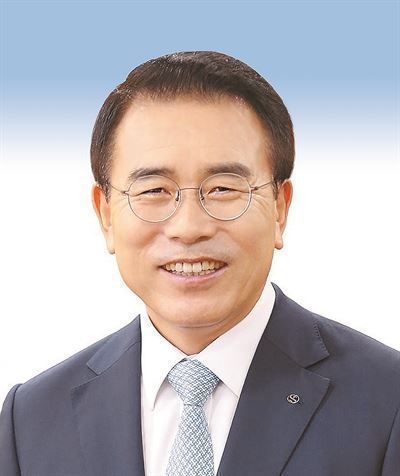
Shinhan Financial Group Chairman Cho Yong-byoung
The nation's financial industry is letting go of its long-lasting conservative and closed culture by bringing in outside experts to take top management positions.
The so-called “pure-blood custom” ― referring to the exclusive selection of applicants from within the company ― has long been prevalent in the financial sector here. But with leaders of top-tier financial firms expressing a strong willingness to discard the convention, expectations are that more industry players will follow in an attempt to boost earnings growth amid the prolonged economic slowdown and low interest rates.
Shinhan Financial Group Chairman Cho Yong-byoung is particularly standing at the forefront to lead the trend by appointing experts outside of the group or its affiliates as leaders of major leadership posts.
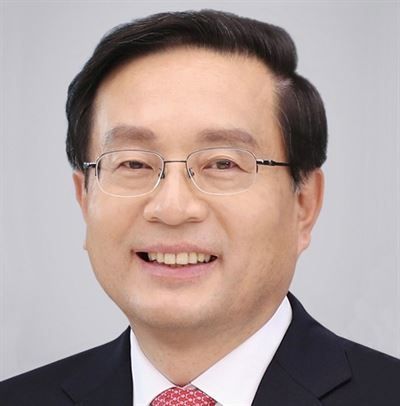
Woori Financial Group Chairman Son Tae-seung
Shinhan Investment, the securities and investment arm of the group, named Lee Young-chang as its CEO in March 2020, recognizing his expertise in the capital market despite his lack of experience at the Shinhan affiliate. Lee had served as vice president at now-Mirae Asset Daewoo before joining Shinhan Investment.
This was the first time Shinhan Investment recruited an outside expert as CEO. This was widely seen as part of Cho's determination to hire staff with a focus on ability, rather than background or internal culture.
Shinhan Life Insurance CEO Sung Dae-kyu was also appointed as the leader of the company in February 2019. The appointment of the bureaucrat-turned-CEO made headlines back then, as he spent most of his career working for government authorities ― such as the Financial Services Commission and the Korea Insurance Development Institute ― without much experience on the industrial side.
“The Roman Empire lasted for over 1,000 years due to its openness and receptivity, while pushing for continuous growth and innovation,” Cho said in a speech in March 2017 during his appointment. He has since underlined the importance of embracing openness in recruitment to remain agile during external uncertainties.
The shift in corporate culture is also due to a worsening business environment and widening uncertainty in the financial industry.
Korea is suffering from a prolonged economic slowdown, and this has worsened the profitability of some financial firms in industries such as insurance, banking and securities. Financial holding firms here have a growing sense of concern over their future, as the unfavorable business environment is showing little sign of taking a turn for the better in the near future.
This has driven financial firms to remain agile and ready to change.
The trend is expected to continue prevailing down the road, as the global spread of the coronavirus pandemic is casting a gloomy outlook for their near-term business growth.
Woori Financial Group Chairman Son Tae-seung is also cited as one of the leading figures to break the conservatism prevalent in the banking industry.
In February this year, Woori Bank appointed Kwon Kwang-seok, former head of the Korea Federation of Community Credit Cooperative's (KFCCC) credit business, as its new CEO.
Kwon served as a vice president at the lender until February 2018. He then moved to the KFCCC to take the leadership role.
The appointment of Kwon was surprising, as the banking industry widely expected Kim Jeong-ki, chief of the lender's human resources and sales support units, to become its new CEO.
But Son decided to tap Kwon as the new leader for the group's flagship unit in recognition for Kwon's diverse experience not just at Woori Bank and the KFCCC.
“The adherence to the pure-blood custom is the biggest problem in the local banking industry, but we are going to remain aggressive in recruiting outside experts when necessary,” Son said in a press conference in 2019.
Last year, the group also named Noh Jin-ho, former CEO at Hancom, as the group's new chief information officer (CIO) and the leader of its ICT division, in what was widely seen as Son's strong desire to take the lead in shattering the conservative nature of the banking industry.
Hana Financial Group Chairman Kim Jung-tai is also joining the drive to end the custom by recently naming two external officials as vice chairmen of its key affiliates.
In March, Hana Financial Investment CEO Lee Jin-kook was promoted to vice chairman of the group. Lee is taking control of the group's domestic business, while taking a dual role as CEO of the group's investment arm.
Of note is that Lee spent more than two decades at Shinhan affiliates, such as Shinhan Investment, before joining Hana in March 2016.
His recent promotion is also expected to boost Hana's group-wide effort to abandon the appointment of only internal figures to top management positions.