Is K bank on track for normalization?
By Kim Bo-eun
Attention to the troubled internet-only K bank is growing as it seeks to normalize its operations after business was virtually suspended due to capital issues.
Telecommunications giant KT led K bank's launch in 2017. Last year, KT sought to become K bank's majority shareholder, but was barred by regulations that stated it should be free any record of violating fair trade regulations. The authorities halted a review of KT's eligibility as the major shareholder, because it was under investigation for collusion with other telecommunications firms in a circuit line business project.
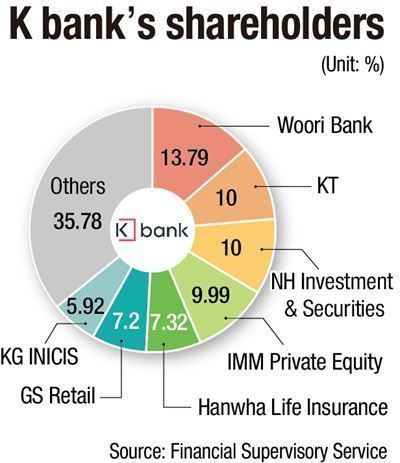
KT devised a plan for its affiliate BC Card to take over its 10 percent stake in K bank, and help the lender increase its capital. BC Card's board approved the plan Tuesday.
BC Card aims to increase its stake in K bank to 34 percent, by purchasing new shares issued by the lender. Boosting its capital base is of the utmost priority for K bank, which halted extending new loans in April last year due to the shortage of capital.
BC Card needs to receive approval from financial authorities to buy KT's shares. The authorities are likely to approve the move, since it does not have any record of violating regulations, and also because of a precedent of approval in another similar case.
Korea Investment Holdings used the same tactic when handing its shares of Kakao Bank to IT firm Kakao.
The holding company initially sought to sell 29 percent of Kakao Bank shares to its brokerage unit, Korea Investment & Securities.
This would have made the brokerage Kakao Bank's largest shareholder, but this was impossible due to a penalty that was imposed on the unit in 2017 for a violation of fair trade regulations.
The holding company therefore opted to sell its shares in Kakao Bank to Korea Investment Value Asset Management.
Financial Services Commission Chairman Eun Sung-soo also stated that authorities would help K bank with capital issues.
The plan was unveiled after the revisions to regulations on internet banks failed to pass a plenary session at the National Assembly.
The revisions eliminate requisites for entities seeking to become major shareholders of internet banks to be clear of violations of the Fair Trade Act.
But the revisions are expected to be passed soon, based on pledges lawmakers of the ruling and opposition parties have made.
A K bank official said earlier it would prepare for both scenarios.