Trouble with Argentina
By Willem H. Buiter and Anne C. Sibert
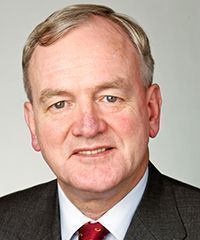
Willem H. Buiter
Anne C. Sibert
NEW YORK ― In a recent commentary, Joseph E. Stiglitz describes Argentina's recovery in 2021 as a “COVID Miracle.” Yet in our view, the country is heading for another economic disaster.
Consider Argentina's recent economic history. When President Alberto Fernandez took office in December 2019, he inherited a two-year recession and soaring inflation (53.8 percent) from his predecessor, Mauricio Macri. The pandemic then deepened the Macri recession, and real (inflation-adjusted) GDP fell by 9.9 percent in 2020.
While Argentina's vast natural resources helped its recovery as the pandemic shifted global demand from services to physical goods, even an estimated 10 percent real growth rate in 2021 was not enough to restore Argentina's GDP to its pre-COVID peak in the fourth quarter of 2017.
Moreover, while the COVID recession dampened inflation in the second half of 2020, the recovery drove the annual rate back up to 50.9 percent by the end of 2021, despite the government's periodic price freezes and export caps on some meat products and grains. A 50 percent inflation rate is not economically, socially, or politically sustainable. But reducing it requires monetary and fiscal restraint, which means enduring a period of below-potential growth and higher unemployment.
Although the economic and social cost of disinflation tends to be lower if monetary and fiscal authorities have credibility that is not the case in Argentina. Nor does the country have the social consensus or level of public trust needed to implement a well-designed temporary prices and incomes policy that could reduce disinflation's output cost.
Where does that leave things? On Jan. 6, the central bank raised the benchmark (annual) interest rate from 38 percent to 40 percent ― its first increase in over a year. But the effective compounded annual interest rate of 48.3 percent still implies a negative real interest rate, and thus is inconsistent with a serious disinflation effort.
Since the start of the International Monetary Fund's revised stand-by arrangement (SBA) for Argentina in October 2018, the exchange-rate regime has gone from a free float to a crawling peg to a managed float. The Multilateral Nominal Exchange Rate Index depreciated by 33.6 percent in 2020 and by 17.2 percent in 2021. That implies a roughly constant real exchange rate in 2020, but a 17.5 percent real appreciation (and a corresponding loss of competitiveness) in 2021.
Tight capital and exchange controls to prevent losses of foreign-exchange reserves have had only limited success. According to Morgan Stanley, Argentina's net foreign-exchange reserves currently stand at just $3.2 billion, and liquid reserves are even lower. The parallel-market exchange rate for the US dollar is about double the official rate.
Argentina's primary budget deficit (which excludes debt service) for 2021 is estimated to be 3.3 percent of GDP, down from 6.5 percent in 2020. But with the real interest rate on the debt exceeding the trend real GDP growth rate, fiscal sustainability requires primary budget surpluses. Unfortunately, under its current proposals to the IMF, the government does not plan to achieve a balanced primary budget until 2027.
We agree with Stiglitz that the IMF's dealings with Argentina since 2018 have been deeply misguided. The augmented $57 billion three-year credit line approved in October 2018 was the largest SBA in the Fund's history, and Argentina's 21st SBA in 66 years. But the program soon went off the rails, and in August 2019, after $44 billion had already been disbursed, the IMF de facto suspended it. Then, in May 2020, Argentina went through its ninth sovereign default, and in July 2020 the government canceled the program. The country's public debt still stands at about 100 percent of annual GDP today.
The IMF's decision to make so much money available to Argentina is incomprehensible. The only apparent beneficiaries were the private holders of sovereign debt who escaped the looming restructuring. There is little doubt that Argentina's IMF stand-by loan will be restructured through a series of window-dressing exercises, rather than through the significant write-down that is required.
In September 2021, Argentina relied on part of its $4.3 billion allocation of special drawing rights (the IMF's reserve asset) to make its first repayment of $1.9 billion. The next installment is $2.8 billion and it is due in late March. The total scheduled repayments for 2022-23 will come to around $37 billion. There is no way Argentina can meet its obligations without external assistance. Another sovereign default, as early as 2024, looms.
In a December 2021 assessment of Argentina's latest SBA, the IMF's Executive Board refers to “deep-seated structural problems, including fragile public finances, dollarization, high inflation, weak monetary policy transmission, a small domestic financial sector, and a narrow export base.” But that diagnosis only scratches the surface.
In 2020, Argentina's informal sector was estimated to account for 46 percent of total employment, contributing to a high and often unpredictable tax burden on the formal economy. Moreover, Argentina ranks 78th out of 180 countries in Transparency International's most recent Corruption Perceptions Index; 63rd out of 64 in the International Institute for Management Development's World Competitiveness Ranking; 83rd out of 141 in the World Economic Forum's 2019 Global Competitiveness Index; and 126th out of 190 in the World Bank's last-ever 2020 Doing Business ranking.
It is worth remembering that in the early twentieth century, Argentina's per capita GDP was comparable to that of Canada and Australia. Yet in 2019, it was just 18 percent of Australia's and 22 percent of Canada's at market exchange rates (and 44 percent and 45 percent, respectively, in terms of purchasing power parity).
Argentina's political and economic institutions will need fundamental reform if the country is to achieve fiscal sustainability, low inflation, and equitably distributed economic growth at a rate warranted by its rich endowments of natural and human capital. We are still waiting for that miracle.
Willem H. Buiter is a visiting professor of international and public affairs at Columbia University. Anne C. Sibert is professor of economics at Birkbeck, University of London. This article was distributed by Project Syndicate (www.project-syndicate.org).