Samsung, SK, LG brace for crisis with preemptive investments

SK hynix's M15 fabrication plant in Cheongju, North Chungcheong Province / Courtesy of SK hynix
SK hynix to invest $10 billion with expectation for chip industry boom in 2025
By Park Jae-hyuk
Samsung, SK and LG have continued to expand their domestic and overseas manufacturing facilities despite the looming economic recession, in apparent attempts to overcome the crisis by making preemptive investments, according to industry officials, Wednesday.
Although most companies have downsized their operations amid the uncertain business environment, the tech giants have decided to make aggressive investments, remembering their experience of outstripping rivals through such measures during previous crises.
SK hynix, for example, announced Tuesday that it decided to start building its new M15X fabrication plant in Cheongju, North Chungcheong Province, earlier than initially planned, so as to secure a future growth engine.
With the aim of beginning construction in October and completing it by early 2025, the chipmaker said it plans to invest 15 trillion won ($10 billion) over the next five years to build the plant and set up additional manufacturing facilities. In addition, the company will decide on the construction of the next M17 fabrication plant, after reviewing the overall business environment.
“Looking back on the past 10 years, SK hynix could grow into a global company thanks to its bold investment decisions during times of crisis,” SK hynix Vice Chairman Park Jung-ho said.
When most chipmakers were scaling back their investments in 2012, SK hynix increased its investment by over 10 percent, succeeding in a turnaround by the end of that year. Although market uncertainties had continued since then, the company built its M14 fabrication plant in Icheon, Gyeonggi Province, in 2015 to prepare for the next boom in the memory business, which led to two years of record-high earnings starting in 2017.
According to SK hynix, semiconductor experts expect the industry will start to recover in 2024 and rebound in 2025. The company therefore decided to build the M15X facility in preparation for increasing the supply in time for the next upturn.
Its investment plan is also interpreted as part of the company's efforts to outrival Kioxia, Western Digital and Micron Technology in the global NAND flash memory market, solidifying its second-largest market share, following Samsung Electronics.
Despite the skeptical outlook for global semiconductor demand, memory chipmakers have competed to expand their manufacturing facilities. U.S.-based Micron announced recently it would invest $15 billion to build a new plant in the U.S. state of Idaho.
Samsung Electronics plans to build three additional factories in Pyeongtaek, Gyeonggi Province, to operate a total of six production lines. In addition, the conglomerate held a groundbreaking ceremony last month for its next-generation semiconductor R&D complex at its Giheung Campus in Yongin, Gyeonggi Province, with the aim of investing 20 trillion won by 2028 to develop the research complex.
“Without bold R&D investment for next-generation, as well as next-next-generation products, Samsung semiconductors would not exist today,” Samsung Electronics Vice Chairman Lee Jae-yong said at the ceremony.
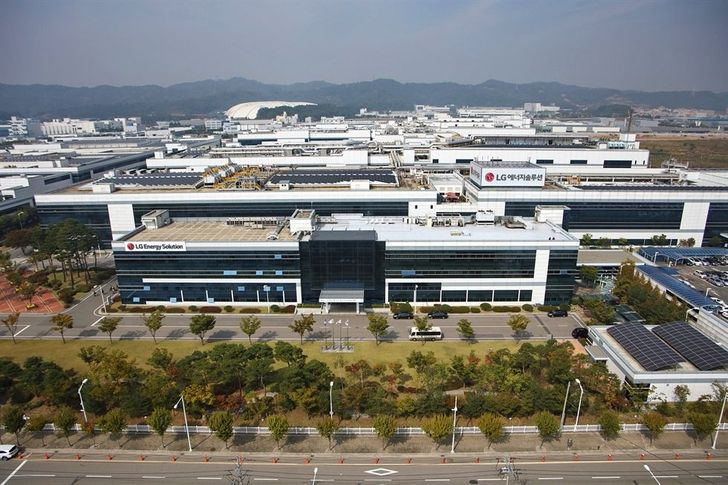
LG Energy Solution's (LGES) Ochang plant in Cheongju, North Chungcheong Province / Courtesy of LGES
LG Energy Solution (LGES) is also likely to invest $1.4 billion as initially planned, in order to build a cylindrical battery plant in Arizona.
Three months after it had announced the investment plan in March, the electric vehicle (EV) battery maker said in its regulatory filing that it is reconsidering the plan, due to the soaring costs resulting from the recent deterioration of the global economy.
However, the company is reportedly considering fulfilling the initial plan, amid the U.S. government's move to deny subsidies for the purchase of EVs assembled outside of North America. Arizona Governor Doug Ducey, who visited Korea earlier this month, is also said to have visited LGES to encourage its investment.
“LGES is reportedly considering building the factory as initially planned, taking account of the Arizona state government's request for the construction and supportive policies,” Hana Securities analyst Kim Hyun-soo said in a report, Monday.