POSCO seeks to establish hydrogen economy infrastructure
By Kim Hyun-bin
POSCO is following in SK Group's footsteps as it is seeking to establish a hydrogen economy infrastructure to fuel future growth.
The company is creating a hydrogen blueprint to report to the board of directors within this month. If approved POSCO will enter the hydrogen market.
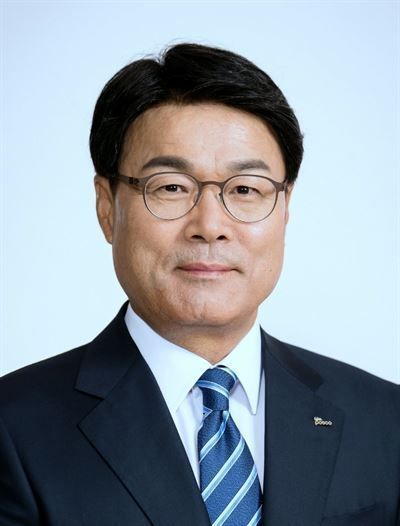
POSCO Chairman Choi Jeong-woo
According to industry sources, POSCO Chairman Choi Jeong-woo recently ordered executives to look into businesses related to hydrogen production and importing during a recent company meeting.
Choi has emphasized the importance of the hydrogen market. Last month during a Korea-Australia Economic Cooperation Committee Meeting, Choi said, “It is crucial to reduce global dependence on fossil fuel and transition to renewable energy. There is a growing interest in the eco-friendly hydrogen industry.”
POSCO has been searching for new growth engines as the steel industry has been seeing a decline in recent years, and is contemplating ways to develop a hydrogen economy and prepare for a surge in demand for hydrogen because of the government's Green New Deal initiatives.
The company is familiar with the hydrogen market. It developed and was the world's first to commercialize POS470FC, a stainless metal divider plate that is a crucial component for hydrogen-powered electric vehicles.
In addition, POSCO Energy's affiliate Korea Fuel Cell has been engaged in the hydrogen fuel cell business.
Despite its experience, the company is fairly new to the game. Many industry watchers believe POSCO will take a similar path to Hyundai Steel, which develops high-purity hydrogen and supplies it to companies that manufacture hydrogen-fueled electric vehicles.
POSCO is also looking into other options such as importing hydrogen from overseas and locally producing green hydrogen that does not emit carbon dioxide in the process of its creation.
SK Group has also recently announced it will create its own hydrogen value chain and if POSCO enters the hydrogen market it is expected to give a boost to the local hydrogen economy infrastructure.
“Korea's hydrogen industry's weakness in storing and transporting hydrogen infrastructure is expected to be enhanced with POSCO's involvement,” an energy company official said.
Many industry watchers believe the expansion to the hydrogen market will also create synergy with local hydrogen-electric vehicle manufacturers as well as the hydrogen fuel cell development sector.
SK to create hydrogen value chain
SK Holdings recently announced that it would invest in the hydrogen businesses to capitalize on the expected growth of the next-generation eco-friendly energy source.
The SK Holdings team's hydrogen business strategy is divided into three sectors. First, utilizing SK Group's infrastructure to establish a hydrogen mass production system for the local market; secondly, establishing a value chain to secure safety and efficiency; and thirdly, obtaining key hydrogen use technologies through investments and partnerships.
SK Holdings plans to fully utilize SK Group's gas station infrastructure to supply hydrogen and aims to enhance competition in the market.
Through its affiliate SK E&S will build liquid hydrogen production plant that could produce up to 30,000 tons annually by 2023 and plans to supply liquid hydrogen to the capital region.