Huawei's possible exit could benefit Samsung, SK hynix

A silhouette of a visitor next to the logo of Huawei is displayed on a screen at the Huawei stand at the IFA fair in Berlin, Sept. 3. EPA-Yonhap
By Baek Byung-yeul
While Huawei Technologies may be considering an exit from the smartphone business due to continued sanctions imposed by the U.S. government, Korea's tech firms ― Samsung Electronics and SK hynix ― will likely benefit from the probable withdrawal, according to industry analysts.
At a time when Huawei is expected to have difficulties in procuring chips used for smartphones due to Washington's clampdown, they said Samsung, which has been fiercely competing with the Chinese maker, will likely benefit if Huawei decides to withdraw from the phone business.
The U.S. issued its executive order in May 2019, barring U.S. companies from doing business with Huawei due to concerns about national security. After the order, Huawei was banned from using Google's Android operating system on its smart gadgets.
Recently, Washington imposed new restrictions, banning the Chinese company from using American technologies for semiconductors. Due to the sanctions, Huawei is not able to manufacture its own chipset used for smart devices with the help of U.S. firms or companies that use American technologies or software.
Ming-Chi Kuo, a seasoned analyst in the smartphone business, claimed recently that Huawei could exit the smartphone business as the U.S. sanctions are severely affecting its business operations.
The analyst said the best-case scenario for Huawei is that the company's market share declines and the worst-case scenario is that the company decides to completely withdraw from the phone business.
Even if the company is able to make it through the fallout from the sanctions, Kuo presumed that Huawei's market competitiveness will inevitably decline because the technology upgrade trend of smartphone components such as cameras, storage and chips will slow down.
Samsung has been maintaining a symbiotic relationship with Huawei as it supplies chips to the Chinese company through its Device Solutions Division, which supervises its semiconductor operation. Industry analysts said Huawei accounts for around 6 percent of semiconductor sales.
On the other hand, the two also have been in a competitive relationship with each other as they are competing for leadership of the smartphone market.
On July 30, market tracker Canalys released a stunning list showing Chinese phone maker Huawei surpassing Samsung in terms of smartphone shipments in the second quarter.
According to the market researcher, Huawei shipped more smartphones worldwide than other manufacturers during the April-June period, marking the first quarter in nine years that a company other than Samsung or Apple has led the market.
During the same period, Samsung struggled with its phone sales in key markets such as North America and Europe where it experienced fallout from the strict lockdown measures employed there to slow the pandemic.
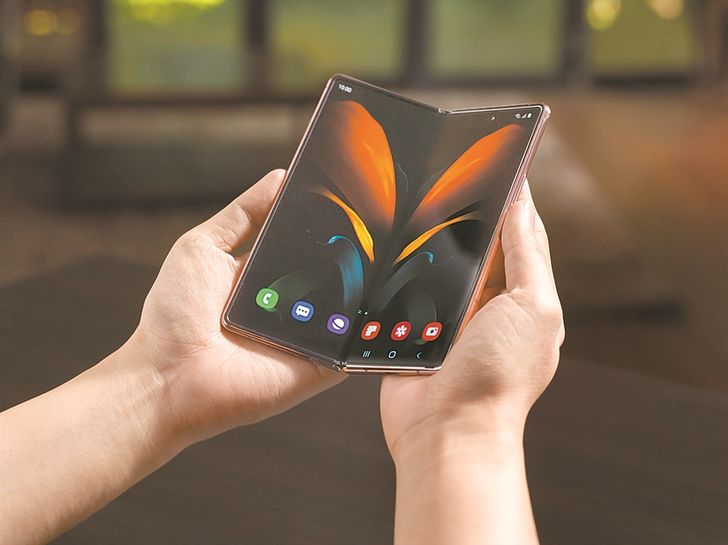
Seen is Samsung Electronics' foldable phone Galaxy Z Fold2. AP-Yonhap
As Huawei has hit a snag in securing semiconductors for its smart gadgets, industry analysts forecast the Chinese companies will see a decrease between 25 percent and 30 percent in smartphone shipments this year compared with last year.
“The smartphone shipments of Huawei this year will be decreased by between 25 percent and 30 percent year-on-year,” said Park Hyung-woo, an analyst at Shinhan Financial. “Huawei's smartphone shipment is expected to be decreased to around 190 million in 2020, from 240 million in 2019, and be further decreased to under 100 million in 2021.”
Samsung already experienced a sudden increase in smartphone sales last year, when the U.S. government issued a sanction on Huawei in May 2019. After Huawei's smartphone sales start to decline, the analyst said Samsung would be able to sell 40 percent more smartphones in the third quarter from the previous quarter.
SK Securities analyst Kim Hyung-woo said “the U.S. government's sanctions on Huawei, rising anti-China sentiment in India and Apple's iPhone 12 launch delay will definitely work as favorable factors for Samsung.”
For SK hynix, the world's second-largest memory chip maker, industry analysts said the memory chip maker will likely see negative effects in the short term from the Chinese maker's possible exit from the smartphone business.
However, in the long run, SK hynix will be able to recover from the fallout as it will seek other Chinese buyers such as Oppo, Vivo and Xiaomi.
“It is expected that SK hynix will likely take a hit if Huawei decides to withdraw from the smartphone business. But this will be a short-term thing as the company is capable of providing its memory chips to other smartphone makers in China,” an industry official said on condition of anonymity.
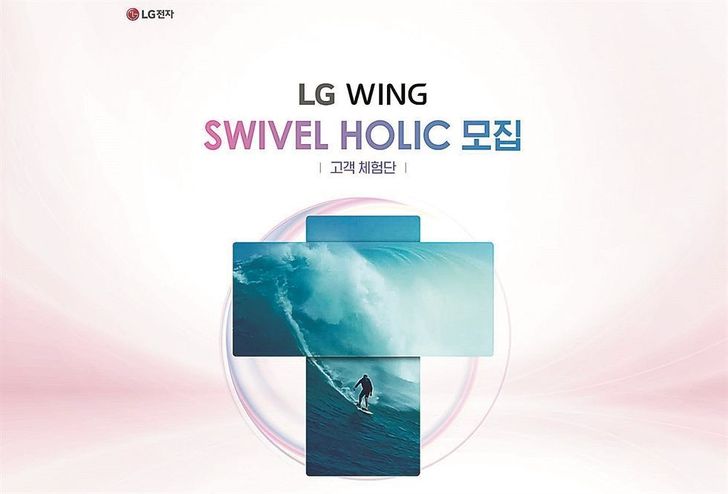
Seen is a rendered image for LG Electronics' new smartphone Wing. The company said Sunday it is recruiting test users for the upcoming device. / Courtesy of LG Electronics
Though analysts are saying that LG Electronics are unlikely to benefit from Huawei's possible exit from the smartphone business, chances are still alive that LG will draw public attention with its new smartphone.
LG announced recently it will introduce a T-shaped dual-screen smartphone called LG Wing on Sept. 14. Unlike its previous smartphones that come with a dual-screen accessory, the LG Wing offers two screens with a swiveling design.
With a couple of leaked videos of the new smartphone, LG seemed to accomplish its intended goal ― creating an online buzz. At a time when the smartphone business has been struggling with stagnant demand as well as economic fallout from the virus pandemic, it remains to be seen whether LG can convert the buzz around the new device into sales.