COVID-19 forcing GM, SsangYong to unload assets
By Nam Hyun-woo
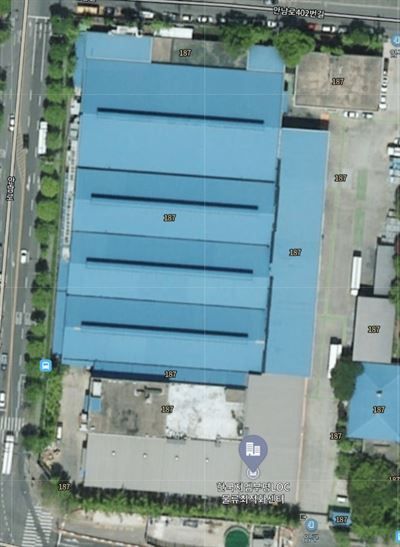
An aerial view of GM Korea's Logistics Optimization Center in Bupyeong-gu, Incheon. / Captured from Naver
GM Korea and SsangYong Motor are on an asset-selling spree in a desperate move to secure liquidity amid plunging vehicle sales stemming from the COVID-19 outbreak, according to industry officials, Friday.
According to GM Korea, it has notified its union members about its intent to sell off its Bupyeong Logistics Optimization Center (LOC) and its site near the company's plant in Incheon. Given the government-appraised value of the 9,900-square-meter site was about 14 billion won ($11.5 million), the combined market value of the building and site could reach at least 40 billion won.
The move is the latest development in GM Korea's detailed plans to overcome a sales slowdown as the COVID-19 outbreak hits sales. Last year, the company closed a separate logistics center in Incheon, and two more logistics centers in Changwon, South Gyeongsang Province, and Jeju Island earlier this year. Those centers will be merged into a logistics center in Sejong, which will be GM's only logistics center in the country.
“This is in line with GM Korea's normalization efforts since 2018,” a GM Korea official said. “By merging logistics centers, we are seeking to minimize costs and make the best use of our assets amid the slowdown of the car industry.”
The official said the Bupyeong LOC closure would not involve job losses as employees would be relocated to the nearby assembly plant.
GM Korea has been reporting operating losses since 2014. Domestic sales and exports during the January-May period this year plunged 28.1 percent to 140,053 vehicles from 194,721 during the same period a year earlier.
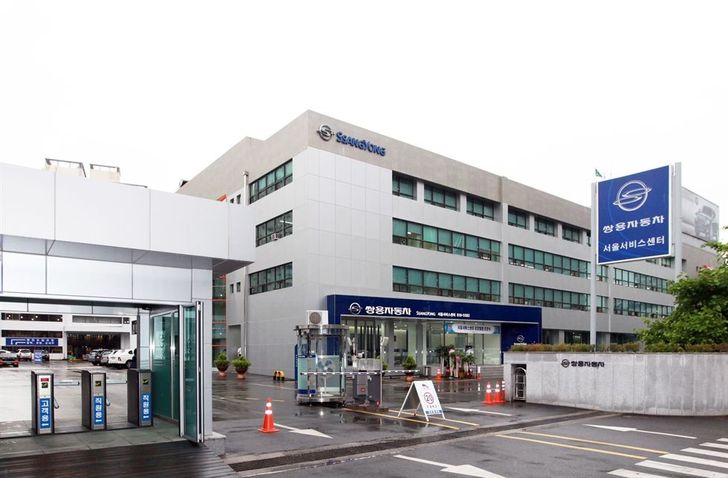
SsangYong Motor service center in Guro-dong, Seoul. / Courtesy of SsangYong Motor
GM is following cash-strapped SsangYong Motor.
SsangYong Motor recently signed a 180 billion won sale and purchase agreement with PIA Asset Management for its 18,089-square-meter service center in Guro-dong, southwestern Seoul. SsangYong Motor will lease back the center.
In April, the company also sold a logistics center in Busan for 26.3 billion won and plans to unload an employee training center in Gyeonggi Province and two logistics center in the interior Chungcheong provincial region.
SsangYong is on track to address its liquidity-driven issues. The company is loaded with 390 billion won debt due in March next year, and is exploring measures to secure cash through asset liquidation and a government bailout. Its largest shareholder, Mahindra & Mahindra of India, refused to provide more capital, citing its own difficulties.
SsangYong Motor has also been reporting operating losses since 2017, with last year's loss standing at 275.2 billion won. The slump continued in the first quarter of this year with a 97.75 billion won operating loss.
Its domestic sales and exports from January to May stood at 39,206 vehicles, down 32.4 percent from 58,030 a year earlier.
Renault Samsung is also reportedly considering selling sales branches and service centers ― there are more than 360 Renault Samsung service centers across Korea.
“Although there could be possibilities, we are yet to have any details on selling our assets,” a Renault Samsung official said.
Renault Samsung's earnings are relatively intact compared to GM Korea and SsangYong Motor. Its operating profit last year stood at 211.23 billion won, down 40.3 percent from 354.1 billion won in 2018.
The three carmakers' difficulties are largely attributable to slowing exports.
GM Korea rolled out the Trailblazer SUV earlier this year as a global export model made in Korea, but had to slash production due to the COVID-19 outbreak. Renault Samsung also successfully launched its compact SUV, the XM3, in Korea, but is yet to get a grant from its headquarters on whether it will assemble the vehicle for overseas markets.
SsangYong Motor has been suffering a continued decline in its exports due to the economic downturn in its major markets, including Iran and Russia, while the company is also having difficulties financing new vehicle development.