Toyota, Nissan log biggest sales drop amid trade spat
By Kwak Yeon-soo
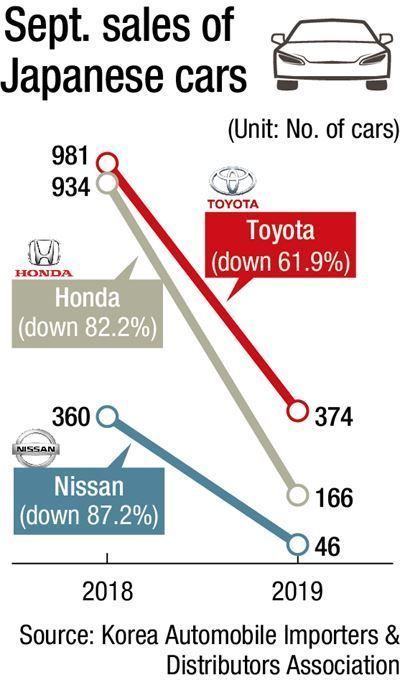
Toyota, Honda and Nissan suffered the biggest monthly sales drops in September due to a consumer boycott of Japanese products, data showed Friday.
According to data from the Korea Automobile Importers & Distributors Association (KAIDA), Toyota vehicle sales plunged 61.9 percent to 374 in September from 981 the same period last year.
Sales of Honda plummeted 82.2 percent to 166 from 934 and Nissan sales dropped 87.2 percent to 46 from 360.
Sales of Lexus, Toyota's independent luxury brand, were down 22 percent to 469 from the previous month, although that was still up 49.8 percent from the previous year.
Sales of Infiniti, Nissan's independent luxury brand, were down 69.2 percent to 48, data showed.
Sales of Japanese vehicles moved in the opposite direction of the overall sales of imported vehicles, which rose 17 percent in September buoyed by increased supply of new models.
German carmaker Mercedes-Benz topped the sales of imported vehicles, selling 7,707 last month. It was then followed by BMW at 4,249 and Audi at 1,996.
The number of newly registered imported vehicles stood at 20,204 in September, up from 17,222 a year earlier, according to KAIDA.
By contrast, the number of newly registered Japanese vehicles stood at 1,103 in September, a 59.8 percent drop from the same period last year. Compared with August, the number plunged 21 percent.
“Sales of Japanese cars will likely remain in the doldrums in the near future, as the worsened trade spat between Tokyo and Seoul continues to weigh on consumer sentiment,” said a big data analyst at Zigcar, a market platform for car exchange dealers, manufacturers and consumers.
KAIDA also stated that the key reason for the slump was lower demand for Japanese vehicles.
Japanese carmakers worry that the boycott will continue for the rest of this year, with political tension between the countries showing no sign of abating.
This came after Japan decided to restrict exports to Korea of a few high-tech materials used in semiconductors and displays in July. In August, Tokyo removed Seoul from its whitelist of preferred trade partners. The actions are widely seen here as retaliation for a South Korean Supreme Court ruling ordering Japanese firms to compensate surviving South Korean victims of wartime forced labor during the 1910-45 Japanese occupation of the Korean Peninsula.
Nissan said although it sees no relief in sight, the company will continue its activities here.
“As Korea is a strategically important market for us, we will overcome difficulties by revamping operations here,” a Nissan Korea official said, denying reports of pulling out of the country.