Chanel, Vuitton rapped for poor labor conditions
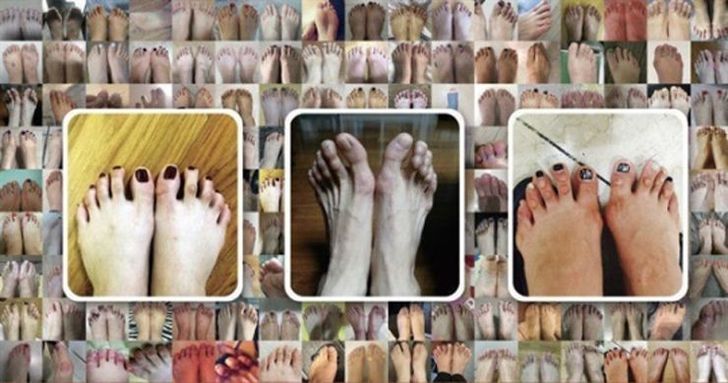
Seen above are the feet of female workers at department stores and duty free shops, who suffer from bunions. / Courtesy of Rep. Kim Jong-hoon
By Park Jae-hyuk
Workers for Chanel and other imported luxury brands revealed their poor working conditions during a National Assembly audit of the Ministry of Trade, Industry and Energy last week.
They criticized their companies for forcing them to work nearly 12 hours a day without regular days off.
“I work from 9 a.m. to 8 p.m. on weekdays, and work for 12 hours a day on weekends,” said Chanel’s union head Kim So-yeon, who is working as a Chanel salesclerk at Hyundai Department Store’s Apgujeong branch in Seoul. “Due to the long working hours and late closing time, I cannot take care of my child at all.”
Kim, who has worked at local department stores for 20 years, said she has a nine-year-old child.
“Most of my colleagues are feeling difficulties in pregnancy and delivery,” she said. “I want the company to allow regular days off at least twice a month.”
Kim Sung-won, head of Bluebell Korea’s union, accused international luxury brands of neglecting the poor labor conditions of salesclerks at local duty free stores.
His company distributes luxury products in Korea for global brands, including Louis Vuitton, Dior and Bally.
“Airport duty free stores close late at night and open early in the morning, so salesclerks have to go home late at night and come to work early the next morning,” he said. “They can sleep only four hours at home.”
According to Kim, women account for 90 percent of all salesclerks at local duty free stores. They are often urged to wear high heels and tight uniforms.
“Many of my colleagues, who are suffering from bunions, cannot go to the hospital, because they have no regular days off,” he said. “Some of them face difficulties in pregnancy.”
In response to their complaints, Minister Paik Un-gyu said, “I feel sorry about this issue. I will figure out whether our ministry can solve the problem.”
It was not the first time the poor working conditions of luxury brands’ employees have come to the fore.
An official website of Chanel’s union in Korea is full of negative opinions and stories about management. Female workers complain about their skimpy uniforms, as well as small salaries and long working hours.
Last year, Chanel Korea was also criticized for integrating its department store and duty free divisions into a single unit, which appears to have caused a mass resignation of employees who were working for its marketing and sales departments.
Considering the local unit has enjoyed increases in sales at major department stores here over the past few years, analysts regarded the massive payroll cut as the global headquarters’ strategy to overcome its recent slump in global sales.
Chanel headquarters declined to disclose regional business performances, but a recent regulatory change is expected to prompt the company to disclose all data beginning next year.
Industry officials said each luxury brand manages salesclerks at local department stores and shopping malls.
Because department stores and shopping malls are not the employers of the salesclerks, they cannot play a role in days off and other working conditions.