Menace of illicit drugs in Golden Triangle region
By Dr. Nehginpao Kipgen and Shivangi Dikshit
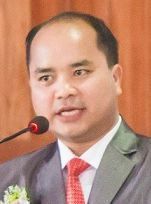
Dr. Nehginpao Kipgen

Shivangi Dikshit
The Golden Triangle region of Southeast Asia is one of the major producers of illicit drugs. This region includes northern Thailand, western Laos, and eastern Myanmar. Earlier, the region was known for its opium cultivation, processing and distribution across Southeast Asia and other parts of the world.
However, in recent times, the region has occupied a dominant position in the production and trafficking of methamphetamine. This rise in the production of synthetic drugs is also due to the availability of precursor chemicals in neighboring countries such as India and China. These drugs can be easily manufactured in a laboratory with the precursor chemicals and do not depend on seasonal harvests.
Myanmar has turned into a major drug producer, whereas Laos and Thailand have turned into major drug trade routes. Drugs are smuggled into Yunnan Province in China and from there to Guangdong, Hong Kong and Macao. Similarly, Ho Chi Minh City, Manila, and Phnom Penh have become leading centers for drug distribution.
The traffickers use various corridors and shipments from Laos to Thailand, Vietnam and Cambodia, or southern Myanmar to southern Thailand to other parts of the region and beyond. Infrastructural development plans such as the Chinese Belt and Road Initiative have created easy passageways for such syndicates to traffic drugs to different parts of the world.
The drug syndicates operating in the region have connections with other transnational criminal organizations such as the Japanese yakuza, Vietnamese gangs, Nigerian groups and Colombian cartels to distribute the illicit drugs worldwide. Transnational criminal organizations are attracted to the drug trade due to its high profit earning capacity.
Drugs are similar to other food items, once consumed, they need to be purchased again for future consumption; therefore, the demand for them remains constant, which is not the case with other illicit items such as arms or precious stones. The high demand and high profit earning capacity makes it a lucrative trade for transnational criminal organizations.
Some ethnic armed groups in Myanmar have been active in the drug trade for decades. Drugs are mainly produced in the highlands of eastern Myanmar which is poorly developed economically.
The armed groups have control over the border region with China, Laos and Thailand, while the latter two have minimal control over the remote border areas which make them easily penetrable.
The availability of drugs during the COVID-19 pandemic demonstrates the failure of the authorities in controlling the expansion of the illicit trade. This also throws a light on the prevailing corruption within the system that supports the illicit trade in times when many businesses have been suspended or closed.
With changes in the social system since the virus outbreak, the drug syndicates have started utilizing social media platforms to continue the sale of drugs. This not only expands the trade but also reduces the cost of drugs as the syndicates drop the parcels at specified locations, and the buyers can easily take their package(s) from the assigned places. It has become harder for the police to clampdown on these deals as private chat apps are used to sell and buy drugs.
The current situation where many people are facing unemployment and or a reduction in income, there is a high vulnerability for the marginalized and economically lower strata of society to participate in the drug business.
To curb the illicit drug trade during and after the pandemic, Southeast Asian countries need to focus on, among others, the social aspects related to drug trafficking in the region.
There is a need to tackle the issue as a societal concern along with it being a non-traditional security threat to the region and the wider world.
There is high demand for drugs such as methamphetamine among the young in Southeast Asia for recreational purposes and/or as a source of energy to carry out their daily mundane duties. Drug consumption is also considered fashionable and a modern thing to do, and is also practiced by the young to be part of their social units.
Both men and women are involved in the distribution and consumption of drugs. As per the social norms of the region, women are not expected to be part of the drug trade, therefore, they are often used to traffic drugs because the drug dealers believe that women will not be, or are unlikely to be, arrested by the police.
Drug users often face violence at the health centers which discourage them to complete their treatments. Moreover, using these health facilities can be expensive in the long-run which discourages drug-users from completing their treatments. Women often leave the health treatment mid-way or do not avail themselves of the health facilities due to fear of social stigma.
Governments have failed to focus on alternative development programs which can provide drug cultivators alternative means of livelihood.
To reduce the drug trade, it is vital to engage and involve the communities harmed or affected by the illicit trade. This would help in reducing the social stigma and discrimination toward the drug-users and those who are involved in the drug business.
Moreover, authorities responsible for the implementation of counter-narcotics policy, and medical service providers need to be well-trained about the sensitivity of the issue they are dealing with.
The COVID-19 pandemic has caused travel restrictions, and closed borders have affected the production and supply of drugs. But a reduced government focus on drug trafficking can allow the drug syndicates to expand their trade in newfound ways.
Dr. Nehginpao Kipgen is a political scientist, associate professor, assistant dean and executive director at the Center for Southeast Asian Studies (CSEAS), Jindal School of International Affairs, O.P. Jindal Global University. Shivangi Dikshit is a research assistant at CSEAS.