Armistice and Hill 351
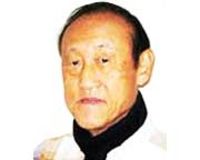
By Dan C. Pak
After about a year of continuous fighting, the allied forces led by the United States on one side and the Communist troops of China and North Korea on the other faced off approximately along the 38th parallel. Neither side was able to dominate the entire peninsula. The Korean War went into a stalemate.
The armistice talks started on July 10, 1951. They lasted for 748 days until July 27, 1953. During this period, no less than 159 plenary sessions were held where chief negotiators from both sides were in attendance.
In addition, a number of sub-committee meetings took place to work out the details. In total, there were 765 meetings before a final agreement was reached, according to a South Korean government source. While negotiations were in progress, both sides tried to maximize gains. Accordingly, fierce fighting continued to gain extra territory.
The front line at the time of agreement was slanted in relation to the 38th parallel. In the east coastal area, it went above the 38th parallel, whereas on the west coast, it sagged below the line. I was assigned to the 15th ROK Division fighting to hold the combat position on the east coast.
Our division was involved in the battle for Hill 351, one of the most vicious in the Korean War. The hill changed hands many times over. At the height of the deadly struggle, hand-to-hand combat ensued taking heavy artillery fire from both sides.
In the end, we were able to hold onto the territory that extended north of the 38th parallel. But we suffered heavy casualties. At the same time, we learned from enemy prisoners of war that the North Korean 7th People's Army Division suffered even more casualties from B-29 bombings and bombardments from the battleship USS Missouri.
The macabre-drama-like kill or be killed continued on the barren hill seemingly with no end in sight. Then, on July 27, 1953, we received a directive from the I ROK Army Corps, the immediate higher command that the 15th Division was subordinate to. The directive was short and to the point: “All manner of hostilities shall cease effective 2200 hours today.” Instantly, we realized that a cease-fire agreement had been reached at last. The division issued its own directive to subordinate units at once.
Those of us at the tent-offices congregated together, waiting for the hour to arrive. The humid hot summer day seemed to linger on longer than usual. As the sun started to sink over the ridge of the nearby hill, daylight was slowly giving way to darkness.
As light was fading, the sound of sporadic gunshots seemed gradually rising. Both sides seemed determined to vent vengeance against the other until the last minute. Shortly before the designated hour, the crescendo of war-making sounds reached their climax. Every imaginable kind of firearm was shooting into the darkness. The earth was shaking and the valleys echoed.
Then, at 2200 hours on the dot, the shooting stopped. The silence was devastating. No one spoke; no one moved. It was as if a magic wand appeared from nowhere. Presently, taps started to sound that began to squeeze the chest. In the distance, flares slowly descended in the air above the Hill, exposing the pulverized topsoil that was said to have turned to ankle deep dust.
Today, a commemorative tower stands on the hillside in the vicinity of where once fierce fighting took place. It is dedicated to the ones fallen defending the critical combat position.
The sounds and the scenes remain in my fossilized memory.
The writer is a Korean War veteran and author of the novel, "The Wood Bracelet," published in January 2015. He can be reached at dc.p@mindspring.com.