Free economic zone in Tumen River Basin for permanent peace and prosperity in Northeast Asia
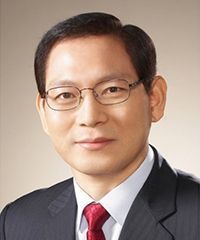
By Park Chong-soo
The war in Ukraine is a war of attrition in which, since World War II, the largest military force has been mobilized. Far from an end to the war, there is no possibility of a ceasefire. The West sticks to its position that Russia cannot win the war. On the contrary, Russia holds on to its position that it will not lose the war. The war between Russia and Ukraine has escalated into a small world war.
In the early days of this war, the West avoided providing offensive weapons to Ukraine. However, as the war prolonged, the West has strengthened its level of support with offensive weapons. The Biden administration eventually decided to provide controversial cluster bombs. Provision of a fighter F-16 is also under consideration. The F-16 is considered the game changer in the war in Ukraine.
As the war escalates, Russia could resort to nuclear weapons. Because Russian political leaders have stated the possibility of using nuclear weapons on several occasions. President Putin reminds us that “the United States is the only country in the world that ever used nuclear weapons,” boasting that Russia can also use nuclear weapons. Dmitry Medvedev, vice chairman of the National Security Council and former president, also threatens, saying, “Just as the U.S. dropped atomic bombs on two Japanese cities in 1945, we can end the war once we use nuclear weapons.”
The U.S. was the only nuclear power then, but today nine countries possess nuclear weapons, including North Korea. In particular, Russia has the largest number of nuclear powers. Presidential elections in Russia, Ukraine and the United States are scheduled to be held next year. It remains to be seen what steps the leaders of the three countries will take depending on domestic politics.
Hitler in Germany did not have nuclear weapons. It was Truman of the United States that gave the order to drop the nuclear bomb. The international community avoids condemning Truman as a devil. It is because the history of war is written by winners. But this past could be taken as a precedent by Putin, as a justification for his possible use of nuclear weapons. President Biden said, “There is absolutely no chance that Putin will win the war in Ukraine.” Paradoxically, this statement corroborates that Putin could be tempted to use nuclear weapons to win the war, given he has no chance of winning at all otherwise.
Now is the time for world leaders to exercise their negotiation skills to deter the war in Ukraine from escalating into a nuclear war. First, diplomatic tactics should take priority over military countermeasures. The strong versus strong confrontation is prone to escalate into an out-of-control crisis. If the Ukrainian war escalates into a nuclear war, the consequence will be the end of mankind. North Korea, which remains steadfast in partnership with Russia, is making an unusual move. In an attempt to keep the U.S. in check, North Korea may launch an IBCM into the Pacific Ocean near the U.S. mainland. In return, Russia may provide sensitive technology for nuclear weapons and missiles to North Korea. If this becomes a reality, it will be a matter of time before the war could expand from Europe to Asia.
Second, the international community should not return to the Cold War era of ideological dichotomy. In the wake of the war in Ukraine, confrontation has been intensifying between the G7 and the BRICs, as well as between NATO and the SCO. Since resources and technology are being weaponized and thus security and economy are inseparably related, the symbiotic economic relationship should not be threatened by security factors. International supply chains are too tightly connected to return to the Cold War system.
Third, careful measures should be taken to prevent conflicts in Europe from expanding to Northeast Asia. China and Russia recently regularized their joint military drills in the North Pacific and this could lead to a heated battle for hegemony among neighboring countries. In the case of a 'strong vs. strong' confrontation between the South Korea-U.S-Japan and the North Korea-China-Russia grows acutely, tensions will rise in the region. The Korean peninsula issue is not just one of the Korean people; it also is a matter of diplomacy among neighboring countries.
The mouth of the Tumen River is evaluated as a “blessed economic zone.” What is desirable is to create a trans-border free economic zone to help establish a permanent peace regime on the Korean Peninsula and Northeast Asia. Since 1991, the U.N. Tumen River Development Plan (UNDP―GTI) has been underway, but it has been stalled. A declaration ceremony of the International Tourism Cluster there was promoted on March 1, 2022, as part of the New Northern Policy, but has been put on hold due to the war in Ukraine. But resuming the process is open to possibility.
Especially a free economic zone is expected to lead North Korea to reform itself and open its border. In this regard, the “Mongol Forum-2023” was held in Ulaanbaatar on June 20-24. Scholars from around the world gathered their wisdom for peace and prosperity in Northeast Asia and Korean reunification. Above all, the keyword is peace. And peace represents the essence of “Hongik Ingan,” the founding ideology of the Republic of Korea.
This ideal has been inherited through 5,000 years of Korean history and is still going on. A unified Korea goes beyond physically integrating the two Koreas; it builds a new country that embodies the ideal of Hongik Ingan. This is what the K-Dream is all about. No doubt the realization of the K-Dream will mean geopolitical stability in Northeast Asia, particularly on the Korean Peninsula, and ensure lasting world peace and prosperity. I hope that the war crisis in Europe can be transformed into an opportunity for peace in Northeast Asia.
Dr. Park Chong-soo served as chairman of South Korea's Presidential Committee on Northern Economic Cooperation.