Shareholders' rights and corporate governance
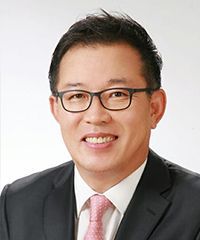
By Ryou Hyo-sang
On March 30, the Supreme Court of South Korea issued a historic ruling, recognizing the rights of shareholders to protect corporate value. It demonstrates that the rule of law is alive and well in Korea.
In a shareholder derivative lawsuit filed by Schindler Holdings AG (Schindler), the Supreme Court of Korea affirmed the lower court ruling that held Chairwoman Hyun Jung-eun liable for damages to Hyundai Elevator, as she breached her duty of care to conduct due diligence.
The shareholder derivative lawsuit was filed in 2014 by Schindler, the second-largest shareholder of Hyundai Elevator. It alleged that Hyun and others had engaged in the misappropriation of funds for the benefit of certain controlling shareholders, including Hyun, since 2006. This included entering into more than a dozen derivative contracts to protect Hyun's control of affiliate company, Hyundai Merchant Marin (HMM), causing Hyundai Elevator to suffer a 718 billion won ($542 million) loss in the process. These derivative contracts with “white knights” conflicted with the interests of Hyundai Elevator and its shareholders.
In 2006, when Hyundai Heavy Industries acquired a 26.68 percent stake in HMM, Hyun lost her position as the largest shareholder. She had Hyundai Elevator enter into derivative contracts with Cape Fortune, Nexen Capital, NH Investment & Securities, Kyobo Securities, and Meritz Securities from 2006 to 2013. Each party agreed to exercise their voting rights to support Hyun's control of HMM but Hyundai Elevator, as a company, bore all potential losses.
This was a clear breach of fiduciary duty of care, as it impaired corporate value and shareholder value, simply to protect a specific individual's personal control of another company. It was widely criticized in capital markets and by governance experts in 2013.
This is also a dramatic story of Schindler's successful recovery of shareholder rights and corporate value over a period of nine years, from filing a lawsuit in 2014 as a shareholder, losing the first trial, winning the appeal case, and eventually obtaining a favorable decision from the Supreme Court. The ruling affirmed the liability of Hyun and former CEO Han Sang-ho, ordering them to compensate Hyundai Elevator a total of 170 billion won in damages.
A shareholder derivative lawsuit is filed by shareholders on behalf of a company against the company management and/or directors for losses to the company caused by decisions that violate the interests of the company and its shareholders. These cases are difficult to bring, especially in Korea. This ruling, in particular, garnered significant international attention as a notable case of a foreign shareholder winning a derivative lawsuit in Korea.
In its ruling, the Supreme Court stated that directors are in a fiduciary relationship with the company, and must perform their tasks with the duty of care of a good manager. They must faithfully fulfill their duties in accordance with the provisions of the law and the company's articles of association. The court noted that in case of negligence, they are liable for damages and must compensate the company for the losses.
The court explained that when a company belonging to an enterprise group with a circular shareholding structure acquires additional shares of an affiliated company, the directors must specifically examine, based on objective data, the existence and extent of operational and financial ties between the company and the affiliated company. They must consider the extent of the benefit and cost for the company caused by retention or loss of control of the affiliate company.
In other words, the ruling centered on the management's breach of the duty to conduct due diligence, and the failure to fulfill the duty to review, i.e., inaction was, in fact, an act constituting a breach.
There are still processes left for the defendants to pay the damages to Hyundai Elevator, and it is important for the defendants to ensure that the compensation process is transparent and avoids any further damage to the company and shareholder value.
However, on April 6, the board of directors at Hyundai Elevator announced that it would accept part of the damage payment in Hyun's shares of Hyundai Movex, an affiliate of Hyundai Elevator, causing another controversy. Chairwoman Hyun is on the board of directors of both Hyundai Movex and Hyundai Elevator, raising questions of a conflict of interest.
In other words, the debtor was involved in the decision-making regarding how the creditor would receive the payment it was owed. It is questionable whether this agreement is in line with the spirit of the ruling, an arrangement which only Hyun appears to benefit from.
It would be interesting to see what responses follow this action, in particular, any moves by the National Pension Service (NPS) holding 5.49 percent of Hyundai Elevator's shares, which should be closely monitored.
Statutes provide some grounds for a potential lawsuit by the NPS. Article 22 of the Guidelines for Responsible Activities of National Pension Fund Trustees states that a fund may file a derivative lawsuit by considering numerous factors, including whether a director or other persons have been determined to have intentionally or negligently committed an act that violates laws or the articles of association of a company in a lawsuit, and whether the amount of damage caused to the company by the misconduct can be specifically identified or objectively calculated from the judgment of the relevant lawsuit result.
Additionally, Article 24 states that the fund may file a lawsuit against public companies it holds shares in, including a claim for damages, if public companies or their employees violate laws and regulations against the company's interests.
At a time when there is a growing interest in corporate governance issues and shareholder activism is more vigorous than ever, the Korean Supreme Court's decision to give shareholders a voice and hand down a punishment for breaching fiduciary duties is particularly significant. The hope is that this will lead to an opportunity to alleviate the long-standing concerns of foreign investors or prospective investors regarding the “Korea Discount” and lead to a more stable and reliable investment environment for all shareholders.
Ryou Hyo-sang is president of Unicorn Business Institute.