Canadian troops in Battle of Kapyong
By Choe Chong-dae
Although it's been more than seven decades since the 1950-53 Korean War broke out, the United Nations Memorial Park in Busan still evokes a sense of pride and respect for the lofty spirits of the fallen U.N. warriors. There have been numerous unsung heroes who fought bravely and sacrificed their lives for the freedom of Korea.
It is encouraging to learn that the remains of John Robert Cormier, a Canadian veteran of the Korean War, were laid to rest in the U.N. Memorial Cemetery in Busan on June 21, according to his cherished wishes. Cormier fought in the Korean War at the young age of 19 from April 1952. He passed away last November after living at a nursing home for military retirees in Canada for some 25 years. His ardent love for Korea led him to be buried in Korea.
Canada dispatched troops to Korea as part of the United Nations Allied Forces soon after the outbreak of the Korean War in 1950. Thanks to their exemplary benevolent spirit, approximately 26,000 forces helped defend Korea's freedom and democracy. By the conclusion of the war, more than 500 Canadians had sacrificed their lives. Their humanitarian contributions and indomitable spirit, alongside the other U.N. allied forces, have paved the way for Korea to grow into a prosperous, peaceful and democratic nation.
Of significant note is the part the Canadians, along with other U.N. forces, played in the Battle of Kapyong. Those Canadian troops, members of the 2nd Battalion, Princess Patricia's Canadian Light Infantry Regiment, along with the 3rd Royal Australian Regiment and the 27th British Commonwealth Brigade, achieved brilliant battle results in the hills above the Kapyong River Valley in April 1951. The Canadian troops played a pivotal role in defending a crucial hill against a force of about 5,000 Chinese and North Korean soldiers. They successfully defended the Kapyong Valley against attacks from Chinese forces while overwhelmingly outnumbered, and prevented enemy forces from ultimately capturing Seoul.
If the Kapyong Valley had been overtaken by the Chinese forces, it would have provided the enemy forces with a direct route to Seoul. The Kapyong area is better known as part of Gapyeong, Gyeonggi Province.
Personally, I have had the opportunity to establish a close friendship with Col. T. Spencer who served as defense attache at the Embassy of Canada in Korea in 1982. He was a Canadian veteran of the Korean War and emphasized to me the significance of the Battle of Kapyong.
I'm certain all of Korea would have been communized by North Korea were it not for the tremendous courage and determination of our fallen foreign comrades and other unsung military heroes.
We should honor their philanthropic sacrifice forever. Regrettably, there have been some leftist civic groups and pro-North Korean figures who are unaware of the sacrifice, heroic efforts and devotion of U.S. and U.N. allied nations to defend freedom in Korea. They call for the withdrawal of U.S. forces from Korea and dismantling of the United Nations Command in Korea. Their senseless demands seem to forget the lessons and bitter experiences of the Korean War. And the fact that the freedoms, which those groups and people as well as other South Koreans enjoy today, were purchased at a high cost, in terms of the precious blood of the U.S., U.N., Korean and other soldiers during the Korean War. They should realize: “Those who cannot remember the past are condemned to repeat it,” a warning remark attributed to philosopher George Santayana.
The dedication of the Canadian troops to Korea, along with U.N. allied forces, has had a profound impact on Korea and on me personally. It was very good to relive it again.
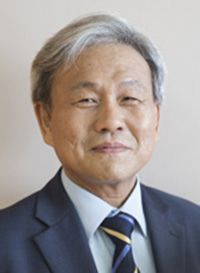
Choe Chong-dae (choecd@naver.com
) is a guest columnist of The Korea Times. He is president of Dae-kwang International Co., and director of the Korean-Swedish Association.