Art of South Korea-China summit
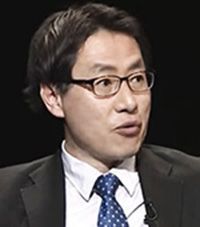
By Lee Seong-hyon
In early April, the government said, "As soon as the coronavirus situation stabilizes, we have decided to push forward Chinese President Xi Jinping's visit to Korea to an early date." The announcement came after a meeting of the foreign ministers of South Korea and China in the Chinese coastal city of Xiamen.
Xi's visit to South Korea falls in the realm of diplomatic negotiations and political decisions between the two countries. As a result, the possibility of the visit remains open. However, from an analytical perspective, there are also some factors that may make it difficult for the summit to materialize. Here are some observations that support this rationale.
First, China tends to withhold new diplomatic initiatives with South Korea when the President of Korea enters the fourth year in office. It is because she or he enters the supposed “lame duck period.” China waits for the next South Korean government. China displayed this pattern during the Lee Myung-bak, as well as the Park Geun-hye, administrations. Park's term was prematurely terminated due to her impeachment.
The Korean Constitution stipulates that the president serves a single, five-year term. It is difficult to ensure the continuity of diplomatic agreements, especially long-term projects, under the South Korean presidential system. In addition, the polarized, partisan politics of South Korea often abandons or repeals the previous administrations' policies.
This aspect is especially true when it comes to North Korea policies, which China considers sensitive. China is well aware that the North Korean issue is the most important agenda item for the South Korean side. At the same time, China has also learned that the South Korean government in the past pursued completely different, even contradictory, policies toward North Korea, based on its ideological tendencies, and asked for China to be in line with the South Korean government's policy position at the time. “Last time, the South Korean government asked us to choke North Korea's neck. This time, the South Korean government asked us not to. We don't know whose rhythm to match,” a Chinese interlocutor once complained.
Second, it doesn't seem clear what both South Korea and China can achieve from the summit. A summit is an occasion where the top decision-makers of both countries meet in person and sign major policy and diplomatic initiatives. As mentioned, however, President Moon Jae-in has entered his final year in office. China is well aware that Moon's power is waning.
China's biggest foreign policy mandate is how to manage the current U.S.-China rivalry. Under such a strategic calculus, its ultimate concern with Seoul, a U.S. ally, is how the latter positions itself between the two global superpowers.
This situation has a lot of geopolitical ramifications. For instance, it involves whether South Korea will join the Quad, or whether South Korea will continue to cooperate with China and supply advanced semiconductor chips. The same is true of the human rights issues concerning China, as well as the possible consideration by Washington of boycotting the 2022 Beijing Winter Olympics, in case the U.S.-China rivalry intensifies further. As a U.S. ally, South Korea has to make decisions.
China seems to believe that South Korea, a democratic nation, is, eventually, likely to lean toward the U.S. side in the overall scheme of policies. This calculation will be especially true if the next South Korean government is from the conservative wing.
Third, COVID-19 infection numbers remain in the triple digits in South Korea. It was reported that China considered Xi's visit last fall, but scrapped the plan, as the number of infection cases in South Korea rebounded. The Chinese side hoped to use the summit to highlight the fact that both China and South Korea are Asian countries that successfully contained the pandemic, underscoring Asian values and Asian governance. Xi reportedly has said, "The East rising, the West declining" (dong sheng xi jiang).
Fourth, currently, there is an unprecedented level of anti-Chinese sentiment in South Korea. The gradually rising South Korean antipathy toward China has been, in fact, snowballing, since Beijing's economic retaliation against Seoul for the deployment of THAAD, followed by Xi's revisionist speech on the Korean War. When it rains it pours. Unfortunate skirmishes ensued. There was the Chinese uproar over K-pop band BTS displaying solidarity with the United States. Many South Koreans took great offense when some Chinese people claimed the Chinese origin of Korean cultural staples kimchi and hanbok, to name a few.
All politics is local. Xi Jinping's visit to South Korea, if it materializes, will also be factored into South Korean politics, which is entering the presidential campaign season. The government here will take that into consideration.
Lee Seong-hyon (sunnybbsfs@gmail.com), Ph.D., is the director of the Center for Chinese Studies at the Sejong Institute