Photographing snowy Korean winters
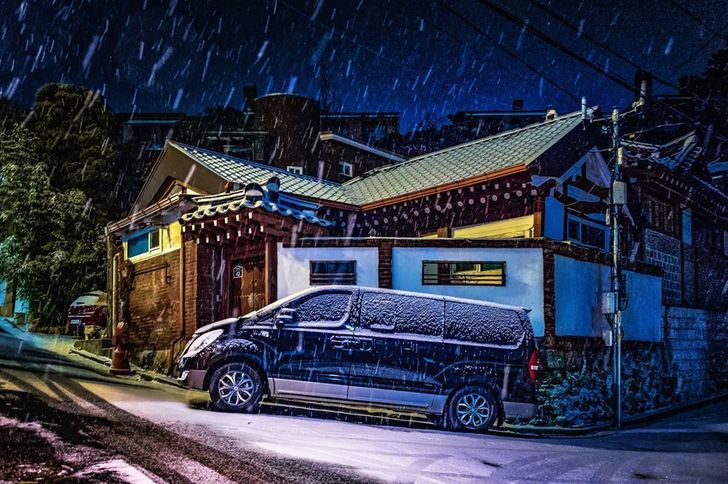
Cheongun-dong. Photo by Tom Coyner
By Tom Coyner
With each passing year, I must confess I’m less inclined to leave the warm comfort of my home and office to venture out into the cold brace of winter. But, like so often is the case with anything, when one pushes oneself, the rewards often match or surpass the sacrifices.
So stepping out into the cold, one can say there three classes of snow image opportunities. The first is when one can anticipate ahead of time there are great photos to take. For 15 years, I lived almost next to Changdeok Palace with its amazing Biwon or Huwon traditional gardens. When it snowed heavily one Sunday evening with promises of clearing skies the next morning, it was obvious I would have to be at the ticket counter to buy a position in the first tour of the day. It turned out at least half of the other visitors in that tour were photographers and the guide was good-natured enough to accept that most of us were not listening to her excellent narration. In such case, one has to be ready to shoot often and quick, since in guided tours one is not allowed to hang back and take one’s time. Nonetheless, the results speak for themselves.
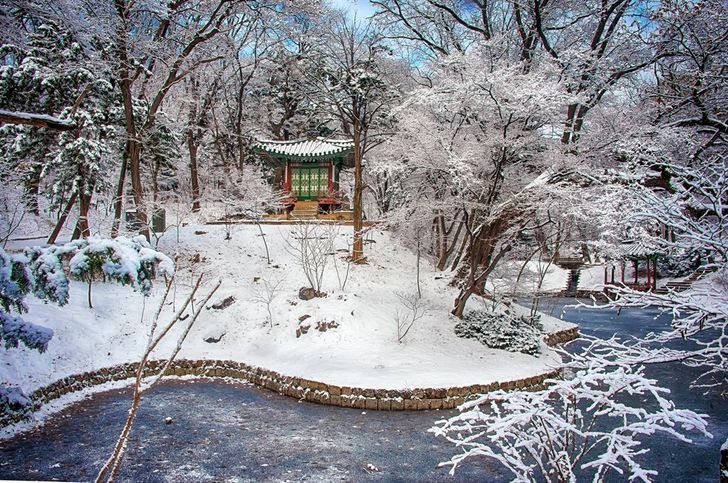
Biwon Small Pond Pavilion. Photo by Tom Coyner
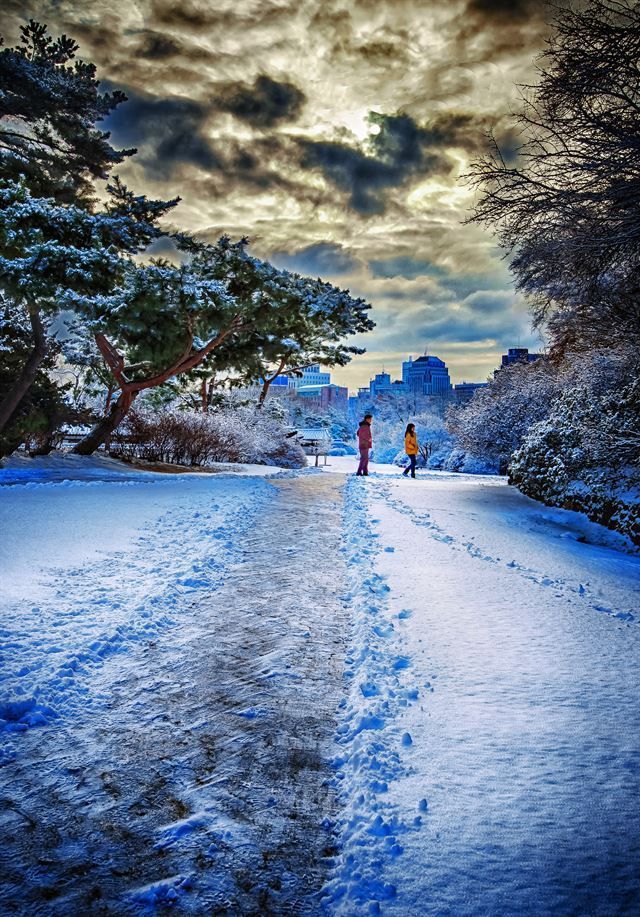
Changdeok Palace Sun Path. Photo by Tom Coyner
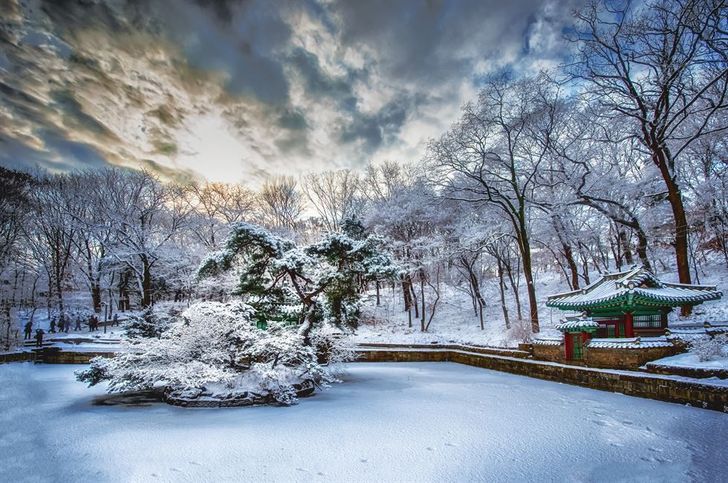
Seoul Biwon Main Pond Cloudy Sun. Photo by Tom Coyner
The second class of snow photography is when one purposely goes out to enjoy the snow by oneself or with one’s family. Some of these images were taken in visiting a temple in Cheonan on New Year’s Day.
And finally, there are those moments of serendipity when one is unexpectedly caught in the snow and by good chance one has one’s camera. Such was the case as I made my way home on the slope of Mt. Inwang in Cheongun-dong during a snowy evening a month ago.
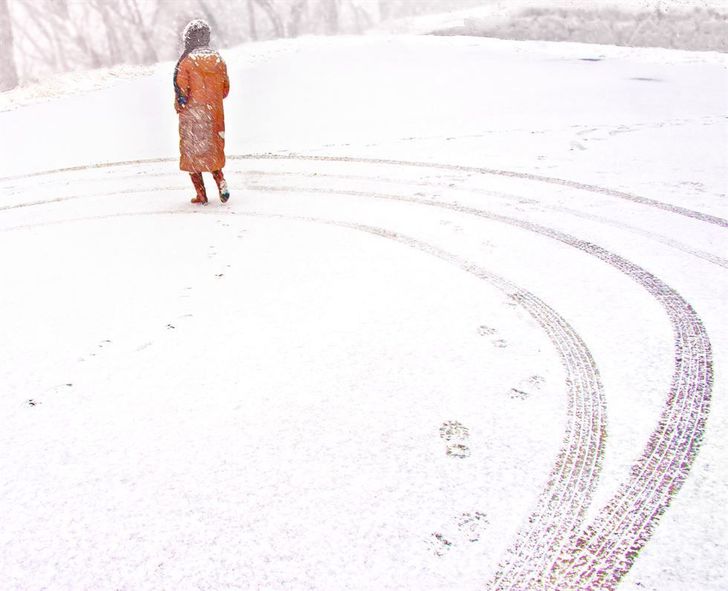
Mi-jong In Snow. Cheonan. Photo by Tom Coyner
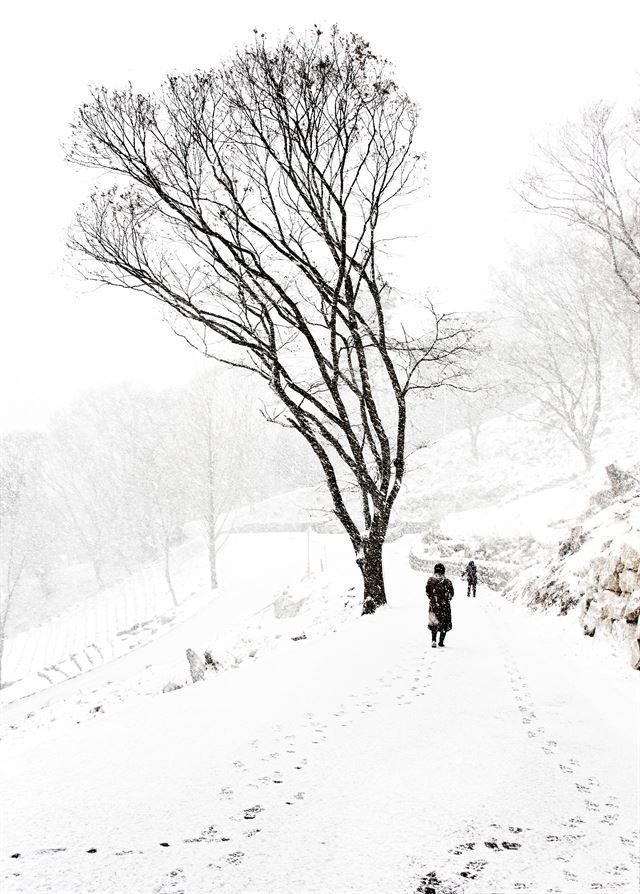
Hikers In Snow. Cheonan. Photo by Tom Coyner
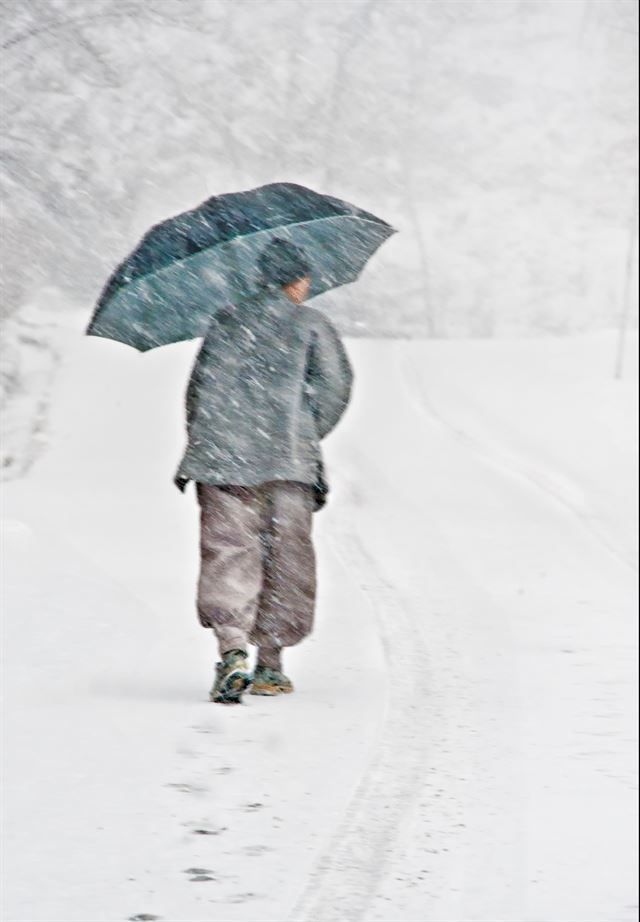
Monk. Cheonan. Photo by Tom Coyner
In general, snow often presents some unique challenges. First, snow reflections tend to fool your meter so it underexposes. It’s almost counterintuitive, but when photographing in bright snow, it is often necessary to overexpose from what your camera suggests. When having to shoot quickly while being part of a moving group of people, it is almost required to bracket one’s exposures, since one is unlikely to expose correctly on the first attempt.
Another point worth knowing is most modern cameras are surprising resilient in the snow. Most cameras are more weather/water-resistant than one may assume. Nonetheless, it is an excellent idea to have a soft cloth, such as one made from an old undershirt, to wipe the snow from the camera, while being mindful of keeping the lens dry of water and snow, with special attention to wipe the front of the lens frequently with a microfilament cloth. And finally, should one shoot for an extended period of time in -10 degrees Celsius or colder temperatures, it may be good to keep the camera warm by keeping it under your coat as much as possible, as batteries often slow down or even stop working in extreme cold.
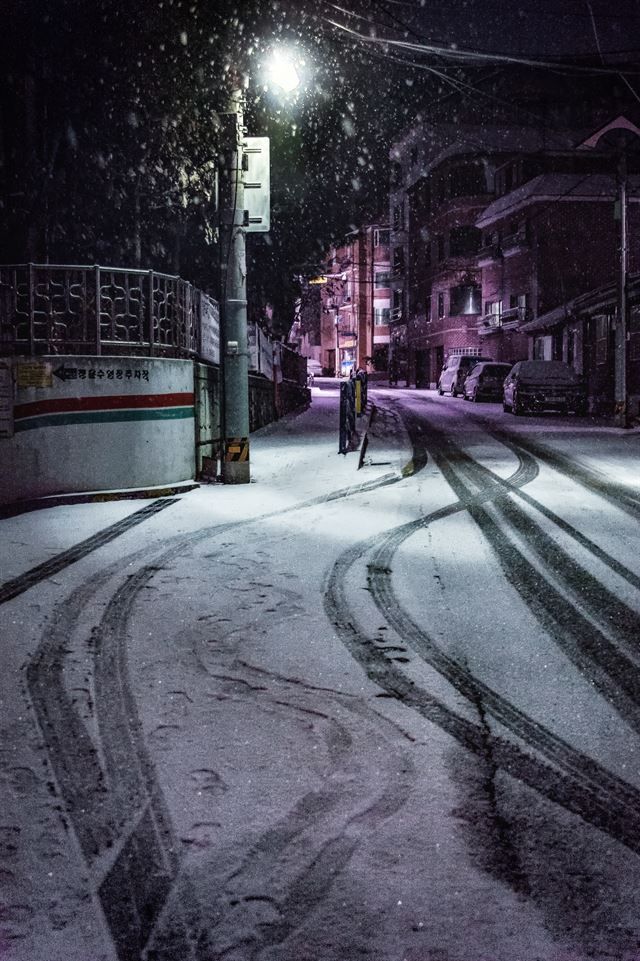
Cheongun-dong. Photo by Tom Coyner