Does patent law boost or harm innovation?
By Cho Mu-hyun, Kim Yoo-chul

Samsung’s Galaxy S3
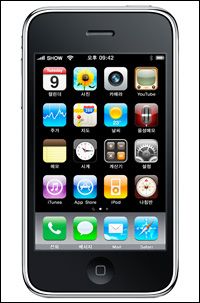
Apple’s iPhone 4

The headquarters of Samsung Electronics in Gangnam, southern Seoul
Are patent laws in the United States helping or hampering innovation? This question is surely one of the top issues as Samsung and Apple are embroiled in a global patent war.
It’s too early to say that patent laws are an innovation killer or a source of energy for the world to see more innovation.
But some patent experts and analysts think what’s in jeopardy is the complex relationship between imitation and innovation. They say whether Samsung copied some features of Apple’s i-products is hardly in doubt.
``Companies innovate when innovation is more profitable than imitation. Innovation declines if a rival company can sweep in. But one clear point is innovation is desirable when it produces positive external benefits for an entire society. Therefore, what’s in question is the proper role of patent laws,’’ said a senior official from the Korea Intellectual Property Protection Association (KIPPA) by telephone on Monday.
Some are claiming that the patent law system is already broken. David J. Kappos, the head of the United States Patent and Trademark Office, recently remarked to the contrary.
“The explosion of litigation we are seeing is a reflection of how the patent system wires us for innovation. It’s natural and reasonable that innovators would seek to protect their breakthroughs using the patent system,” he said.
He strongly denounced statements of a need to fix the system, saying “give it a rest already, give the America Invents Act a chance to work.”
Most industry participants seem to disagree. Though Apple isn’t the only party involved in litigations, as the spearhead of the smart revolution, it has received the most criticism for its involvement.
It is also undeniable that it has been the instigator and plaintiff in most cases across the globe in over 10 courts.
“The patent system’s main purpose has been to give incentive to innovators and protect their rights,” said a patent lawyer at a prominent domestic law firm over the phone. “Especially in smartphones, a compact device that is an accumulation of miniscule technologies, more and more companies are strongly asserting their rights which isn’t against the purpose per se.
“The problem is that even the owners of insubstantial technologies are trying to maximize that right. The question raised by the design patent argument of Apple, a right given by legal authority, is how much protection should be given to what variety of innovations,” he added.
Most businesses have publically tried to enunciate their opposition to litigation, which shows that being involved in lawsuits or starting one never results in building a good company image.
High-level executives from Internet giant Google, which provides the now dominant Android operating system, have been vocal of their opposition. “Products and services ― not legal claims ― are what improve the lives of hundreds of millions of Americans and billions of people around the world,” Kent Walker, senior vice president and general counsel at Google recent wrote at Wired. LG Electronics recently released a catchy ad in prominent U.S media that read, “We Make Phones Not War.”
Whatever the arguments, the fundamental and existential questions still remain of the patent system in general.
“There are two goals for the existence of patent laws. First is to protect the individual innovator. The second is to promote the industry,” said Kim Kyung-hwan, a lawyer for domestic law firm Minwho by telephone. “The right balance of the two to achieve both goals is the best environment for the patent system to work. The general atmosphere continues to change along the way.”
“Especially in the United States, the current ambiance seems to support the former, represented by Apple, which can be detrimental to business and the market to flourish. Samsung’s argument on the other hand is for the latter. There is a need to think of the public good at this point,” he added.