Why we need full-fledged int'l forum
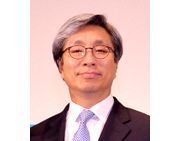
By Moon Tae-young
We are living in the era of globalization, witnessing diverse domestic issues crossing national borders and affecting other countries. New challenges from nuclear security, climate change, stalling economic growth, terrorism, new epidemics, and cyber-terrorism pose problems that cannot be solved by any single country. The world is, therefore, in dire need of cooperation between countries and regions and efforts to find new communication channels for the sake of coexistence.
For this reason, global discourse venues such as the World Economic Forum in Davos, attended by world opinion leaders, and the BOAO Forum, wholeheartedly supported by the Chinese government, draw greater attention. Korea also has an international forum that brings together government officials and civil experts to discuss diverse global issues, including diplomatic and security agendas, which is the “Jeju Forum for Peace and Prosperity,” slated for May 25-27 this year, on Jeju Island.
The 11th Jeju Forum, with the theme “Asia’s New Order and Cooperative Leadership,” has comprehensive agendas for 69 sessions operated by 39 organizations, including the Ministry of Foreign Affairs, the Korea National Diplomatic Academy, and the Korea Foundation, as well as U.N.-affiliated agencies and business organizations. More than 4,000 participants from 60 countries are expected to attend. The forum’s agendas cover all aspects of current issues, including North Korea’s nuclear threats, the new climate system after the Paris Agreement, the safety of nuclear energy, responses to terrorism, the startup ecosystem, and the electric car revolution.
Similar to the BOAO Forums, the Jeju Forum was started in 2011 at a representative vacation spot, Jeju Island, as a multilateral dialogue for peace and co-prosperity. Presidents or prime ministers of Korea attended previous forums and were joined by high-profile figures such as U.N. Secretary General Ban Ki-Moon, former German prime minister Gerhard Schroder, former Japanese prime minister Fukuda Yasuo, former Chinese vice premier Qian Qichen, who all delivered peace messages at the forum.
This year’s forum will be joined by former Japanese prime minister Tomiichi Murayama, former Malaysian prime minister Mahathir Mohamad, former Singaporean prime minister Goh Chok Tong, CEO of Siemens AG Joe Kaeser, co-founder of Tesla Motors Jeffrey B. Straubel, as well as other global leaders.
The Jeju Forum is the only international forum focused on diplomacy and security held under the co-sponsorship of the central and local governments of Korea. It is now said to emulate other esteemed international forums, judging by the high-profile participants, speakers and relevant topics.
We need to further develop the Jeju Forum, which is a “1.5 track (a mixture of government and civil sectors)” dialogue, as Asia’s representative forum. As China propagates development strategies and international policies via the BOAO Forum, which is nominally operated by civil organizations, Korea should utilize the Jeju Forum as a channel to distribute valuable information, opinions, wisdom, and ideas. The need to do so is confirmed by the achievement of the public diplomacy networks that the forum has established thus far.
With the advent of the 21st century, Asia has emerged as one of the major engines of the world’s economic growth. However, there exists the “Asian paradox” of deepening conflicts over political and security affairs in
conjunction with widening economic interdependency among Asian countries. The Jeju Forum is a communication channel for mapping out Asia’s future.
The Korean government needs to enhance the forum’s international status and utilize it as a platform for global issues. To do so, the president of Korea and other high-ranking government officials should attend the forum on a regular basis. It is time for the forum to gather wisdom and play an active role in pursuing a new Asia.
Moon Tae-young is President of the Jeju Peace Institute and Executive Chairman of the Jeju Forum for Peace & Prosperity. He had a diplomatic career serving in Canada, Thailand, and the United Nations. He served as Ambassador to the Federal Republic of Germany, Ambassador to Panama and Spokesperson of the Ministry of Foreign Affairs of the Republic of Korea.