Proposals for N. Korea policy
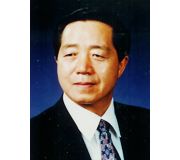
By Kim Myong-bai
President-elect Park Geun-hye, concerning the North Korea policy of the next government, has been maintaining the position that the new administration will pursue principle-centered dialogue with Pyongyang, reflecting public opinion that wants reconciliation and cooperation with the communist state.
Still, the two major principles of the North Korean despotism are the communization of the Korean Peninsula and the resolution of its economic crisis.
The former has been the unchangeable ``revolutionary goal” of the North Korean regime, and the latter is an unavoidable phenomenon arising from the political undemocratic rule and the economic ineffectiveness of the North’s authoritarian leadership.
As long as the North Korean government concentrates its efforts on the withdrawal of the U.S. forces stationed in Korea, and the extortion of economic assistance from South Korea, relations between the two Koreas will continue to be a zero-sum game, in which there are no winners or losers.
Moreover, both the possibility of the withdrawal of the U.S. forces from South Korea and the extortion of economic aid from abroad have been decreasing as time passes.
The more North Korea depends on economic assistance from China, the deeper its political dependence on Beijing becomes. The North Korean authorities aggressively attempted to recover the unconditional provision of economic help from South Korea, by attempting to establish a pro-North Korean government in the 2012 presidential election.
As is well known, such attempts went nowhere as South Korean voters chose change amid stability, amid eagerness to revive ``the miracle of the Han River” in the 21st century.
The next five years under the new government will be a watershed to decide the destiny of the divided peninsula. There is fat chance that North Korean society will experience a ``tsunami of reform and opening-up,” which couldn’t be discouraged even by Pyongyang’s ``military-first policy.”
As the socialist country moves closer toward 2020, the so-called ``market generation” is expected to appear in North Korean society amid a rapid generational shift.
This generation, who were born in the early 1990s when the economy fell into the abyss owing to the demise of the Soviet Union, the death of Kim Il-sung, and the repeal of the state distribution system, is known to be the most miserable generation, afflicted by hunger, malnutrition and stunted growth amid the so-called ``March of Hardship.” They are known to feel a strong antipathy to the propaganda and ideological indoctrination of the government.
It is a very important task entrusted upon the new government to make the utmost efforts to persuade the North Korean authorities that it is not absorption but ``peaceful coexistence on the Korean Peninsula” that the South Korean people want to realize with their North Korean counterparts.
This notwithstanding, the new government should be ready to strongly retaliate to any North Korean provocations based on ``principle.”
Last but not least, the incoming administration should persistently pursue ``humanitarian aid” without any political motivation to win the hearts and minds of North Koreans and move together toward a peaceful coexistence of both Koreas.
The writer, a former ambassador in Brazil, currently serves as an adjunct professor of the Hoseo University. His email address is mailto:mbkim77@naver.com.