KOGAS to use distribution stations as hydrogen car charging infrastructure
By Nam Hyun-woo
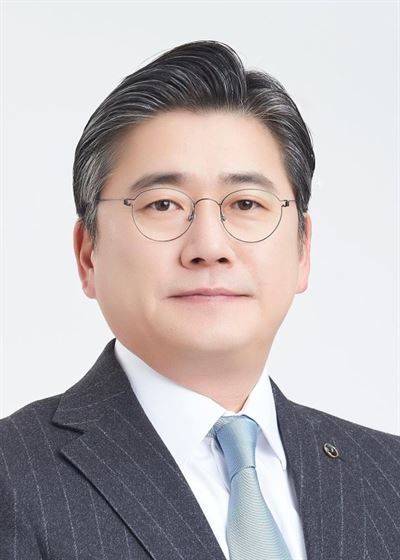
Korea Gas Crop. CEO Cheong Seung-il
PYEONGTAEK, Gyeonggi Province -- Korea Gas Corp. (KOGAS) said Wednesday the state-run liquefied natural gas (LNG) provider will use its gas distributing stations across the country as charging stations for hydrogen cars.
“KOGAS is running more than 400 LNG distribution stations across the country and it is looking forward to using those facilities as hydrogen car charging stations,” KOGAS CEO Cheong Seung-il said during a press conference at the company's terminal in Pyeongtaek.
Cheong's remark came hours after KOGAS, the Ministry of Trade, Industry and Energy, Hyundai Motor and other hydrogen-car related companies and institutions agreed to establish a special purpose company for hydrogen car charging stations in the country.
“Currently, using LNG is the most economic way of producing hydrogen for cars, and KOGAS could be the most efficient company in producing and providing hydrogen,” Cheong said.
“Like Korea National Oil Corp. overseeing the prices and the volume of transactions of petroleum products, KOGAS can be an overseeing body of information and data coming from hydrogen transactions and distribution.”
Cheong stressed that LNG is under the spotlight as a sustainable energy amid the Moon Jae-in government's initiative to drive the country free from nuclear energy.
“In the government's initiative, renewable energies will account for 20 percent of the country's total energy supply, while the reliance for coal and nuclear energy will decline,” he said. “LNG will be a bridge between the transition from old generation energies and new renewable energies.”
Cheong, who took the post in Janaury, also said that KOGAS will enhance its effort to diversify the source of LNG imports during his tenure.
“The mandate of KOGAS is providing LNG to the public safely at low cost,” he said. “For that KOGAS will highlight three principles of price competitiveness in importing LNG, flexibility in import deals and diversification of importing sources.”
Currently, KOGAS relies on 30.8 percent of its LNG import from Qatar, followed by 18.6 percent from Australia, 11.3 percent from Oman and 10 percent from Malaysia.