Curfew created unique nighttime culture in 1970s

Curfew violators queue to board a vehicle in April 1960 in the southeastern coastal city of Masan, present-day Changwon. They were arrested and released after paying fines. The night curfew had been in place between September 1945 and January 1982. / Korea Times photo file
Veteran staffer recalls fond memories of making newspapers for 4 decades
By Kang Hyun-kyung
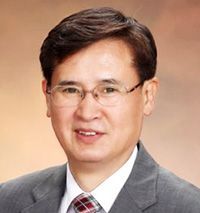
Son Dae-sik, section chief of The Korea Times Advertising Bureau / Korea Times
A curfew that had been in place in Korea for over 36 years since 1945 for security purposes had created a unique nighttime culture for media people.
Having no place to go in the midst of the curfew, some went to nearby bars or tearooms, which were opened only for journalists or for those working in media, to kill time before the curfew was lifted in the morning.
Their hours-long chats with fellow workers helped them deepen their bonds.
When the curfew was in place, all citizens were ordered to stay indoors from midnight until 4 a.m. Those who violated the curfew were subject to fines or detention by the police.
Journalists and media workers were no exception. The tricky thing was the deadline for the newspapers’ city editions. Media people had to complete the city edition no later than 1:30 a.m. amid the curfew.
The clash between the curfew and city editions stirred the public about the journalists’ whereabouts after their night shifts in the 1970s — how were they able to safely return home with the curfew in place?
Son Dae-sik, section chief of The Korea Times Advertising Bureau, said there were loopholes that helped the media survive the nighttime regulation.
“At that time, you had two options in case you worked the night shift,” he said. “You spend the night at the newsroom until sunrise, or go to a nearby bar or tearoom.”
According to him, there were old-fashioned coffee shops called “dabang,” humble bars and small restaurants that were secretly operated all throughout the night.
These facilities were for journalists and other media workers only.
Such a bold business practice was possible partly because the Gwanghwamun area was the heartland of the mainstream media. Several print media groups, including The Korea Times and its sister newspaper Hankook Ilbo, and wire media were based in the central Seoul district at that time.
Once journalists and newspaper staff finished their night shifts, some of them walked down to the district to find a place to rest.
Like other stores, their front doors were closed tightly. But owners, who recognized the familiar voices of the media staff, would come out once the media people knocked on the doors and usher them inside.
“I usually went there with two or three Korea Times staffers with whom I worked with at night for the city edition,” said Son. “We would order one bottle of soju, along with a bowl of haejanggook (a meat soup with vegetables) as a side dish. A bottle of soju was good enough for us to continue our chat about our lives and families until the curfew was finally lifted.”
The nighttime regulation on outdoor activities was in place here for 36 years and four months since the U.S. military government first introduced it to maintain security and order following Korea’s independence from Japan. It was lifted in 1982.
At 10 p.m., radio stations sent off a reminder about the looming curfew with calm background music. “Boys and girls, it’s late at night and be prepared to get home,” an unknown voice actress’ reminder signaled that people had only two hours to go until curfew.
Taxis, buses and subway stations became crowded by 11 p.m. as people rushed to public transportation to arrive home before curfew.
At midnight, barricades were set up in streets after a curfew siren was sounded and a two-man team of security forces blew whistles whenever they discovered people violating the regulation.
Once caught, the violators had to pay fines or were detained.
Son said he had night shifts every four or five days in the 1970s because of a staff shortage. At that time, The Korea Times printed eight-page editions every other day. Once the curfew was over, he said he went back home via subway. After hours of sleep, he returned to the newsroom by 3 p.m. and repeated his daily routine for four decades.
Since he joined The Korea Times media group as an administrative staffer in 1977, Son has worked with The Korea Times and Hankook Ilbo for 40 years.
His four decades of service in the print media ended on Monday. He retired, ending his decades of dedication to the newspaper. He is to be awarded a medal of appreciation, along with a certificate, by the newspaper in November on the occasion of the 66th anniversary of The Korea Times.
Son’s friendly, down-to-earth personality and willingness to help others when they are in trouble enabled him to gain many friends of all ages in the newsroom.
Korea Times reporter Ko Dong-hwan calls Son a role model for other staff in the newspaper, saying Son is a versatile man.
“Mr. Son works hard and he is probably the most diligent staffer at The Korea Times,” he said. “He is the first person to arrive in the newsroom and the last man to leave. He worked six days a week, except Saturday. He has done this for 40 years. He is the man that every editor looked for whenever they were struggling with layouts.”
Asked what kept him at The Korea Times media group for four decades, Son said making newspapers is a fun and enjoyable job.
In the past, he said some people read English newspapers to show off that they are educated and intelligent.
“But readers these days are practical. They read English newspapers for information,” he said.
One of the tricky things that he had to deal with in the 1970s was the public’s ignorance of media staff who were not journalists.
“It took time for me to convince them to believe that there were staff in the media who are not reporters. People outside the newsroom didn’t understand that there were technical staffers there,” he said. “One day I joked that our president never covers stories.”
Son said he feels proud of what he has been doing for the past four decades in The Korea Times media group.
“Over the decades, I have always had a kind of pride of being part of the media,” he said. “Unlike other commodities, there is no inventory in the newspaper industry. Newspaper articles are valuable and will be of use to inform the public of what’s happening. If stories are of no value, they are not articles.”
Son said he has no regrets about his career choice. During his tenure at The Korea Times media group, the newspaper industry has waxed and waned.
Citing several major international sporting events as high points for The Korea Times, he said such global events highlighted the role of the English media because foreign athletes, staff and government officials read the newspapers to learn about the country and keep them updated about what’s going on here.
“Among others, I think the 1988 Seoul Olympics and the 2002 World Cup are the two major events that raised the profile of the English media published in Korea,” he said.