Choonwon: how daughter sees modern literary pioneer

The late writer Yi Kwang-su with his children / Korea Times file
By Lee Chung-wha
In the past 20 years, I have been able to collect four essays related to Choonwon from The Korea Times. These essays are dear to me.
My father, Lee Kwang-su, born in 1892, was arrested by a North Korean agent and forced to go to North Korea in 1950, the first year of the Korean War, and died in captivity there the same year.
My father was known to be a pioneer of modern Korean literature and an independence fighter who later became an unwilling pro-Japanese collaborator. His name is sometimes written as Yi Kwang-su, and his pen name, Choonwon, is sometimes Romanized as Chun-won.
In the piece “In Memory of Yi Kwang-su,” published in two parts in the Opinion section on Aug. 6 and 8, 1991, Kim Byong-kuk introduced Choonwon’s major works: “Maui Taeja” (Prince in the Hemp Dress, 1928), “Tanjong Aesa” (The Tragic History of King Tanjong, 1928), Yi Sun-sin (The Biography of Admiral Yi, 1931), “Huk” (Soil, 1933), “Sarang” (Love, 1938-39) and “Wonhyo Taesa” (The Great Buddhist Monk Wonhyo, 1941).
In another article, about the Feb. 8 Independence Declaration in Tokyo in 1919, about one month before the March 1 Independence Movement in Korea, Kim wrote about how Choonwon composed the Tokyo Independence Declaration and then translated it into English.
His translation was later edited by Rev. Henry M. Landis. Prompted by his patriotism and desire for Korean independence, Choonwon appealed to the international audience through an English translation of the document, a strategy considered brilliant by many people outside Japan and Korea at the time.
Choonwon was ahead of his time. He must have known the importance of the document’s English version in telling the world about the Korean students’ demonstration for the Feb. 8 Declaration of Independence.
In 1937, Choonwon was imprisoned by Japanese authorities for his involvement in independence activities. After six months of confinement in the hospital ward of the Seodaemun Prison, Choonwon was released on bail. It was around this time that he was forced to collaborate with Japan.
After the liberation on Aug. 15, 1945, Choonwon was loudly denounced as a collaborator and a traitor to the fatherland. Was Choonwon really a collaborator? If he was, why? In his article, Kim talked about why Choonwon collaborated with Japan and why he urged the Korean students to fight for the Japanese cause during the Pacific War.
Kim was able to speak to Choonwon face-to-face on this matter. When he was facing conscription into the Japanese army, he visited Choonwon with a friend at his villa in the northern outskirts of Seoul.
In his two-part piece for The Korea Times, Kim wrote, “After hearing out what we had to say, Choonwon talked of memories of his youth, his views on Christianity, the backdrop of his conversion to Buddhism, his philosophy of history, nationalism, and so on … Instead of restraining us directly, Choonwon suggested that we should start first with something seemingly unimportant.”
“He cited a Buddhist sect called Ittoyen (One Lantern Society) headquartered in Tokyo. The monks belonging to the sect were renowned for making the rounds of homes to do voluntary cleaning of latrines and other dirty places the people would shy away from. Chunwon lay down on the mattress and continued talking. We frequented his villa several more times,” Kim added.
He continued, “I faced conscription myself, but I accepted it willingly taking the hint from the hidden message of Choonwon. I wanted to learn how to handle a rifle for the day when such training would be needed for our nation and also wanted to cross over to the side of the Korean Provisional Government when given the chance.”
On Sept. 14, 1991, Cheung Heung-shin published an article in response to Kim’s article. In the Thoughts of the Times article, titled “Exiled artist vs. involved artist,” she compared Irish writer James Joyce (1882-1941) with Yi Kwang-su. They were contemporaries in that they were both born under imperial rule.
Joyce left Ireland to pursue his literary career, and his writing focuses on cultural cosmopolitanism and individual consciousness and does not confront colonial issues.
Choonwon, on the other hand, wrote inside his own country while it was under the iron grip of Japan. Thus, Cheung argued, he was drawn into the whirlpool of national tragedies and forced to compromise with the colonial power in order to mitigate the sufferings of the Korean nation.
Kim wrote about Choonwon again in his two-part essay, “February 8 Declaration of Independence,” published on March 28 and April 4, 2000. Patriotic Korean students read the Declaration at the YMCA in Tokyo, and all but one signatory of the document were arrested.
The declaration can be found only in the archives of the Independence Hall in Cheonan. Since it is an important document, it is strange that the the National Assembly Library does not have a copy.
Prof Choi Yearn-hong, in the guest opinion piece titled “Choonwon: Korea’s Leo Tolstoy,” published on April 4, 2014, recounted Choonwon’s life as a writer, publisher and editor of newspapers. Choonwon wrote to educate young Koreans and open their eyes to patriotism, he concluded. He also talked about why Choonwon collaborated with Japan.
Choi addressed the present and never-ending censorship or punishment of past Japanese collaborators and wonders whether it is time to move on from this.
He wrote: “I would like to propose that the so-called pro-Japanese Korean people who collaborated with the Japanese authorities before and after the Pacific War (1940-45), be pardoned with our sympathy and compassion. So many good Korean people have been listed as pro-Japanese collaborators. That may be unfair, unjust to them. The heart of nationalism is sympathy and compassion.”
I am thankful to The Korea Times for printing these four articles that I have collected over the years. I am honored to celebrate The Korea Times’ 20,000th edition from Philadelphia.
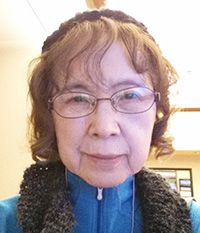
Lee Chung-wha received a doctorate in organic chemistry at Bryn Mawr College in 1968. She worked as a research associate in the field of muscle contraction at the University of Pennsylvania. She was a visiting professor at Gyeongsang National University, Jeju National University and Seoul National University.