U.S. envoy's departure triggers concern

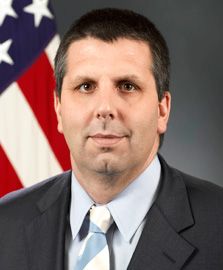
Sung Kim
By Yi Whan-woo
As U.S. Ambassador Sung Kim prepares to leave his post for a new role, many here are expressing concern over the way Washington is coordinating the change at the U.S. Embassy.
The U.S. State Department recently tapped Kim as assistant secretary of state for East Asian and Pacific Affairs, according to the Ministry of Foreign Affairs on Tuesday. The Korean-American has also been nominated as special representative for North Korea policy, the ministry added.
Washington’s plan to promote Kim to a bigger role in Asia comes amid delays in the U.S. Congress in ratifying Mark Lippert as Kim’s successor.
According to a government source, Kim is expected to leave for his new job by the end of this month at the earliest. Lippert, 41, will be the youngest U.S. ambassador to South Korea if he assumes the position.
He has been a focus of attention in the South Korean media since President Barack Obama tapped him for the role on May 1.
However, Republicans on the U.S. Senate Foreign Relations Committee have been opposing Lippert’s appointment. They claim he is a political appointee and is ill-equipped to head the Seoul embassy, according to a government source.
Lippert currently serves as chief of staff to U.S. Defense Secretary Chuck Hagel. He worked as a senior foreign policy adviser for Obama during the 2008 U.S. presidential election campaign.
After Obama’s inauguration, he worked as deputy assistant to the President and then was named chief of staff for the National Security Council (NSC) until 2010.
Considering the delay in ratifying Lippert, pundits in Seoul are now concerned about Obama’s choice to appoint him, and some have expressed doubt that he is the best person for the job.
A U.S. ambassador to South Korea must be capable of dealing with rapid change in Northeast Asia’s geopolitical landscape, amid the emergence of China as a world superpower as well as North Korea’s growing military threat.
Critics here also have suggested that Lippert lacks “political weight” compared with Washington’s ambassadors to China and Japan.
U.S. Ambassador to China Max Baucus served in the U.S. Senate from 1978 to 2013 and was Montana’s longest-serving U.S. Senator.
He also has extensive experience in international trade. As chairman of the Senate Committee on Finance, Baucus led the passage and enactment of free trade agreements with 11 countries — Australia, Bahrain, Jordan, Chile, Colombia, Morocco, Oman, Panama, Peru, Singapore and South Korea.
Caroline Kennedy, the daughter of late U.S President John F. Kennedy, serves as the U.S. ambassador to Japan.