Five loose cannons strain Korea-Japan relations
Tokyo lacks Berlin’s war contrition, experts say
By Chung Min-uck
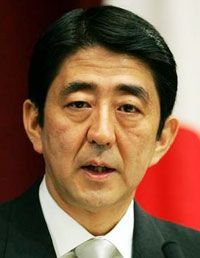
Shinzo Abe, Japanese Prime Minister
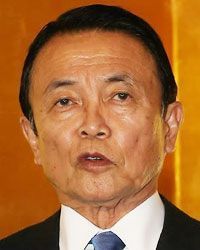
Taro Aso, Deputy Prime Minister
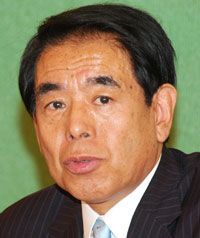
Hakubun Shimomura, Minister of Education
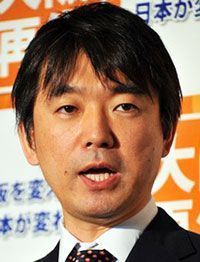
Hashimoto Toru, Osaka Mayor
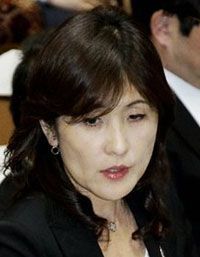
Tomomi Inada, Minister of Administrative Reform
High-ranking Japanese officials have made a series of provocative remarks since the ruling Liberal Democratic Party’s decisive victory in July parliamentary elections, angering South Korea and other neighbors.
Such remarks are expected to worsen the already-soured Korea-Japan ties further.
The verbal provocations reached their peak when Hakubun Shimomura, Japanese minister of education, said Tuesday that the “cultural standard of South Korean people is questionable,” referring to how Koreans cheered for their team during a football match between the two countries at the East Asian Cup on Sunday.
Some Korean spectators at the stadium held up placards calling on Japan to acknowledge its past wrongdoings during World War II.
The Ministry of Foreign Affairs in Seoul soon released a statement expressing regrets over Shimomura’s comments.
A day earlier, during a lecture in Tokyo, Taro Aso, Japan's finance minister and deputy prime minister, said Japan should learn how Germany’s constitution under the Weimar Republic was stealthily revised by the Nazis in the early 1930s before anybody realized what had happened.
The foreign ministry soon lambasted Aso for his irresponsible remarks by saying that “Such remarks definitely hurt many people" and that Tokyo’s political leaders must be “prudent in their words and deeds.”
The minister’s comments suggested that Japan’s right-wing Shinzo Abe government and his ruling LDP seek a constitutional revision to gain military power in a discreet fashion.
Prompted by the July 21 upper house election victory which strengthened the mandate for Abe’s aggressive economic and nationalistic agenda, Japan is aiming to revise the current Pacifist Constitution, which prohibits the country’s Self-Defense Forces to invade others, to give its military a bigger role in the international scene.
Verbally provoking its neighbors by denying its imperial past and laying unjust claims over some territories is considered to be a ploy to consolidate rightist supporters in Japan before pushing for a nationalistic agenda.
Observers say the upcoming Liberation Day which falls on Aug. 15 will be another turning point in the bilateral relationship which will depend on how Japan behaves.
Previously, on Liberation Day _ for Japan the day it conceded defeat over its part in WWII _ Japanese politicians paid tribute to the Yasukuni Shrine which honors Japan’s war dead, including 14 Class-A war criminals. The visit to the shrine has outraged people in Asian countries, including Korea and China, who see it as glorifying Japan’s military past.
Since Prime Minister Abe took office in December, Japanese officials have made countless provocative remarks, further straining Seoul-Tokyo ties.
Abe started off soon after he took power by attempting to undo apologetic statements made by previous administrations regarding Japan’s aggression and wartime atrocities.
In April, during a parliamentary hearing, he questioned the definition of Japanese invasion saying it can be interpreted differently depending on which side you view.
Abe also appointed ultra-rightist politicians in key Cabinet posts including Tomomi Inada, minister in charge of administrative reform.
Inada came under fire for claiming that sexual enslavement during World War II was “legal” and that Japan does not need to apologize and compensate Korean victims.
Inada is one of four lawmakers who attempted to visit South Korea’s easternmost islets of Dokdo in 2011 which Japan lays claim to.
Osaka Mayor Hashimoto Toru is another infamous figure who gained popularity by exploiting nationalist sentiment in Japan.
He recently said that military brothels were “necessary” during wartime to raise the morale of the troops. His comment prompted a severe backlash from nations that suffered during World War II.
The conservative swings spilled over into diplomatic relations when South Korean Foreign Minister Yun Byung-se canceled a ministerial meeting with his Japanese counterpart in April. A summit meeting between President Park Geun-hye and Abe has yet to be scheduled due to conflict over Japan’s wartime wrongdoings.
Despite close economic ties and high interdependence in diverse fields between Seoul and Tokyo, enmity toward Japan runs deep among Koreans due to Japan’s harsh colonial rule of the Korean Peninsula from 1910-45.