'Potential for Georgia-Korea economic cooperation is huge'
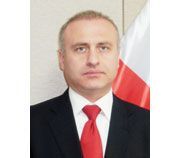
By Nikoloz Apkhazava
On May 26, Georgia celebrates its Independence Day, which commemorates the establishment of the Democratic Republic of Georgia in 1918. In 1991 Georgia regained independence from the Soviet Union. In 1992 it was internationally recognized as a sovereign state and became the 179th member of the United Nations.
Georgia’s strategic location at the cross-roads of European and Asian civilizations, along with its fertile lands and access to the Black Sea, always made the country a lucrative target for the big powers. Throughout more than 4,000 years of history, Georgia has seen numerous invasions and subjugations. Nevertheless, Georgians always managed to liberate their homeland, maintaining a strong national identity, culture, traditions and religion. Georgia has one of the oldest Christian Orthodox churches. Its unique alphabet traces back to 4th century B.C.
In 2003, Georgia witnessed a major political change, when a widespread peaceful uprising led a western-oriented reformers team to power. Complex economic reforms were aimed at fighting corruption, minimizing bureaucracy, eradicating poverty and creating a business friendly environment. Changes in fiscal policy reflected in fewer and lower taxes (from 21 in 2004 to only six flat taxes today), lead to a revival of economic activities, and a steady GDP growth of 7 percent on average throughout 2004-2008 (6.1 percent in 2012). The creation of Free Industrial Zones and a massive privatization process contributed to a significant foreign capital inflow ($2.2 billion in 2007, $814.5 million in 2010, $1.1 billion in 2011, $865 million in 2012).
At the same time, Georgia’s political agenda included strengthening its democratic institutions, improving its human rights, the rule of law and government transparency. The main but not yet achieved objective of both our internal and external policies remains the issue of territorial integrity. In August 2008, Russian military aggression resulted in an occupation of the inalienable Georgian territories of Abkhazia and Tskhinvali region/South Ossetia. Moreover, Russia has recognized their non-existent “independence” and still continues its “recognition” campaign, though unsuccessfully. Nevertheless, Georgia makes efforts to normalize its relations with Russia through economic and cultural exchanges. However, Georgia’s territorial integrity is of supreme importance. Our request is legitimate and therefore firm: Russia should fulfill the 6-point Ceasefire Agreement signed on Aug. 12, 2008, and withdraw its troops from Georgia’s occupied regions.
Georgia has always strived to become a full-fledged member of the European family. Our foreign policy priorities are based on the will and choice of our people. They are firm and clear ― full integration into the EU and NATO.
In October 2012, Georgia held parliamentary elections, which were internationally recognized as the most transparent and democratic polls since Georgia regained independence. The new government’s agenda has an emphasis on social, healthcare, education, and human rights issues. It intends to achieve greater decentralization of executive powers and a higher level of democracy. Its ambitious economic plan includes the creation of special funds to finance prioritized fields. Though the views of the ruling and opposition parties differ on a number of internal policy issues, the Parliament of Georgia unanimously adopted a special resolution on Foreign Policy directions, reaffirming Georgia’s adherence to the Euro-Atlantic integration. The negotiations on Deep and Comprehensive Free Trade Agreement with the EU are almost complete. Georgia cooperates tightly with NATO through a partnership for peace program, taking part in peacekeeping operations in Iraq and Afghanistan.
Another goal of Georgia’s foreign policy is to diversify its international ties, establishing economic cooperation and political partnerships. Georgia attaches great importance to its relations with the Asia-Pacific region, and the Republic of Korea in particular. The opening of the Georgian Embassy in Seoul in 2011 started a new phase in our bilateral relations. In the last couple of years, a number of high-level Georgian delegations visited Korea. The year 2012 marked the 20th anniversary of establishing diplomatic relations, followed by a Korean movie festival and a photo exhibition in Tbilisi. We believe that the opening of the Korean Embassy in Tbilisi will make our relations even more dynamic.
The potential for economic cooperation between Georgia and Korea is huge. Georgia offers unique and diverse investment opportunities and a business-friendly environment. The country’s liberal trade regimes with its neighbors Free Economic Zones, skilled labor and numerous other favorable factors make Georgia an attractive business destination. The steadily growing trade turnover ($55 million in 2011 and over $50 million in 2012) indicates that our relations are on the right path. The embassy will strive to further promote our bilateral ties, and will be happy to guide interested Korean businesses on their way to Georgia.
The author is the Georgian ambassador to Seoul.