Time for joint film project: Amb. Prakash

In this photograph taken on April 29, Indian pedestrians walk past movie posters outside the century-old single screen theater, Imperial Cinema in Mumbai. / AFP-Yonhap
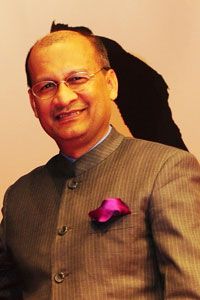
Indian Ambassador Vishnu Prakash
By Kim Se-jeong
Observing the centennial of Bollywood and the 40th anniversary of diplomatic ties with Korea this year, the top envoy of India to Korea called for a new collaboration in filmmaking.
“We should have a Bollywood and Korean film joint project. This is an idea whose time has come,” Ambassador Vishnu Prakash told The Korea Times last Wednesday in his Hannam-dong office.
“If we do a good joint movie on a commercial basis, that can put Korea in the living rooms and bedrooms of Indians, winning the hearts and minds of half a billion people,” Prakash said.
His message came after India’s Ministry of External Affairs commissioned Indian film director, Archana Kapoor, to produce a 12-minute documentary on Korea-India relations.
Kapoor will be in Korea next month on a fact-finding mission and to get inspiration for the project.
The term Bollywood is identified with all movies made in India, but actually refers to the Hindi-language film industry in the Mumbai (Bombay) area.
The term is an adaptation of Hollywood, and began to dance on the lips of people from the 1970s in India, said Ajay Chandpuria, the military attache at the embassy, who also oversees culture and education.
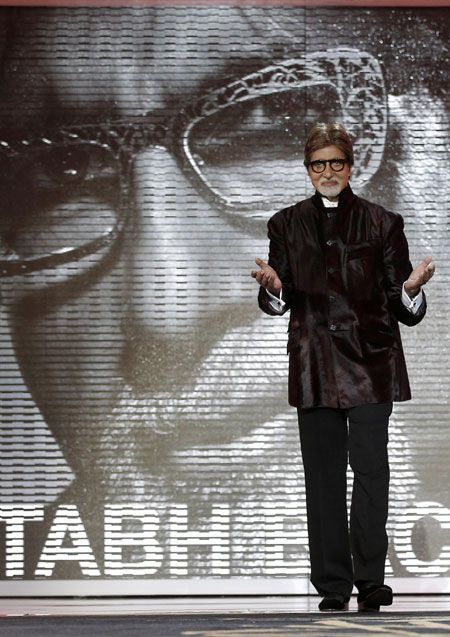
Amitabh Bachchan is Bollywood’s biggest star actor. Bachchan had a small role in “The Great Gatsby,” a 3D extravaganza starring Leonardo DiCaprio. In this photo taken on Dec. 1, 2012, he arrives for the Tribute to Hindi Cinema at the Marrakech International Film Festival in Marrakech, Morocco. / AP-Yonhap
Now, Bollywood is associated with big movie stars like Amitabh Bachchan and Sonam Kapoor.
The history of the Indian film industry dates back to the early 20th century.
The first Indian film “Raja Harishchandra” (King Harishchandra) was directed by Dadasaheb Phalke and released in 1913. It was a silent film.
In 1931, “Alam Ara” by Ardeshir Irani was released, opening the era of talking movies in India.
The film industry based in Mumbai is the most successful and prominent one, but it doesn’t mean that Mumbai is the only place where films aremade.
Chandpuria said 18 film centers throughout the country make movies in different languages, and that makes the Indian film industry the largest in the world by number of productions. In 2011 alone, more than 1,200 movies were approved by the Central Board of Certificates in India.
The structure of the plot with music and dance defines Indian films. Almost always, Indian films have a happy-ending with virtue rewarded and vice penalized.
“It’s pure entertainment. Life is full of difficulties and anguish. Why would you like to pay to see something similar again? You’re there to enjoy,” Ambassador Prakash said.
Indian films have long been exposed to outside markets.
The trigger was “Neecha Nagar” (Lowly City) by Chetan Anand which won the Grand Prix du Festival International du Film award at the first Cannes Film Festival in 1946.
“In Korea, Indian films have a low profile, but Bollywood was quite well known 20 years ago. There was a period when they were not so popular, but they’re coming back,” the ambassador said citing a couple of his Korean acquaintances who shared their impression of Indian films that they had watched.
“Three Idiots,” a comedy drama released in 2009, is the most recent successful one in Korea, according to the ambassador. Worldwide, the same film earned nearly $70 million, becoming the most successful Indian film ever on overseas markets.
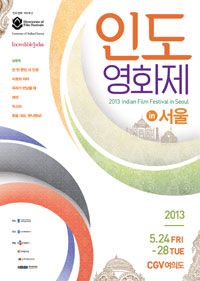
To carry on this momentum, the embassy and the Indian cultural center are bringing Indian films to Korea, and an upcoming festival opens this Thursday in Seoul.
The five-day Indian Film Festival 2013 will feature six films — “Zindagi Na Milegi Dobara” (Once in my life — 2011), “Jab We Met” (2007), “Rock Star” (2011), “Veer-Zaara” (2004), “Fashion” (2008) and “Lage Raho Munna Bhai” (2006).
The venue is CGV Yeouido at IFC mall in Seoul. They were screened in Busan last month, and according to the embassy, 12 screenings drew nearly 9,000 people.
Indian films are also available at the cultural center, which screens one film every month in the center close to the embassy in Hannam-dong, Seoul. The center also offers yoga and dance — both traditional and contemporary — classes with certified instructors from India. Visit https://indoculture.org for more information.
A book project
The Indian Embassy and the Indian Cultural Center will present a book for children on King Suro and Queen Hur Hwang-ok of Gaya (43-532 A.D.) during the Seoul Book Fair, which opens early next month. India will be the guest country. The title of the book was not available for this article.
Queen Hur from India took a three-month voyage to marry Kim Suro. What gives this project prominence is Nagesh R. Parthasarathi, former Indian ambassador to Korea, who authored the book. The Korean translation of his book was published later, and the children’s book is an adaptation of his book.