Tensions high but no full-scale war likely

Barricades are placed at the southern entrance of the Unification Bridge in Paju, Gyeonggi Province, which leads to the Gaeseong Industrial Complex, North Korea, amid escalating tensions between the two Koreas, Sunday. The North threatened Saturday to shut down the joint industrial park, but it remained open Sunday. / Korea Times photo by Shin Sang-soon
NK hysterical over ROK-US show of force
By Kang Seung-woo

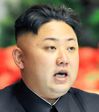
President Park Geun-hye
For one who is not familiar with inter-Korean political theatrics, it could easily be assumed there is about to be another Korean war pitting the South Korea-U.S. alliance against North Korea.
For the worrywarts, here is an experts’ view: a full-fledged war is not likely, although tensions are quite high. But as with any prediction, it can’t be guaranteed100 percent, they say, not ruling out the possibility of a limited-scale attack.
The best of the U.S. military hardware ― B-52 strategic bombers and B-2A stealth bombers ― made public training flyovers as part of the two allies’ show of force in their joint Key Resolve exercise.
The North’s young dictator, Kim Jong-un, hosted an emergency meeting at midnight, calling for missiles to be put on standby and raising his country’s military alertness to the highest level. He threatened to use nuclear weapons against South Korea and the United States. The regime is releasing photo after photo, showing its troops in training.
“There is no chance for the two Koreas to go to war against each other. As Kim Jong-un is smart enough to calculate pros and cons, a full-fledged war is unlikely,” said Chang Yong-seok, a senior researcher at the Institute for Peace and Unification Studies at Seoul National University.
Korea University Professor Yoo Ho-yeol said, “Without North Korea’s decision to risk the collapse of its regime, it cannot push the button to engage in a military campaign.”
On Saturday, the Kim regime’s bellicose rhetoric reached a fevered pitch, with a statement declaring the defiant nation had entered a “state of war” with South Korea.
“From this moment, the North-South relations will be put at the state of war and all the issues arousing between the North and the South will be dealt with according to the wartime regulations,” said the Korean Central News Agency (KCNA), which acts as a mouthpiece for the North.
“The DPRK will immediately punish any slightest provocation hurting its dignity and sovereignty with resolute and merciless physical actions without any prior notice,” the report continued. The DPRK is the Democratic People's Republic of Korea, the North’s official name.
The two Koreas have technically been at war for six decades, as the Korean War ended with an armistice rather than a formal peace treaty in 1953.
Washington and Seoul expressed concern about the North’s unprecedented saber-rattling, including the threat of pre-emptive nuclear strikes on the United States and South Korea.
“We take these threats seriously and remain in close contact with our South Korean allies,” Caitlin Hayden, a spokeswoman for the White House National Security Council, said on Saturday.
However, analysts attribute the aggressive posture to its young dictator’s attempt to consolidate his power in the country founded by his grandfather Kim Il-sung.
“The more hostile words than in the past intend to strengthen his hold on the military and the community,” Yoo said.
“Without the support of the military, he won’t be around for much longer. And so he has to bolster his support with the brass,” Jasper Kim, founder of the Asia-Pacific Global Research Group in Seoul, told CNN.
Chang said a lack of response from the South and the United States is pushing the North to the stepped-up rhetoric.
“Brinkmanship can be successful when the other party responds to it but, since 1993, when North Korea declared a ‘semi-state of war’ to protest joint U.S.-South Korean war games, putting the United States on the brink of war with the North, the South and the United States have been accustomed to those kinds of warnings, and the North is taking on a more virulent tone to get a response,” he said.
However, unlike full-fledged conflict, the world’s most isolated nation can take advantage skirmishes to provoke its southern neighbor.
“As the North attacked Yeonpyeong Island (in 2010), it is possible for the state to use a small-case incident in the five islands in the West Sea,” Yoo said.
“What we worry about is low-level provocations capable of leading to a full-scale war at the border between the two Koreas,” said Paik Hak-soon, a senior researcher at the Sejong Institute.
Hours after its declaration of war statement, the North threatened to shut down the Gaeseong Industrial Complex ― a joint economic cooperation zone between the two Koreas in the North ― in anger at foreign media’s speculation on the zone’s ongoing operation.
“The puppet group of South Korea, its doubtful media and hack writers are saying that ‘the North does not take up the issue of the zone because it is a source for its foreign currency income’ and talking about ‘two faces of the North,’” the KCNA said.
“They are even insulting the dignity of the supreme leadership of the DPRK. The DPRK does whatever it says it will and the future of the zone entirely depends on the attitude of the South Korean puppet group.”
The South Korean government said there is no change in its plan to keep the industrial zone functioning, despite the North’s threat.