K-beauty goods excel in price, quality

Actor Jang Keun-suk’s face adorns Nature Republic’s store in Myeong-dong, downtown Seoul. Thousands of foreigners visit the shop for K-beauty products. / Korea Times photo by Kim Ji-soo
By Kim Ji-soo
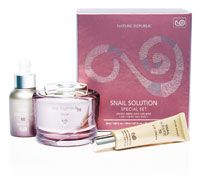
Nature Republic’s Snail-Solution Set, composed of ampule, cream and eye-cream, is a steady-seller for the cosmetic firm. / Courtesy of Nature Republic
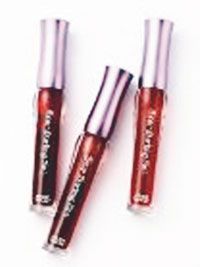
Etude’s Dear Darling Lip Tint is popular among foreign customers Courtesy of Etude
As the sweet smile of Korean heartthrob Jang Keun-suk graces the shop’s walls, foreign visitors begin their shopping at 10 a.m. at the Nature Republic’s shop near exit 6 of Myeong-dong subway station in downtown Seoul.
Visitors, mainly from Asia and familiar with Korean products from their exposure to K-pop and Korean dramas, grab the affordable Korean cosmetics.
“Currently, the Prime Cream is doing very well, with foreign visitors,“ said Jang Sang-ho, deputy manager of the store. The Prime Cream, priced at 120,000 won ($106), is unique with its seven black-colored plant ingredients including black tea, elderberry and black ginseng that allows richer moisture and elasticity for the skin.
But the firm’s existing lines are what keeps the cashiers busy. The Snail Solution Set comprising a cream, an ampule and eye cream, at the price of 69,000 won, is a top-seller. It is made with extracts from the mucus of snails that is known to have the ability to self-heal, and is effective in reducing fine wrinkles, and whitens the skin. The Collagen Dream 90 Skin Booster, selling at 18,900 won for a 150-ml bottle, is another steady seller.
“We see about 4,000 to 5,000 visitors a day. I would say that about 1,000 of them make a purchase,” said Jang. While the number of visitors may seem large, the actual amount of sales isn’t ringing up like previous years, he said.

Taiwanese shoppers hold up the bag of Korean cosmetics they bought at the Face Shop and Holika on Tuesday in Myeong-dong, downtown, Seoul.
That estimation may be seasonal, but also relative as Korean beauty products have been doing well. In 2012, exports of cosmetic brands surpassed imports. Exports amounted to $1.1 billion, while imports remained at $978 million according to the Korea Pharmaceutical Traders Association (KPTA). And as more K-beauty goods go overseas, tourists exposed to the brands make purchases when they visit Korea.
Cathy, 20, and Yvonne, 20, are two college students from Hong Kong in Seoul for the first time for a five-day tour. They have plans to buy Korean cosmetic goods.
“Brands like Innisfree, It’s Skin, Nature Republic and Laneige are popular in shops in Hong Kong. But it’s cheaper here, “ the two friends said.
For themselves, they intend to shop for the snail mucus-based items and the water sleeping mask from Laneige. In fact, Laneige’s water sleeping mask meets the specific needs of Hong Kong citizens whose hot-and-humid weather and frequent use of air-conditioning require strong moisturizing.
At Missha shop situated along one of the main alleys in Myeong-dong dotted with cosmetic shops, the steady seller is the BB cream or Blemish Balm cream.
“But because of the season, the sun creams and the snail-extract mask and essence are selling well,” said Han Ju-ho, a store manager of Missha’s second shop in Myeong-dong.
At its ubiquitous pink shop, Etude is popular among visitors. Its main sellers are the Precious Mineral BB Cream Bright Fit with SPF 30, Dear My Lips-Talk and Dear Darling Lip Tint. The Dear Darling Lip Tint in particular is well-known as a lip gloss used by a Thai princess.
The popularity of K-pop and Korean dramas has been fueling the interest in Korean beauty items. But that interest has now spread so that the beauty products themselves can lure consumers and visitors.
Seizing on the trend and the massive size of the consumers, CJ E&M has produced a special program dubbed “Get K-Beauty” to offer information about how K-pop idols and Korean actresses do their makeup. The “Get K-Beauty” is modeled after an influential fashion and beauty program “Get It Beauty” currently airing on OnStyle.
The demand for K-beauty products may well fuel further tourism to Korea.
Olivia Chu, 28, and her two friends from Taiwan, were in Seoul for a six-day tour. Holding shopping bags containing cosmetic goods, she said she and her friends bought products well-known for their moisturizing effect.
“Korean cosmetic goods are good to use in Taiwanese weather” said Chu. She and her friends have been to Hong Kong and other shopping cities in Asia, but said that the beauty items were more affordable in Seoul. Asked if she would come back again to shop for cosmetics, she immediately responded “Yes, if we could!”
The Visit Korea Committee surveyed 3,025 people via its website asking them “What’s on Your Korean Shopping List?” from Dec. 3 through Jan. 25. The most “wanted” items were Korean beauty products with 32 percent of respondents saying they would buy cosmetic goods, followed by fashion goods (23 percent), performances (16 percent) and food and food ingredients (12 percent).
In the purchase of Korean cosmetics, Asian buyers seem to be aligning their tastes.
“We see both Japanese and Chinese consumers looking for particular ingredients when they are buying K-beauty products, and those from Southeast Asia look into whitening products,” said Lee Hyun-jeong, a PR official with Nature Republic.
But recognition and preference for the pricier Korean brands is getting stronger. Leading in the higher-price range is Sulwhasoo, which was promoted as a gift to the wives of the leaders who attended the 2009 Korea-ASEAN Summit, the 2010 G20 Seoul Summit and 2011 G20 Seoul Speakers’ Consultation Conference. Sulwhasoo products can be found in the upscale Nieman Marcus and the Berdorf Goodman stores in New York.