Goguryeo music had enterprising musical spirit

By Sheen Dae-cheol
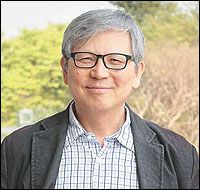
Sheen Dae-cheol, a professor of culture & arts, musicology of the Academy of Korean Studies
According to several ancient Chinese history books, the Goguryeo, Silla and Baekje music were performed and appreciated in the court of the Sui and Tang dynasties for a long time. It means that the ancient Korean music of three kingdoms was exported to China by unknown devotees.
The majority of them might have been Koreans, and they were loved by the highest society and royal families in the court of ancient China.
Of the music created in the three ancient Korean kingdoms, Goguryeo music is especially worthy of notice.
Although the music of Silla and Baekje was performed with that of Goguryeo in the courts of Sui (581-618) and Tang (618-907), the status of music from these two countries was completely different from that of Goguryeo. Music from Silla and Baekje were listed only as miscellaneous music.
However, that of Goguryeo was listed as official court music.
According to a Chinese history book Jiutangshu, however, Goguryeo music already existed in the court of Song (420-479) of the southern dynasties (420-589) with Baekje music.
This means that once Goguryeo music had been performed and appreciated by the Chinese Royal families and the highest in society since the 5th century with the Baekje music, and was finally designated as official court music of the Sui and Tang dynasties.
There were seven forms of music in the court of the early Sui Dynasty in the late 6th century.
These were three genres of Chinese music, Indian music, Bokhara and Qiuci music from Central Asia and Goguryeo music.
Central Asian Samarkand and Kashgar music were added to the seven to become nine forms in the early 7th century.
The third emperor Taijong (626-649) of the Tang Dynasty excluded a genre of Chinese music from the nine adding two different Chinese genres to it and finally established ten kinds including Goguryeo music. The latter had been continually performed and appreciated in the courts of two Chinese dynasties, the Sui and Tang, since the late 5th century and this tradition continued until the time of Empress Wu Zetian (690-705) of the Tang Dynasty.
Goguryeo music continually been performed there for about 250 years without interruption.
The Sui Dynasty did not have friendly relations with Goguryeo after its foundation and several wars broke out between the two countries, leading to the formers demise. Curiously, the music of the enemy Goguryeo, however, flourished in the court of Sui and was officially included in the seven and nine recognized of music by them.
The Tang Dynasty maintained amicable relations with Goguryeo for some time at the beginning of its foundation.
However, these soon soured after the crowning of the third emperor Taijong. He eventually invaded Goguryeo but was defeated.
Naturally Goguryeo became the mortal enemy country of Tang, too, although its music was still accepted.
Two Chinese dynasties, Sui and Tang, appreciated Goguryeo music as one of their official forms of court music even in the worst war situations and it continued to be performed there for a long time.
It is said that the Goguryeo music of two Chinese dynasties was performed by dispatched Goguryeo court musicians or local Chinese court musicians. Who performed it at the Chinese courts doesnt matter. What does is that it was continually performed for a long time because it won popularity.
How could Goguryeo music become successful and win popularity in ancient Chinese courts? It was because there were unique musical expressions and special artistry and these made it successful.