The complex identity of in-between
Korean-American authors confront model minority myth with eye on race and social issues
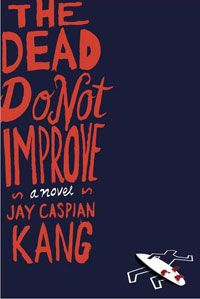
“The Dead Do Not Improve” Jay Caspian Kang, Random House
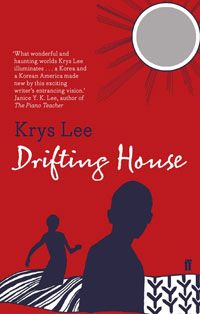
“Drifting House” Krys Lee, Penguin US
By Kim Young-jin
The year 2012 saw a number of ethnic Koreans make their mark on the world. Jim Yong Kim, a Korean-American, became head of the World Bank. Sung Kim was appointed as U.S. ambassador to Seoul. Koreans impacted the West as well: Psy happened, and the word “oppa” is now a vernacular word.
Korean media pored over the rise of the prominent Americans, discussing the political implications, the extent of their Korean-language abilities and embraced them as part of a Diaspora that, at the moment, possesses a strong mojo.
While given less attention, two literary voices with Korean roots ― Jay Caspian Kang and Krys Lee ― emerged to add nuance to the chronicling of the Korean experience, which often stops at heralding the country’s dynamic economic growth.
As Korea rises in influence, many Korean-Americans, for instance, are doing the same as part of the Asian American demographic that is the fastest-growing and highest-earning minority in the United States.
But scholars say racial stereotypes and other hurdles remain for these groups. As Kang and Lee attest, Koreans’ movement beyond borders sometimes leads to isolation and identity issues, problems lost in the shadows of success.
Last month, Fox host Bill O’ Reilly drew ire when he
over social problems in Hawaii given the state’s large Asian population. “Asian people are not liberal, you know, by nature,” he said. “They're usually more industrious and hard-working."
Though it might be interpreted as innocuous, the remark prompted debate online. While it was widely criticized as stereotyping, others questioned why being characterized as hard-working would be offensive.
The debate may point to fatigue with what Asian-American scholars have termed the “model minority myth,” which indiscriminately paints Asians as docile overachievers. The downside, critics say, is that needy Asian communities are overlooked, while the perception causes friction with other groups.
This goes hand-in-hand with what has been termed the “perpetual foreigner” effect, which explains the media representation of Asian-Americans as hapless foreigners in their own land. Though their rising economic and political clout appears to be slowly changing, observers say misrepresentations remain common.
Kang, a Korean-American, turns the myth on its head in his first novel, “The Dead Do Not Improve,” published in August. This begins with the protagonist, Philip Kim, who despite receiving a top-notch education, is a struggling writer working for a faltering internet startup. He spends his time Googling himself and pontificating on the social habits of San Francisco hipsters.
Kang has built his name as an editor for popular sports-culture website Grantland and by contributing to the New York Times and other publications. During the excitement last year over NBA star Jeremy Lin, Kang emerged as a fresh Asian-American voice capable of tackling the race issue with gravity and style; “Dead” confirms he is a young writer to watch.
His narrator Philip, while self-depreciating, is troubled by the stereotypes targeting Asian men. “I spent most of my childhood split between a foreign model of grace and my father’s personal brand of macho,” he explains. Meanwhile, he is chided by Koreans for his dark skin and dating outside the race.
Kim grows up in an America where Asians fall between black and white, and seek definition through a culture they themselves can barely impact. When Philip’s father is worried by his son’s interest in hip-hop (touching on historical tensions between the black and Korean communities) he takes the boy to see Bob Dylan. Later, a college professor tells Philip it would be difficult for a Korean to “feel Dylan, because…so much of Dylan is about the history, of course, within its proper musical context.”
His angst confronts him because he gets caught up in the murder investigation of a neighbor, a middle-aged porn actress. Siddhartha “Sid” Finch, a bitter homicide detective, pursues him through a gritty, humorous version of San Francisco populated by disgruntled creative writing students and cultish health food junkies.
“Dead” and its cast eschew political correctness and its pages are filled with unfiltered banter on topics from sex and drugs to race and recent historical events.
The most surprising of these is Philip’s troubled fixation with the Virginia Tech massacre carried out by Korean Cho Seung-hui, who was a permanent U.S. resident. The tragedy prompts him to contemplate his own anger, but his fixation eventually raises suspicion on his possible involvement in the murder case.
The cultural references and the protagonist’s complex relationship with his Korean roots, especially his parents’ immigrant experience, may make “Dead” challenging for some. But as the story morphs into a whodunit, Philip opens up, delves deeper into his past, and provides a thought-provoking look into his psyche.
****
While Kang’s is a romp through an unmistakably American landscape, Krys Lee straddles the peninsula and the United States in her collection of short stories, Drifting House. The book, released last year, has earned praise here and abroad for Lee, who was born in Korea but raised abroad. It deserves another look as a meditation on the price of Korea’s development.
The emergence of Korean transnational movement coincides with a history of division, war and political confusion. Lee’s characters, traveling through tiny apartments and Koreatown strip malls, are a product of these, show that rapid growth comes with unseen costs.
In “A Temporary Marriage,” the protagonist, who arrives in California on a “K-fiancé” visa, struggles to live with a stranger she is supposed to marry. The purpose of her migration is to locate her daughter, whisked overseas by her ex-husband.
She eventually finds the girl in a schoolyard, but migration has changed her. She observes the children and their “harsh, glottal syllables,” and that “the few Asian faces, boys and girls…belonged to bodies moving with an ease she had thought only belonged to men.”
“The Goose Father” explores the loneliness of a Korean man who sends money to his family in Boston, where his children are studying. His surprising friendship with young tenant forces the man to consider joining his family, but he decides the cultural gap is too daunting, imagining himself as “a stuttering dwarf in a land of blond giants.”
The collection also delves into the experience of North Koreans living in the United States and escaping from the Stalinist land. Readers familiar with peninsula issues may find some explanations to be academic; however, Lee has a knack for building tension with a short space and for portraying a slice of the Korean experience rarely touched upon in English.
Psy's surprise
on an episode of Saturday Night Live (SNL) in September ― at the height of the "Gangnam Style” clamor ― was revealing in terms of the portrayal of Asians, even wildly celebrated ones, in American popular culture.
However, in the space of one remarkable minute, the unlikely man of the hour exposed those shortcomings, and, for a moment, challenged them.
In a skit, an employee at a hat retailer, played by an SNL actor, becomes disgruntled over unfair treatment. But he finds a valve for his stress: a button that opens a secret door, behind which Psy (played by an actor) awaits, ready for song and dance.
The impersonators for Psy and his dancing sidekick Yoo Jae-suk (the Korean comedian who appears in a banana-colored suit in “Gangnam Style”) strut out and ride their imaginary horses. But when the door closes before the two actors can slip behind it, they quickly transform into familiar Asian caricatures ㅡ bewildered, bowing profusely, able only to mutter “Senk you, Senk you” in heavy accents. This earns laughter from the audience.
But the next time, the real Psy, Park Jae-sang, slowly strolls out from the behind the door, hands in pockets, with the swagger of a man who knows he’s on one of the world’s most prominent stages and is soaking in the moment. Decked out in a white bow tie, pink cuffs and sunglass, he surveys the wildly applauding audience before dancing with the actors.
Psy’s ownership of the moment, cool and unquestionable, subverted and rendered the tired stereotypes as things of the past. It can be argued that SNL planned the shabby impersonation in order to allow Psy to tear down the stereotypes, but the sophomoric tone of the skit, and a history of perpetual foreigner representation suggest otherwise. With the elated reception, Psy also accomplished the feat of being seen as a likeable person, and not simply a foreign commodity (days earlier, he interrupted an appearance on the Ellen DeGeneres show to say: “By the way, can I introduce myself ㅡ not just dancing? I’m Psy from Korea, how are you?”
The SNL sequence points to challenges imposed by long-held misperceptions; and the potential for overcoming these. Such hurdles, surely, lined the road to success for the likes Jim Yong Kim and Sung Kim.
The offerings from Kang and Lee help fill the gap between the headlines of Korean success and the more complicated reality. Their books draw on their own experience of the Diaspora, and doing so, provide valuable complexity to a larger story that continues to unfold.