Jihwaja

Platter of nine delicacies
By Kim Da-ye
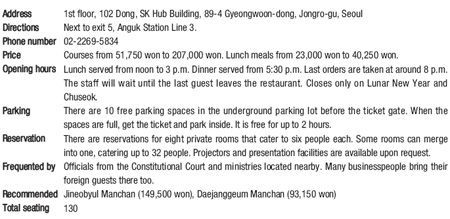
Jihwaja, located across from Unhyeon Palace, is an unrivaled authority on the royal court cuisine from the Joseon Dynasty.
The founder of Jihwaja, Hwang Hye-sung, learned the royal cuisine from Han Hui-sun, the last court lady to cook for the royal family. The palace recipes have been passed down orally and cooks used to measure ingredients using their hands. Hwang has however written down the recipes and standardized them and quantified the amounts of ingredients required for the menu, marking an advance from the oral tradition.
“Founder Hwang helped keep alive the royal cuisine that otherwise would have disappeared,” Lee Hyun-min, a captain at Jihwaja, said.
The royal culinary art of the Joseon Dynasty has been designated as the No. 38 Korean Important Intangible Cultural Property. Han is the first holder of the title, and Hwang is the second. The third title belongs to Hwang’s eldest daughter, Han Bok-ryo, who now runs Jihwaja.
The venue makes an ideal choice for important dinners with foreign guests. The Changdoekgung Palace-inspired interiors are decorated with “dancheong,” traditional colorful paintwork on wooden buildings. The reception is a mini royal cuisine museum with the replica of the king’s chair on which people can sit and pose for photos.
The restaurant opened in 1991 and moved last December from the National Theatre of Korea on Mt. Nam next to exit 5 of Anguk Station. It is now more accessible by public transportation.
The menu is an upscale version of those at hanjeongsik ― or Korean Table d’hote ― restaurants. While many hanjeongsik restaurants nowadays try to be creative with fusion dishes, Jihwaja remains faithful to the original traditional recipes. The food may not come across as fancy in terms of decoration or portions, but one can instantly recognize that a lot of efforts have been put into it. It also tastes free of MSG or artificial flavors.
A popular dish is Tarakjuk or “Ancient-recipe Milk Porridge” that kings were served in the morning. The mild flavor of the porridge made of milk and sweet rice powder is addictive.
Lee recommends two courses from the menu. One is Jineobyul Manchan which was created from the historical records of the 60th birthday banquet for Lady Hyegyeonggung, King Jongjo’s mother. Daejanggeum Manchan, a course consisting of dishes shown at the popular costume drama Dae Jang Geum, is also popular among foreigners. Han Bok-ryo advised on the culinary art shown in the drama in which a royal kitchen cook becomes the king’s doctor.
The courses are expensive ― the prices range between 51,750 won to 207,000 won including a 10 percent tax and five percent service charge. For those on a budget, the cheaper yet wholesome lunch menus that cost from 23,000 to 40,250 won are available.
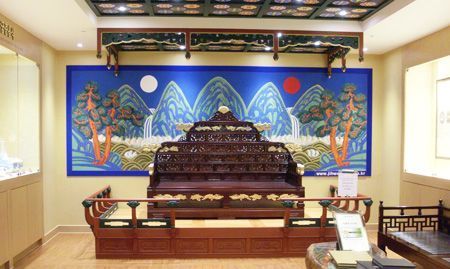
A replica of the King’s chair in the lobby of Jihwaja / Courtesy of Jihwaja