Magnet for foreign shoppers

Kang Myung-koo, CEO of Shinsegae Simon
By Lee Hyo-sik
Premium outlet malls on the outskirts of Seoul have emerged as must-visit-places for Chinese and other foreign tourists looking to purchase high-quality fashion items at reasonable prices.
Shinsegae, which operates two outlets outside the capital city, spearheads the nationwide campaign to draw millions of non-Korean shoppers and get them to spend billions of dollars here.
In an interview with The Korea Times, Kang Myung-koo, CEO of Shinsegae Simon, said his company will continue to meet the changing needs of foreign visitors and offer them top-notch products and customer services at low prices.
“In cooperation with the Korea Tourism Organization (KTO) and other tourism-related bodies, we will beef up our publicity campaign in China, Japan and other foreign nations,” Kang said. “More important, when foreign customers visit our stores, we will do everything we can to offer them a great shopping experience.”
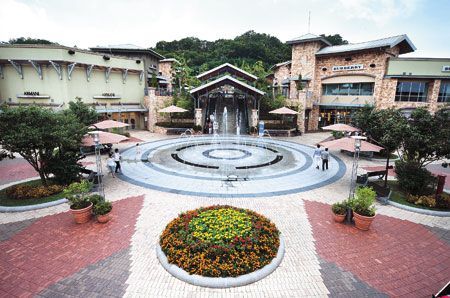
Shinsegae Premium Outlet in Yeoju, Gyeonggi Province
Shinsegae Simon, a joint venture between Korean retail giant Shinsegae and the U.S.-based Simon Property Group, runs two premium outlet malls in Yeoju and Paju, Gyeonggi Province. The Yeoju mall, which opened in June 2007, was the country’s first premium outlet. The Paju store went into operation in March 2011.
The CEO said attracting foreign shoppers to outlet malls will help create jobs for local communities and boost the economy. “We expect the number of non-Korean customers will continue to increase at a double-digit rate for the foreseeable future,” he said. “We will turn our stores into a popular shopping destination.”
In 2012, about 217,000 foreigners visited Shinsegae’s Yeoju mall, up sharply from 120,000 in 2010 and 55,000 in 2008. Its Paju store attracted 120,000 non-Korean customers last year, up from 98,000 in 2011.
Kang projected that over 250,000 shoppers from overseas will come to its Yeoju outlet this year. The Paju mall is expected to draw some 140,000.
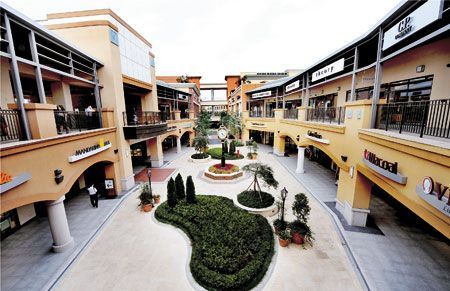
Shinsegae Premium Outlet in Paju, Gyeonggi Province
According to the KTO, the number of foreigners entering the country will reach 12.5 million in 2013, up from 11.14 million last year.
Kang said Shinsegae outlets will generate over 800 billion won ($721 million) in sales this year on the back of the surging number of big foreign spenders. “I cannot make public the exact sales figures of previous years. But we expect to earn at least 800 billion won in 2013. In the first three months of the year, our sales jumped 25 percent from a year earlier.”
Shinsegae has just expanded its Paju mall by 27 percent to 40,180 square meters. It now accommodates 220 shops up from 165.
“The Paju mall has become the nation’s largest premium outlet operating 220 shops on a 40,000-square-meter site,” the CEO said. “We added 55 new shops, selling fashion items ranging from men’s clothing to household electronics. With the latest full lineup, we will become a more popular shopping spot for those in their 20s, 30s and 40s.”
Shinsegae plans to turn the Paju outlet into a shopping hub for those residing in northwestern Seoul and northern Gyeonggi Province.
Kang said going to the Paju mall is like taking a short family trip, adding it takes only about 40-50 minutes from downtown Seoul. “Additionally, there are many tourism and leisure spots nearby, including the Imjingak Pavilion, a horse-riding track and an English immersion camp. Besides shopping, families can eat and enjoy fun activities in and around the outlet.”
Premium outlet: rapidly growing retail sector
Outlets have reshaped Korea’s retail industry landscape, with consumers increasingly flocking to outlet malls that sell brand items at discounted prices.
Many customers rush to outlet stores during seasonal sales, hoping to find bargains before the new season starts. However, while prices are viewed as the biggest factor attracting shoppers to outlet malls, customers are simply looking to escape the city and relax.
Outlets are better suited than any other retailers to combine shopping with leisure.
“The sales of local outlets have increased by double digits over the past few years, despite the prolonged consumption slump. The market will reach 4 trillion won by 2017,” Kang said. “About 5.5 million people visited our Yeoju outlet in 2012, up 10 percent from 5 million in 2011. The number of shoppers at the Paju store increased nearly 40 percent to 5 million from 3.6 million over the one-year period. The figure will rise to 6 million this year.”
He said the outlet industry will continue to grow for the next 20 years, saying Shinsegae Simon will open more malls across the country.
Shinsegae’s rival Lotte also operates premium outlet malls in Paju and plans to open two new ones this year; in Buyeo, South Chungcheong Province, in August and in Icheon, Gyeonggi Province in October. Hyundai Department Store has also decided to build premium outlets in Gimpo, Gyeonggi Province, and in Songdo, Incheon.
Shinsegae’s aggressive expansion
Shinsegae Simon will build a nationwide network of eight premium outlets by 2020, according to Kang.
“We will first open a large-scale mall in Busan in September to target consumers in the nation’s second-largest city and its adjacent areas,” the CEO said. “We expect the store will create positive synergy with the department store and other Shinsegae Group units in Haeundae, drawing over 6 million customers annually.”
“The industry has been around for 30 years in the United States and 15 years in Japan. Given this, there is huge room for growth in Korea. We will continue to expand here. If the local market reaches a saturation point, we will make inroads into foreign markets to secure a new cash cow.”
The company will also enlarge the Yeoju store, which currently runs 142 shops on a 25,740 square-meter site, most of which sell foreign luxury goods. It also plans to open a fourth store in Daejeon.
“We would like to continue to develop the Yeoju store as a shopping hub for a wide range of luxury goods,” Kang said. “We are also considering constructing a premium outlet in the southwestern Gyeonggi Province. In the long term, we want to establish a presence in every large provincial city.”
Acting as responsible corporate citizen
Shinsegae Simon has been involved in an array of charitable activities in Paju and Yeoju to help revitalize the regional economies. The firm has created hundreds of new jobs for local residents, and attracted tens of thousands of visitors to the cities.
“Currently, about 88 percent of the 1,250 staff members employed at the Yeoju store are local residents. Eighty percent of employees at the Paju mall are local residents as well,” Kang said. “Both stores sell regional specialties and offer financial assistance to municipal administrations for the organization of local festivals.”
The company has also been making donations in Paju and Yeoju to help improve the livelihoods of the underprivileged, including children of low-income families and senior citizens.
The CEO said Shinsegae will continue to help those in need, and intends to become Korea’s model corporate citizen.
People most important asset
Kang stressed the importance of talented manpower in the outlet industry, saying people are Shinsegae Simon’s most important asset.
“Outlet malls are not just retailers. To build a premium outlet, we need to develop real estate and lease shops to fashion and household brands. This requires much more sophisticated management knowhow,” the CEO said. “Shinsegae has the best personnel and knowhow in Korea. But we still need to learn from our counterparts in the United States and other advanced markets.”
He said the company sends groups of the employees to Simon Property Group headquarters so they can learn about its management expertise. “Additionally, effective internal communication is the key to the operation of stores scattered around the country. I try to visit stores as often as possible and interact with employees in the field.”
Kang also said he has been trying to introduce Simon’s corporate culture into the joint venture in a bid to create a more horizontal, self-regulating culture, and to promote effective communication and cooperation among employees.”