Real estate market bottoming out
2012 will be best time to move into new office, invest in property
By Richard Hwang
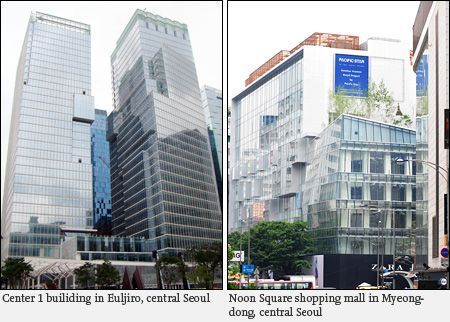
An abundant supply of new properties in the central business district made Seoul’s “Grade A” office market a tenant’s market in 2011.
Tenants kept control of the office rental market this year as the central business district experienced a record high vacancy rate and landlords felt the pressure to reduce rents. Landlords of newly-completed buildings continue to offer two or three months as rent-free periods to attract tenants.
Approximately 1.6 million square meters of new prime and grade A offices will be added to the market until 2014. Consequently, we expect vacancies to rise in the CBD markets over the next few quarters, causing landlords to continue offering incentives in the central areas.
Compared to the central business district, the vacancy rates in the business districts in Gangnam and Yeouido are low due to the lack of available prime space and continuing demand. Vacancy rates will remain relatively low there due to limited new supply in 2012.
However, the abundant new supply in the central area will eventually affect Gangnam and Yeouido. Many domestic and foreign companies are considering office relocation from Gangnam and Yeouido to the central business district. Many tenants still have a preference for these areas and the future market depends on how Gangnam and Yeouido will be affected by competition from the central business district.
Seoul’s Grade A office market is expected to continue to be a tenant’s market in 2012. The question is whether it can be absorbed easily although there seems to be strong potential demand from the corporate side.
In 2011, many major firms took advantage of this tenant’s market in office space and moved its corporate headquarters to new completed building in the central business district.
Although a number of large leases like SK E&C and Daelim Industrial have already signed up for relocations during the third quarter of 2011, we expect that supply will be gradually absorbed by big companies integrating scattered offices. The number of signed leases will continue to grow as tenants want to take advantage of the abundant space options.
For tenants with a long-term perspective, next year will be the best time to move buildings as rent prices are likely to come under pressure amid large supply.
The number of signed leases will continue to grow as tenants want to take advantage of abundant space options. Considering the reduction in forthcoming supply, secondary tenants are likely to continue to exercise their desire to upgrade the quality of their accommodation.
The office market is driven by demand for space which is driven by employment. The unemployment rate is forecast to drop to 3.5 percent in 2012 from the 3.6 percent expected in 2011.
The majority of industries, both IT and Finance, will be in a hiring mode in 2012. South Koreans’ per-capita office usage is expected to increase as the economy expands from its traditional manufacturing base into service sectors such as IT and finance.
Office demand is dependent on the performance of the financial and professional services sector and employment within the sector.
Economic growth will also support future demand despite current risks from the slowing growth of the U.S., EU and Chinese economies. However, despite positive absorption, supply is likely to exceed demand until 2013, making Seoul's Grade A office market a tenants' market for next coming years.

click/
Retail market
Korea is home to one of Asia's most dynamic and largest retail markets. This year has been a great year for the evolution of the domestic retail market. We’ve seen the opening of D Cube City, a new shopping mall in Seoul, the Paju outlet mall opened to great success and a number of new International tenants enter the market such as Aldo, Charles & Keith, Bershka, Stradivarius, Pull & Bear and Bebe.
The next year’s outlook is also looking encouraging with a large number of European and American retailers launching their brands here which will further improve the choice for consumers.
Overall, the outlook for Korea retail sales is positive. Total Retail revenue has increased due to increasing number of tourists and continuous opening of “specialty retailer of private label apparel” (SPA) brands.
The SPA brands such as H&M, Zara, Uniqlo, and Forever21 who have had such success all around the world have left an enormous impact here in Korea.
Garosugil in Apgujeong is a street very important to watch, and we’ll see a huge transformation next year with some big brands entering the popular street which until last year was an almost purely independent domestic retailer street.
The demand for well designed shopping malls is competitive; there are fewer than 10 shopping malls in Korea and with every new mall that comes up, the demand for space is for outweighing the supply.
With a limited amount of space and a limited number of buildings where a floor plate is larger than 1,500 square meters, deliverable rents continue to grow year on year with some places seeing double digit growth.
Despite handover delays with some projects, higher completion levels are now filtering through and are providing more options for tenants in retail sectors of the market. Most projects currently under construction will be completed, albeit with delays caused by financing difficulties.
Good employment conditions mean that households are moderately optimistic, which has supported spending.
However, given the current external macroeconomic situation with an increase in inflation rate, the growth rate will slow down in 2012.
Investment market
Transactions remain dull this year as large domestic institutional investors, including the state-run National Pension Service, a main buyer of local buildings. The large supply lifts the vacancy rate and lower investment yields in 2011.
Investors are likely to wait for a couple of years until market uncertainty clears. It is hard to expect active transactions as long as financing conditions remain difficult due to high borrowing costs.
For investors with a long-term perspective, however, next year will be the best time to buy buildings as prices are likely to come under pressure amid large supply. Although the market is sluggish at the moment, it will recover in a couple of years. Seoul is still a very attractive market, which offers stable returns for long-term investors.
Investments in office assets declined in 2011, when prospects of a debt default by Greece threatening the common currency heightened uncertainties and a possible impact on credit availability. However, transaction volume has recovered in the second quarter, mainly due to the acquisition of the D-Cube City mall.
Despite worsening external economic conditions including the European economic crisis, demand from asset management companies and end users' investment activities continued in the third quarter.
Institutional investors start to come back to the retail investment market as there are more attractive opportunities in office investment market. During the third quarter, there was one notable retail transaction; Mirae Asset Management Company decided to purchase the D-Cube City mall for 800 billion won ($ 700 million). This deal is expected to be closed in the fourth quarter this year. Retail assets are expected to receive increased investor interest.

There are a number of real estate funds that will mature as good quality assets for sale on the market will likely increase. While foreign investors are taking wait-and-see approach, local buyers are expected to lead the increase in sales volumes.
Although it will take time to collect funds to make the fund, it is expected that total sales volumes will go up in 2012 as good quality assets for sale on the market increase.
Korea’s economic growth is estimated at 3.6 percent in 2011 and 3.4 percent in 2012. We are likely to see stable growth in the market, given the country’s stronger economic fundamentals. Interest in the market is expected to be sustained by local investors.