Volkswagen scandal probe may lead to other diesel cars here
By Park Jin-hai
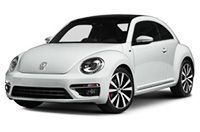
Volkswagen Beetle
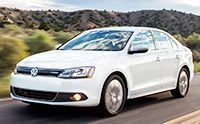
Volkswagen Jetta
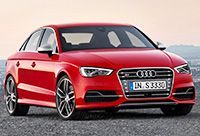
Audi A3
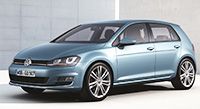
Golf
The government probe of Volkswagen cars, found to have manipulated software to pass emissions tests in the U.S., may expand to other diesel cars in Korea.
The Environment Ministry has selected the Volkswagen cars, which arrived at the port at Pyeongtaek, and secured them for full-scale inspection on Thursday, the day after it held a meeting with Volkswagen Korea and said it began inspections of its four diesel cars. It also said the full-scale inspection may expand to other diesel cars here.
When the carmaker was found to have manipulated data to pass the emissions test here, the Environment Ministry said it may issue a recall, the revocation of its certificate and a fine of 1 billion won for each model, which is the maximum fine under Korean law.
“We are carrying out the test on the defeat device in the same manner as it was done in the United States. If the result turns out to prove the device was adjusted to give a false reading, it may lead to a recall here,” said an Environment Ministry official.
Until now, the government maintained the position that it has no means to punish Volkswagen and Audi even if they cheated, due to the Korea-EU Free Trade Agreement, where Korea promised to follow the EU standards. But the standards concerning auto emissions will not be in place until September 2017.
The scandal also put the carmaker’s fuel efficiency in question.
The Ministry of Land, Infrastructure and Transport also decided to re-inspect the fuel efficiency of those cars. It is rare for the ministry to re-test the fuel-efficiency of the cars it has already given a passing mark.
Among the 21 cars on the land ministry’s fuel efficiency test, the Audi A3 and A7 have been included, two cars that had previously been given approval from the ministry.
“Although the cars have passed our test, they will be placed under inspection again,” said a land ministry official.
“The software manipulation may affect the cars’ fuel efficiency, because if the exhaust gas recirculation works normally, it could drop fuel efficiency. In the following re-inspection, fuel efficiency for those cars is expected to be lower than the data from the previous inspection showed,” said Lee Ho-geun, a professor of machinery and automobiles at Daeduk College.
“As for fuel efficiency, drivers have constantly raised the issue that the approved mileage has shown a significant gap with the actual mileage they have measured on the road. This time, the government should conduct a full-scale inspection on the fuel efficiency of these cars,” he added.
Other German carmakers have been concerned that the Volkwagen scandal may lead to customers’ distrust of all German cars.
“When the scandal moves to the fuel efficiency issue, the situation could get much worse. We are closely monitoring the development,” said a BMW official.
The Citizens’ Coalition for Economic Justice recently called for an immediate and full-blown government probe on the emissions of Volkwagen and Audi cars and their fuel efficiency. “The government should not be passive for the concerns of trade issues with the EU. It should inspect not only the new cars, but the Volkswagen cars already on the streets as well,” the civil watch group said.