Daesung draws suspicions
Civic group claims lenders pressed by power connections
By Na Jeong-ju
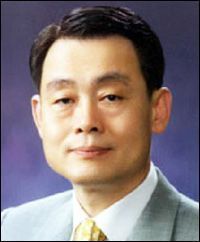
Kim Young-dae

Kim Sung-joo
Daesung Industrial, a mid-sized energy developer, has received loans worth 400 billion won from two state-run lenders to resolve a liquidity crunch, raising questions about special treatment.
Daesung is run by Chairman Kim Young-dae, the older brother of Kim Sung-joo, CEO of Sungjoo Group and MCM Holdings, who campaigned for President-elect Park Geun-hye.
Although the company denied any irregularities in the process of securing such loans, market watchers say that the firm could collapse without the financial help.
The Korea Finance Corp. (KoFC), a state-run corporate financing institution, and Korea Development Bank (KDB) have provided the loans, company officials admitted.
Some civic activists have alleged that such large-scale financing by state-run institutions to a troubled firm is quite “exceptional,” suggesting that the MCM CEO had helped the company secure the loans.
Kim herself has a 0.38 percent stake in the energy firm.
“Daesung came close to bankruptcy since its large-scale construction project failed. However, it was able to make a turnaround with the help of the state-run institutions,” said Chae I-bae, an activist from the Solidarity for Economic Reform.
Both Daesung and the KoFC denied the allegations that the firm received preferential treatment in the loan process.
“The loans have nothing to do with Kim,” said Yang Chang-mo, a Daesung spokesman. “We had already consulted with the KoFC to receive the loans for a long time before Kim joined Park’s campaign team late last year.”
One KoFC official said it decided to extend the loans to Daesung because it has strong fundamentals.
“Our job is to help cash-strapped firms overcome the financial crisis and become stronger players. Daesung met our requirements for the loans,” the official said. “There were no political considerations in extending the loans to Daesung.”
In December, the KoFC provided credit guarantees for Daesung so that it could receive loans worth 400 billion won from four banks ― 150 billion won from Korea Exchange Bank, 100 billion won from KDB, 100 billion won from Nonghyup and 50 billion won from Daegu Bank.
However, the banks refused to roll over the loans, so the KoFC and KDB had to loan 100 billion won and 300 billion wo , respectively.