Opposition lawmakers start crusade to block Yoon's 'pro-Japan' diplomacy

Main opposition Democratic Party of Korea (DPK) Rep. Yang Yiwonyoung, third from right, speaks during a press conference in front of the Japanese Embassy in central Seoul, Wednesday, after she and other DPK lawmakers visited the diplomatic mission to protest Tokyo's decision to release radioactive wastewater from Fukushima's nuclear power plant. Yonhap
DPK members plan to visit Japan to protest Fukushima wastewater release
By Nam Hyun-woo
The main opposition Democratic Party of Korea (DPK) is gearing up for a campaign to oppose President Yoon Suk Yeol's fence-mending diplomacy with Japan. Some DPK lawmakers visited the Japanese Embassy in Seoul, Wednesday, to lodge a protest against Tokyo's decision to release radioactive wastewater from a nuclear power plant in Fukushima.
Following the protest, the lawmakers will make a three-day visit to Japan today seeking to inspect the tsunami-damaged nuclear power plant. However, they have yet to fix their schedule to meet with the responsible Japanese authorities, casting doubts over the effectiveness of their protests.
Five lawmakers, including Reps. Wi Seong-gon, Yang Yiwonyoung and Yoon Young-deok, visited the Japanese Embassy in Jongno District, Seoul, and had a meeting with Daisuke Namioka, a minister of economic affairs.
“Given that Japan's constitution states that no nation is responsible to itself alone, we requested Japan to understand and respect Korea and other neighboring countries' concerns over the wastewater release,” Yang told reporters after meeting the minister.
The lawmakers said they requested that Japan confirms that the top priority in processing the wastewater is the safety of Korean and Japanese people, withdraw its plan to release the wastewater until nearby nations join the safety check process, agree to stop discussions to export fisheries products until their safety is confirmed and cooperate in providing raw data to Korea.
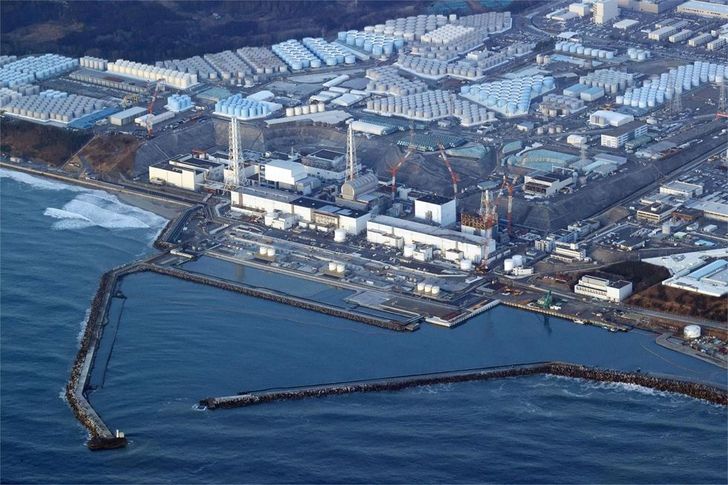
An aerial view of the Fukushima Daiichi nuclear power plant in Fukushima Prefecture, north of Tokyo, March 17, 2022. AP-Yonhap
During their visit to Japan, the DPK lawmakers plan to lodge a protest against the wastewater release plan.
“The Japanese government and Tokyo Electric Power Company (the operator of the Fukushima nuclear plant) plan to release 1.3 million tons of radioactive wastewater for 30 years beginning in the first half of this year,” the lawmakers said in a statement. “This wastewater will flow into waters off Jeju Island within seven months at the earliest, causing significant damage to our marine ecosystem and fishing industry.”
The lawmakers will meet a Japanese nuclear safety expert group, local refugees, Korean reporters in Japan and a city council member. They will also visit Tokyo Electric Power Company, but have yet to fix a schedule to meet with officials from the company or other responsible authorities from the Japanese government.
“Having a meeting between the opposition party (the DPK) and (Japan's) influential politicians is not always the best resolution,” Rep. Wi said when asked about the effectiveness of their visit during a press conference at the National Assembly. “It is also important to show national concerns on the wastewater to Japan.”
Wi added that neither the Japanese Embassy in Korea nor the Korean Embassy in Japan are cooperating with their visit. As a result, the opposition lawmakers said they had to do something to stop the Yoon government from “being on the same side with Japan in releasing the wastewater.”
The DPK lawmakers said that they contacted several Japanese lawmakers and that some of them expressed their intention to meet them, but eventually confirmed that a meeting would be difficult due to Japan's local elections.
“We also regret that we are not fully serving our role in this important matter despite being the largest negotiation group at the National Assembly,” Wi said. “We also feel painful about the government's ignorance of the meetings which were called up by the Assembly's committee chairmen.”

Main opposition Democratic Party of Korea (DPK) Chairman Lee Jae-myung, front center, speaks at a rally against importing fishery products from Japan's Fukushima region, at the National Assembly in Yeouido, Seoul, March 30. Yonhap
Although the DPK lawmakers did not criticize the president's overall diplomatic policy involving Japan, the protest is widely interpreted as the main opposition party's latest jab at Yoon's Japan-related moves in recent months.
So far, the DPK has been slamming last month's summit between Yoon and Japanese Prime Minister Fumio Kishida, claiming that their agreement to renew bilateral ties was tantamount to kowtowing to Tokyo, because Japan did not show desirable responses to Korea's proposal to address their historical conflicts.
The main opposition party has particularly been taking issue with the wastewater release plan, citing a Japanese news report that Yoon vowed to Japanese lawmakers that he would seek public consent from his country regarding Japan's wastewater plan.
The ruling People Power Party (PPP) claims that the DPK lawmakers' visit will only benefit Japan, and they are exploiting the circumstance for their own political gains.
“If lawmakers are visiting Japan, at least they should have some data that can persuade Japanese civil society or politicians,” PPP Rep. Ha Tae-keung said during a radio interview with broadcaster KBS. “It seems like they are about to stage a scene of being involved in a physical scuffle and this will help them enjoy greater popularity in Korea.”
Ha claimed that the DPK's strategy is similar to far-right politicians in Japan. “If those politicians try to visit Dokdo, they will be deported at the airport and this will improve their popularity in Japan. The DPK's strategy is similar to this.”
Japan has been claiming sovereignty over Dokdo, Korea's easternmost islets.