INTERVIEW Rwandan envoy to observe 1994 genocide amid social distancing

Figure Rwandan President Paul Kagame, second from left in the front group, first lady Jeannette Kagame, third from left, African Union President Commission Moussa Faki Mahamat, left, and European Union Commission President Jean-Claude Juncker light the flame of hope on April 7, 2019, the first day of the commemoration week of the 25th anniversary of the 1994 Genocide against the Tutsi, in Rwanda's capital, Kigali. / Embassy of Rwanda
By Yi Whan-woo
Rwandan Ambassador to Korea Dalila Yasmin Amri Sued has had reasons to endure challenges posed by the COVID-19 pandemic in her first upcoming observance in Seoul, April 7, of the anniversary of the 1994 Genocide against the Tutsi.
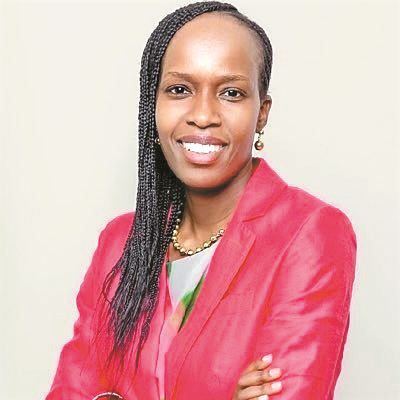
Rwandan Ambassador to Korea Dalila Yasmin Amri Sued will observe her first “Kwibuka” here after taking office in October 2019. / Embassy of Rwanda
Serving in Korea since October 2019, she has been tasked with sharing the new theme, “Remember-Unite-Renew,” of “Kwibuka,” weeklong events and activities held worldwide to remember the massacre of the Tutsi by the Hutu-led extremist government.
The three pillars were introduced as, 26 years after the mass murder, there have been attempts for cover-ups and denial of the genocide that took more than 1 million lives from April 7 to mid-July 1994.
“It reaffirms our fight against all attempts by negative forces to hide and distort the truth of this tragic event,” Ambassador Amri Sued told The Korea Times in a recent written interview.
She said the commemoration therefore will go on this year in Korea, although it will be kept low-key in line with the Seoul government's social distancing campaign to prevent spread of the coronavirus.
The envoy noted this year is the 70th anniversary of the Korean War and something South Koreans and Rwandans could both relate to; the common history of knowing total devastation and mass loss of lives and the rebuilding of a country afterward.
“Rwandans are very much impressed by the quick economic recovery and growth of the Republic of Korea having endured total devastation caused by the tragic and disastrous Korean War,” Amri Sued said.
With 70 percent of Rwanda's population being young, the country has been underscoring their role to inherit the spirit of “Kwibuka” and their role in fighting and combating the ideology that enabled the genocide.
Such efforts could give a lesson to South Korea, with many young South Koreans being indifferent toward North Korea or skeptical of possible re-unification of the Peninsula.
Before the coronavirus outbreak, Rwanda's economy had grown at an annual average rate of 8 percent. This made the country one of Africa's fastest-growing economies.
On Jan. 26, 2018, the U.N. General Assembly officially proclaimed April 7 of each year as “International Day of Reflection on the 1994 Genocide against Tutsi in Rwanda.”
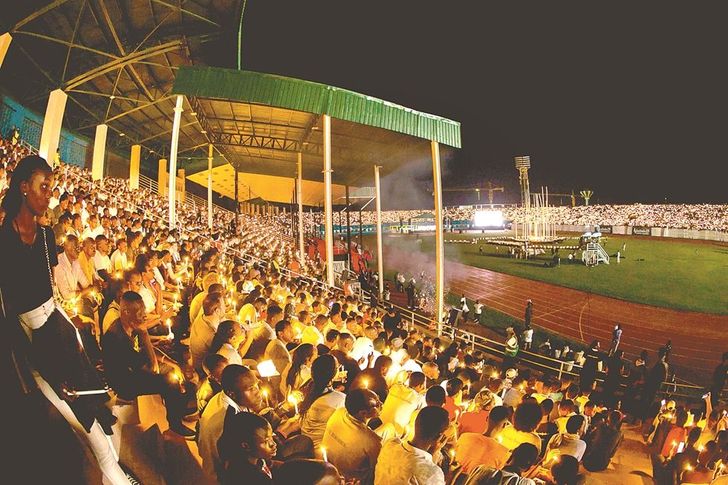
Thousands of Rwandans hold candles inside the AMAHORO (Peace) Stadium, April 7, 2019 to commemorate victims of the 1994 Genocide against the Tutsi in Rwanda. / Embassy of Rwanda
The following is an edited version of the interview.
Q:
A newcomer to South Korea, please share your general impression on the South's level of awareness toward Rwanda and the 1994 Genocide against the Tutsi.
A: The 1994 Genocide against the Tutsi that started on April 7, 1994 was one of worst tragedies of the 20th century in which horrific and gruesome massacre took the lives of over a million innocent victims in 100 days. Soldiers, government gendarmes accompanied by militias of the ruling party and its satellites, scattered throughout the country targeted the Tutsi people, supervised by national and local officials.
While the full-scale Genocide against the Tutsi was carried out from April to July 1994, their extermination had begun in November 1959 decades before that. In December 1963, the massacres took on the scale of mass extermination, to the extent that Westerners who witnessed the events, journalists and researchers termed them: genocide.
The massacre came to an end in July 1994 when the Rwandan Patriotic Front gained control over the country and established a Broad-based Transitional Government, comprising vital forces of the nation, which had not taken part in the genocide.
In Korea, the awareness on the 1994 Genocide against the Tutsi is done on regular basis through commemoration events and activities under the label of “Kwibuka,” public lectures in schools across the country, interviews and other publications in the Korean media, as well as other social gatherings and events organized by either the embassy or the Rwandan community in South Korea.
"Kwibuka" means “to remember” and describe the annual commemoration held in every part of the world as a reminder of the lessons that “genocide" should never happen again. It reaffirms our fight against all attempts by negative forces to hide and distort the truth of this tragic event.
Please explain why and how Rwanda has come up with this year's theme, “Remember-Unite-Renew,” to commemorate the genocide.
A: This theme “Remember- Unite-Renew” reflect of these three pillars: to remember by honoring the memory of the over one million victims; unite through the strength and dignity of our nation; and renew our determination to build a prosperous future for generations to come. Every year, on April 7, the embassy and the Rwandan community living in Korea, joined in solidarity by Korean friends and the diplomatic corps gather to officially commemorate "International Day of Reflection on the 1994 Genocide against the Tutsi."
With the global pandemic of the novel coronavirus, this year's commemoration activities will be adapted to respect social distance. The communal discussions that usually attract big gatherings in Korea, in Rwanda and across the world will not be organized indoor and instead online platforms will be used to livestream events.
A schedule will be shared and will allow us to all unite around commemorative event and activities that will take place in Rwanda. Less people will attend physically but more will gather online from around the world in order to curb the spread of COVID-19 pandemic.
Would you agree that Rwanda, when it comes to genocide or other mass crimes, has a lot to show other countries in preserving the memory, holding those who are accountable for the crime and ensuring such history is not denied or distorted?
A: Although the international recognition of the Genocide against the Tutsi is today a universal legal act, the efforts to build a memorial and deliver justice is made difficult by the lies, cover-ups and denials practiced by the initiators of the genocide.
They try to make it appear that it was a “civil war triggered by the RPF,” an “inter-ethnic war” or a “double genocide.” In fact, the genocide was the work of a group that sought to seize power using an extremist ideology that was etched in the imagination of a large part of the population.
In 2015, the United Nations Security Council adopted a clear resolution calling on states to crack down on any denial of the genocide against the Tutsi.
Resolution 2150 of April 16, 2014 “underscores the importance of taking into account lessons learned from the 1994 Genocide against Tutsi in Rwanda (…); Condemns without reservation any denial of this Genocide and urges Member States to develop educational program that will inculcate future generations with the lessons of the Genocide in order to help prevent future genocides.”
On Jan. 26, 2018, the U.N. General Assembly officially proclaimed April 7 of each year as “International Day of Reflection on the 1994 Genocide against Tutsi in Rwanda,” which corrects the inaccuracies that existed in previous resolution A / RES / 58/234 of 2003, which failed to mention the group targeted for extermination.
Coming from once ethnically-divided nation, what message would you like to share with the ideologically-divided Korean Peninsula that marks the 70th anniversary of the Korean War?
A: Each country has a different experience but following the genocide perpetrated against the Tutsi, the national union government of Rwanda engaged in tireless efforts to rebuild the country and promote the socioeconomic development of Rwandans.
Referring always to Rwandan culture (source of local /endogenous solutions) various mechanisms and initiatives have been put in place, as such unity and reconciliation, and many other home-grown solutions from the traditions and ancient culture and heritages of the Rwandan people.
As this year marks the 70th anniversary of the beginning of the Korean War, we pay tribute to all the heroes who dedicated themselves for the peace and stability of the Korean Peninsula, and paid the ultimate sacrifice for a peaceful nation, free of tensions and injustice but with permanent peace, prosperity and unity among its people and in the region.
Younger South Koreans tend to be less interested or even against inter-Korean unification than the older generations are. Against this backdrop, how do you think young South Koreans can learn from Rwanda to better understand history and their future roles?
A: What made the Rwandan journey of reconciliation possible and successful is the fact that we were living together under the same caring leadership with visionary governance. The genocide was stopped in July 1994 by the Rwandan Patriotic Front after defeating the forces of genocide.
Twenty-six years on, Rwanda has built itself solidly by choosing the path of justice, unity and development of the country by Rwandans themselves.
This is the heritage of Rwanda. Similarly, also Rwandans are very much impressed by the quick economic recovery and growth of the Republic of Korea having endured total devastation caused by the tragic and disastrous Korean War between 1950 and 1953 that led to the division of Korea and millions of lives.
Please explain how the 1994 genocide prompted Rwanda to rise from ashes 26 years on.
A: This tragedy set Rwanda in total darkness. However, the leadership of Rwanda led by President Paul Kagame has infused powerful energy when the whole country recovered from of the extreme atrocities, poverty and suffering. It has raised it to the present fast-moving nation. Second, the diligence, competitiveness and resilience of the people of Rwanda are the reason for the social and economic growth.
Rwanda is rapidly growing as one of the attractive and most vibrant countries in Africa. Basic education is free for elementary school students, and the passion for education throughout the nation is comparable to that of Korea.
Serving your first ambassadorship, please share your short- and long-term goals, and how you like your life in Seoul.
A: To strengthen the bilateral relations between the Republic of Rwanda and the Republic of Korea in the areas of trade, investment, technical and capacity building and explore collaboration on the Green agenda. The economic cooperation is a key pillar of our excellent bilateral relationship, with close cooperation in the sectors of education, agriculture and ICT.