Magpie's Ghost gose named Asia's best beer

Beers by Magpie Brewing Co. / Courtesy of Magpie Brewing Co.
By Jon Dunbar
co-owner Erik Moynihan admits his brewery's signature Ghost gose-style beer, which just won the top award at a major international beer convention, can be “difficult” at first.
The sour citrus taste is not what a newcomer might expect from a beer, especially one that's fresh out of the keg. One may ask, should beer taste that way? Has it gone bad? But that's exactly how it's supposed to be, and after initial apprehension tasters find themselves craving more.
"Whenever I give it to someone for the first time I always tell them to save their opinion for after they finish at least 3 cm of the beer," he told The Korea Times. "Once your palate grows accustomed to the acidity the nuance of the recipe starts to shine through. We think it's one of the most refreshing beer options out there ― and for customers used to the sour lactic acid fermentations of kimchi and makgeolli, there's something familiar there too.”
The Ghost just won the Barth-Haas Champion Beer of Asia award at the annual
SEA Brew Conference & Trade Fair
held last weekend in Thailand, which Moynihan attended with head brewer Ethan Katz.
"Mad props to our head brewer @katznotdogs and the brewery team for doing such an outstanding job,” co-owner Tiffany Needham posted on Facebook. “But most of all I'm so proud of our whole company and each team for grinding the gears every day to move things forward. It feels good to get a pat on the back after seven years of hard work. Cheers, everyone!”
Magpie won Gold Awards in
, with its Ghost in the gose category and its Daydream IPA for the IPA category. Of all the gold medalists, the Ghost scored the highest, netting it the top award. Additionally, a Chairman's Selection award was given to Magpie's First Train beer, made using direct-trade single-origin coffee in cooperation with Fritz Coffee Company.
Fellow Korean brewer
, located in Busan, won in the stout category for its Espresso Vanilla Stout.
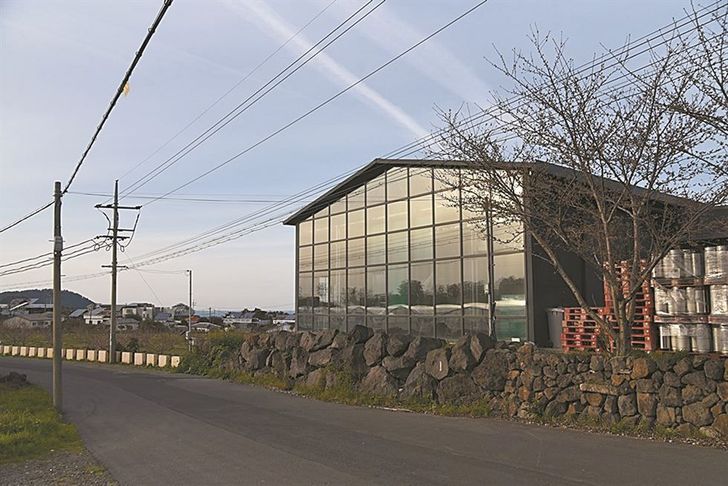
The Magpie Brewery and Taproom is located in a village outside Jeju City. / Korea Times photo by Jon Dunbar
"It's only the second time we've entered a competition so we were really happy with the results,” Moynihan said. “The award is based on technical prowess ― meaning it was the beer that was brewed most accurately to the style guidelines set by the BJCP program ― not just a popularity contest, which is still interesting because Asia isn't really known for sour beer production.”
Gose beer, originating in the German town of Goslar, had been considered a “dead style” for years, hence the name “Ghost” chosen by Magpie. The Ghost was a suggestion of Magpie's first head brewer Josh Easton, who has since founded Seoul Brewery, and at the time there were very few gose beers being made worldwide, let alone sour beers at all in Korea.
A gose is sour and salty with a light coriander note. Magpie's Ghost has been in production for five years, and each successive brewer has applied their own tweaks. The current recipe adds a distinct taste of Jeju orange peel which gives it a uniquely Korean touch.
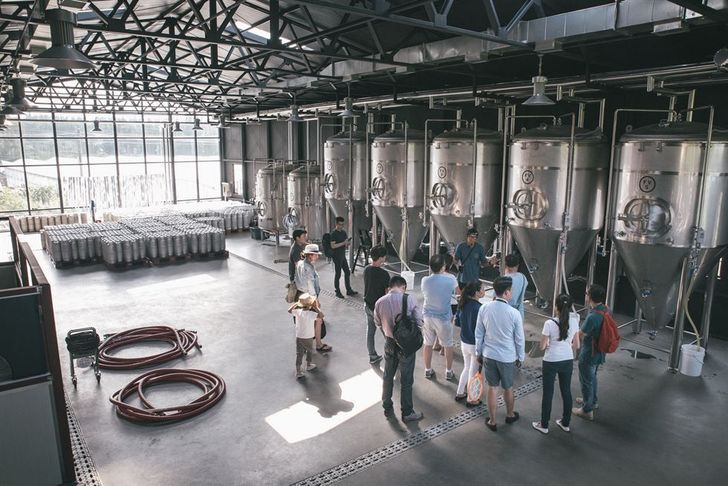
Visitors tour Magpie Brewing Co.'s brewery on Jeju Island. / Courtesy of Magpie Brewing Co.
Magpie officially opened in 2012 in an alley of Itaewon's Gyeongnidan area. Thanks to support from Arario Group, Magpie opened a brewery in a small village on Jeju Island in 2017. It also runs Bluebird, a brewpub in Jeju City's aptly named Tap-dong waterfront area. All three locations are also known for their excellent food. The Seoul location has amazing pizza, while Bluebird's menu is considerably more diverse.
Moynihan estimates they have around 42 workers on the payroll. “We likely employ more than any other microbrewery in the country despite only being in middle in terms of output,” he said.
Government regulations favoring the mass manufacturers have begun to shrink, offering more opportunities for small and agile businesses like Magpie. Moynihan says Magpie beer is currently being exported to Hong Kong and Thailand, and they are making moves to offer their beer at grocery and convenience stores nationwide, with cans already available in a few select locations.
“We are actually just getting ready to launch a membership program focused on increasing our sour beer production,” he added. “We aren't sure how interested the greater market is in sour and wood aged beers, so we want to keep it to a relatively small group of people who can take part in seeing the beers grow and mature and help shape the direction it takes.”
As Magpie's ownership is mostly foreign, they've always focused on straddling the line between being both foreign and Korean.
“Even choosing the name Magpie was an attempt to tell the story that we felt like we had chosen to 'build our nest' here and wanted to be accepted as a part of an extended family,” Moynihan said. “Since the beginning we took it as our responsibility to educate and share craft beer culture with the people we live and work with. …We… tried to replicate a little of what was happening back home in Canada and the U.S. ― but wanted that to resonate with the locals as well. One line we always drew though was not to 'make beer for Koreans' ― we just tried to make the best beers we could.”
At the opening for Bluebird last November, they held a panel discussion asking “what makes a beer or brand Korean?”
“Is it the citizenship of the owners? The origin of the ingredients? The location it's brewed? All of these factors play a part, but none of them encapsulate that feeling and it's hard to get a real consensus on what that definition is ― but we definitely feel that we make Korean beer and that we've played a role in growing a culture and market for craft beer in this community.”
Visit
for more information.