Wasteupso aims to end grocery waste

Wasteupso founder Kychele Boone, right, poses with Seong Hyeon-jin, owner of Kew and Leaves tea store which hosted a Wasteupso pop-up event on May 12. / Korea Times photo by Jon Dunbar
By Jon Dunbar
The community-based
is having a demo day on June 15 at Happiness Studio, near Noksapyeong Station on Seoul Metro Line 6.
Its stand-out name meaning “no waste” in Korean, Wasteupso aims to revolutionize the grocery shopping experience in Korea.
“The name aims to be as literal as possible while still making people think,” Wasteupso founder Kychele Boone told The Korea Times. “Most zero-waste shops have a name that is not as literal which has a tendency to confuse consumers or it is simply overlooked altogether. I wanted the name to stand out and be noticed for what our overall goal is and not just a trend in the current market.”
Wasteupso has been hosting pop-up events so far, with the aim to open a brick-and-mortar store.
“Our overall aim for the shop is to not only be a grocery store, but a community center for people to come together, learn and grow through education in eco-friendly strategies, and build a network of like-minded environmentally conscious companies and consumers,” Boone said.
People who stop by the June 15 event between 11 a.m. and 6 p.m. can expect to find products for purchase, with company representatives present who can answer any questions about their products directly.
Wasteupso will also be testing out its scan-and-go technology, offering a paperless payment system, and collecting customer feedback in advance of launching the service.
And there will be zero-waste classes available to spread the philosophy and methodology of reducing waste.
“For example, classes on how to fold a scarf into a carryall ― a great way to reuse old bedding and blankets without needing to purchase more shopping bags,” Boone said, “a class on upcycling your unused or broken umbrella into a waterproof shopping bag, and how to reduce your waste in your kitchen and bathroom through Wasteupso DIYs.”
Wasteupso aims to help customers save money and save the planet when they go grocery shopping.
It offers a “borrow, rent or buy” system, in which products are shipped through reusable glass jars that can be bought, rented or donated onward. It also uses boxes for shipments, sealed with paper tape rather than plastic tape.
Wasteupso works in collaboration with two other zero-waste shops in Seoul,
and Jigu, promoting each other's events and products to reduce costs for everyone, as well as showing up for each other to show support. It also collaborates with community centers, local governments and eco-conscious organizations.
“The government could help reduce waste by working with organizations and businesses more and better, as opposed to creating more laws that prevent zero-waste initiatives,” Boone said.
“This would aid small businesses that have the expressed purpose to provide eco-friendly strategies that will make a significant change in how people consume, purchase and alter their daily lives to better the planet.”
Boone grew the business concept out of her own interest in vegetarianism and veganism.
“Once I began my meat-free journey, I realized more how expensive vegetables were, as well as how much of a single product consumers were forced to purchase at once” Boone said.
“However, it must be said that Wasteupso is not a vegan company, though we provide products for vegan and vegetarian shoppers. We provide a diverse range of products to appeal to all shoppers and aim to provide affordable healthy options to our customers. We do not wish to isolate or alienate any customer.”
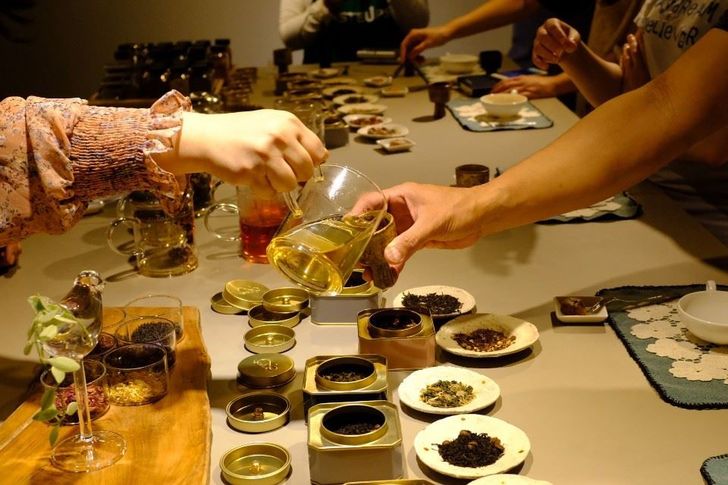
A tea class is held at Kew and Leaves tea store during a Wasteupso pop-up event on May 12. / Courtesy of Kew and Leaves
While many of Wasteupso's food options are vegan- and vegetarian-friendly, there are exceptions such as some desserts and soaps containing palm oil.
“The uniqueness of Wasteupso comes from customer autonomy and dictating what is sold in our stores. We hope to have locations all around the country that carry products that its surrounding community desires. For example, a Wasteupso location near a heavily populated hagwon area will focus on zero-waste treats and snacks for students. Another located in an area with a large population of people from certain cultures or countries will have zero-waste products that cater to that cuisine or taste palate,” Boone said.
“In time, we intend to grow our own vegetables throughout the year hiring elderly [people] and those interested in farming. This, we hope, will build a community of farmers for all of our shops and thereby further reduce costs for our customers and make seasonal vegetables accessible throughout the year.”