VIDEO Teen talks of how YouTube has helped her overcome disabilities

YouTuber Kim Ji-woo runs the channel “Studio GURU,” which reveals her life as a physically challenged person. Courtesy of YouTube
By Dong Sun-hwa
People generally fill YouTube with binge-eating shows or makeup tutorials, but there are content creators who raise their voice as minorities on the platform to bring about diversity. Kim Ji-woo, the physically challenged creator of the channel “Studio GURU,” is one of them.
Since opening her channel in 2018, the high school student, 19, has faced profound changes as she shared videos of her daily routine with dozens of online users.
“In the past, I got panicked and hysterical when strangers stared at me and my wheelchair, but as I run my YouTube channel, I have become more positive and open,” Kim said during a YouTuber event on Tuesday at the Google Campus in Seoul. “These days, I do not avoid eye contact and even tell myself: 'Maybe they are gazing at me because I am attractive.'”
“I tried to hide my wheelchair when posing for photos as well and was reluctant to show people how I stand up and walk without it, but now I display all these freely on the channel.”
YouTube has also helped her become more concerned about issues facing challenged people, particularly about their human rights.
“Some people used to call me in a belittling way and I just overlooked this in the past,” she said. “However, now I firmly tell them to stop.”
At the same time, Kim has been combating a deeply ingrained social prejudice created by Korean films and television programs, which mostly deal with tear-jerking stories of challenged people.
“These materials make the viewers think that people like us are 'pitiful' and 'unable,' but we are not,” she said. “The circumstances abroad are quite different ― there are some challenged people who have been making a splash even as celebrities.”
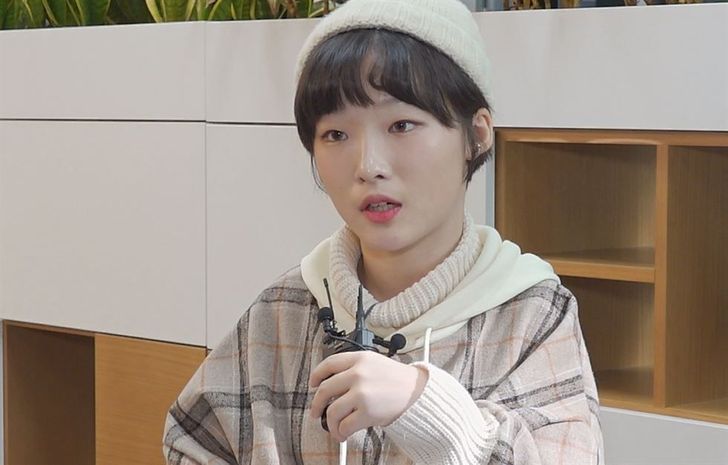
YouTuber Kim Ji-woo in a video interview with The Korea Times. Capture from video taken by Kim Kang-min
In fact, she said she was even “enraged” after visiting Japan.
“The public awareness of the challenged people is more advanced in Japan, and more welfare services are available there as well,” she said. “I took the bus for the first time in my life while in Japan.”
This was possible thanks to buses that are built to be friendly to the challenged.
She said she saw more people like her on the street and on television screens in Japan and learned a vital lesson from her journey ― challenged people in Korea should be more active in bringing themselves into the light. Such a lesson has become one of the driving forces behind her starting her YouTube activity.
So far, she has garnered over 30,000 subscribers thanks to her self-made videos, which open up her life that is both ordinary and extraordinary. In her clips, she adorns her wheelchair, discloses “don't dos” for people who interact with challenged people, and shares her in-depth thoughts on disability issues, just to mention a few.
Visit her YouTube channel:
“Even my family has been significantly affected by my channel,” Kim said. “My parents told me they have learned about my unknown features through YouTube and all the family members have been contributing in video-making.”
Hoping she could exert a positive influence on even more people, she revealed her wishes for the future.
“I have myriad missions to complete,” she said, “I would like to feature more challenged people on my videos, cheer up the young challenged people with my works, and build a gymnasium for people like me in the future so that they can enjoy sports as they want.”
Meanwhile, during the event organized by YouTube, two other content creators of hot channels ― “SOO NOT SUE” and “.FACE” ― also delivered their messages. The former channel deals with queer content, while the latter is a media startup that ranges over various social issues.
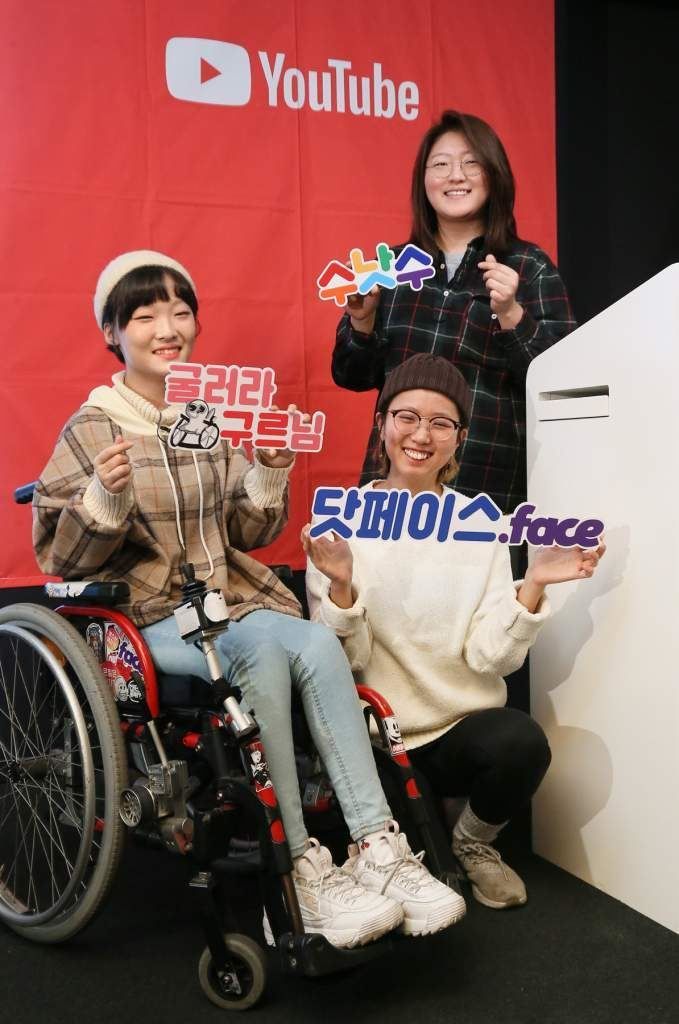
Kim Ji-woo, left, runs the “Studio GURU” channel, Cho So-dam, middle, produces “.FACE” and Soo has “SOO NOT SUE.” Courtesy of YouTube