Hyundai Motor pitches spinoff of its auto parts unit
Norwegian gov’t pension fund manager to vote for Mobis plan
By Nam Hyun-woo
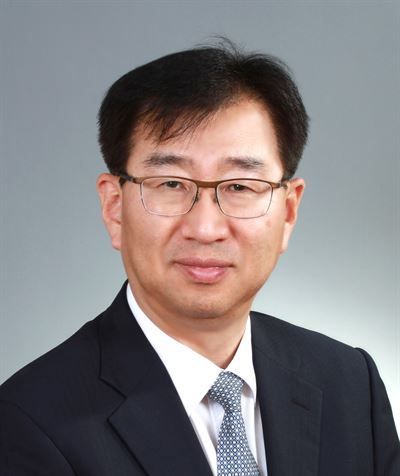
Hyundai Motor Company CEO Lee Won-hee
Hyundai Motor Company's CEO sent a letter Thursday urging Hyundai Mobis shareholders to okay a proposed spinoff-merger plan for the latter, as the automotive group's first step in a group-wide shareholding restructuring.
According to Hyundai Motor Company, one of Hyundai Motor Group's car making units, CEO Lee Won-hee sent a letter to Mobis shareholders asking them to approve the spinoff-merger plan at a meeting scheduled for May 29.
In the letter, Lee said the proposed restructuring plan is important for his company as well, because it will not only reform the group's shareholding structure but also its business structure.
“Amid the paradigm shift toward self-driving and connectivity in the global auto industry, Hyundai Motor Company is in a critical time in coping with this,” he wrote.
“Hyundai needs to evolve from quantitative growth and move toward quality growth. The proposed plan is based on our desperate recognition that we cannot guarantee sustainable growth with our existing business structure.”
In the restructuring plan, the group seeks to spin off Mobis' modules and after-service divisions and merge them with the logistics unit Hyundai Glovis. The remaining Mobis will then focus on developing technologies such as self-driving and connectivity, and will become a controlling firm -- not a holding firm -- of the group.
“Should the restructuring plan be realized, the circular shareholding structure of the group will be broken and it will have a horizontal shareholding structure starting from Mobis,” Lee wrote. “By pre-emptively responding to the government's policy direction on corporate governance structure, we hope to meet the public and social expectations on Hyundai Motor Company and the group.”
However, a number of funds oppose the restructuring plan, led by U.S. activist fund Elliott, which claims the plan lacks sound business rationale and risks shareholder return policies.
“It was inevitable for Hyundai Motor Company to allocate a large portion of its profit to R&D to secure global competitiveness. And we are aware that, despite our efforts for shareholder returns, many have felt it unsatisfactory,” Lee wrote. “Through the restructuring plan, we will enhance our complete car competitiveness and return profits to shareholders, as well as enhancing communication with shareholders.
“We hope shareholders will understand our sincerity and desperation and ask for their support.”
Hyundai Motor Company appears to be on a rebound from slowing global sales, buoyed by its SUVs and hatchbacks.
The company said Thursday it and co-affiliate Kia Motors expect to sell more than 1 million vehicles in the European market for the first time in its 41 years of Europe business, given the robust sales in the first four months of this year.
Hyundai Motor and Kia Motors sold 364,945 cars in the European market from January to April, up 7.1 percent from the same period a year earlier.
Given that it sold 995,383 vehicles in Europe last year, and new electric vehicles (EVs), including Kona EV and Niro EV, will roll out in the second half of this year, the 1 million vehicles target seems eminently achievable.
Meanwhile, Truston Asset Management, a domestic investment firm known for managing the Norwegian Government Pension Fund, said Thursday that it will vote for the Mobis spinoff and merger plan during a shareholders’ meeting.
In a regulatory filing, the firm said there would be no better shareholding structure for the group and the stock swap ratio between Mobis and Glovis was set in accordance with domestic regulations and does not harm shareholder value.
Truston Asset Management was established in 1998 as a Korean equity specialist having its strategies focusing on a long-term approach. About 80 percent of its assets under management are from reputable institutional investors and sovereign wealth funds, including the Norwegian Government Pension Fund and Abu Dhabi Investment Authority.
Observers say though the stakes held by the firm in Mobis, 0.09 percent, and Glovis, 0.19 percent, are small, it is meaningful that the firm made the “for” decision, despite opposition from its proxy adviser the Daishin Economic Research Institute.