Dialogue to help Kim Jong-un avoid miscalculation
The Korea Times has partnered with Northwestern University's Medill School of Journalism in Evanston, Illinois, in the United States, under which graduate journalism students at Medill's newsroom in Washington, D.C., will write articles about Korea. This is the seventh such piece under the partnership. Kim Yoo-chul, an assistant editor of The Korea Times, contributed to this article.
Economic sanctions seen insufficient to change NK dictator
By Kim Yoo-chul
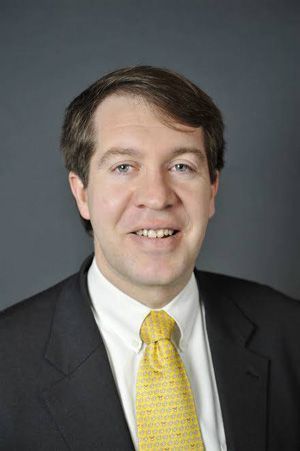
Scott Snyder
CHICAGO, IL ― A leading U.S. expert said “a path is open” for North Korea to cut a devastating confrontation with Washington by pursuing more effective direct communication and dialogue.
“I support establishment of more channels of dialogue with the North Korean leadership, including by South Korea. This will help Kim Jong-un to realize the risks he is taking and avoid miscalculation,” Scott Snyder, senior fellow for Korean studies and director of the program on U.S.-Korea policy at a council on foreign relations, said in a recent interview with The Korea Times.
Snyder said there’s a compelling need for more talks between Washington and Pyongyang given the war of words that has ensued, if for no other reason than to minimize the prospect of “mistakes.”
Washington and Pyongyang were using the “New York channel,” an office inside North Korea’s mission to the United Nations, to handle the most challenging parts of the relationship via informal talks about nuclear tensions as the United States has no official diplomatic relations with North Korea.
But Snyder said he was “pretty skeptical” the North Korean nuclear issue will see much progress. “It will be an issue that remains with us for a long time,” he said.
“Kim Jong-un seems to feel a need to defend his honor against Trump. Trump is baiting Kim into pursuing a course of action he might live to regret.”
While Trump threatens to “totally destroy” North Korea, if it threatens the United States or its allies, Washington needs to have more evidence to justify any action against North Korean aggression, according to the expert.
“The United States would be justified in retaliating against North Korean aggression or possibly in defending itself against moves that look like an imminent nuclear attack. North Korea’s course of action has increased the risks of miscalculation on both sides.”
Rather, Snyder said North Korean military and civilian leaders should be provided with incentives to “act first” and “be safe” by peeling away from the rogue state before it is too late.
Mentioning a few middle-class people in North Korea, he agreed economic sanctions will impose pressure on Pyongyang; however, he stressed: “It’s not clear whether it will be sufficient to cause Kim Jong-un to change his mind. Much depends on who within North Korea is hurt by sanctions. Kim will be the last one to suffer from sanctions.”
Snyder remains quite skeptical over whether China and Russia should entirely cut off vital resources such as oil and textiles to the reclusive country, urging them to join forces with the international community to curb the North’s nuclear ambitions.
“China and Russia should uphold sanctions implementation and join in a united front of opposition against North Korea’s nuclear program, which is a threat to the entire world,” the expert said.