Amid uncertainty in Korean real estate market, New York and London will not fail
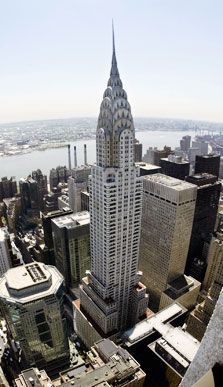
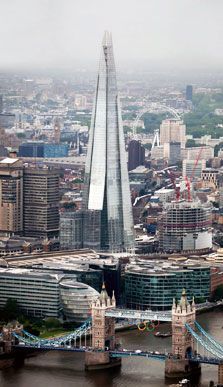
Manhattan, New York
By Kim Da-ye
Real estate as an asset class has been losing its charm in Korea over the past few years. This year until June, the prices of houses and apartments dropped 0.89 percent in Seoul and 0.21 percent across the country, according to KB Kookmin Bank’s real estate division. On April 4, the government announced a tax exemption on capital gains from buying properties this year and selling in the next five years, but the measures so far hardly reversed the decline.
The Korean real estate market is nearly dominated by residential properties — the sales of houses and apartments accounted for 49.1 percent of all real estate transactions including the sales of commercial buildings and lands in 2012.
The commercial sector didn’t fare any better. Global investment, each of which is worth $5 million or more, into the Korean commercial real estate dropped 30 percent from $11.69 billion in 2011 to $8.19 billion in 2012.
Because house prices are expected to fall over the long run, Koreans are losing their belief in the “invincibility of real estate.” Meanwhile, the notion still holds true in two cities, New York and London.
“High net-worth individuals are absolutely buying abroad,” said Carlo Barel di Sant’Albano, the chairman of the world’s largest privately-held real estate service company, Cushman & Wakefield, in an interview with The Korea Times’ Business Focus. “They buy properties that are valuable and will stay valuable for the long term. That’s why they are looking for high-value trophy assets mainly in London and New York.”
Sant’Albano, the former CEO of Exor, the parent company of Cushman & Wakefield, carmaker Fiat and football club Juventus, said that it is dangerous to generalize best cities for real estate investment because investors have their own criteria. Nevertheless, throughout the interview, he repeatedly named New York and London as the best places to put money into.
“Everybody wants to go to London. The place is open to different cultures and different religious beliefs. It’s not in the eurozone. The city right now is enjoying the air of revival — new restaurants and new businesses. It’s a very interesting place,” said the Cushman & Wakefield chairman.
“New York is New York, but it’s still unbelievable how the city has been rejuvenating itself. It is attracting new industries — media, telecom, tech, venture capital and pharmaceutical.”
According to Cushman & Wakefield’s latest “International Investment Atlas Summary,” New York remained the No. 1 destination for commercial real estate investment, with $41.3 billion flowing into the city in 2012 — up 14.4 percent from a year earlier. London came in second place with about $32 billion invested into the city — up 8 percent from 2011.
Los Angeles ranked third, followed by Tokyo as fourth and San Francisco as fifth. Sant’Albano said that East Asians tend to invest in the West Coast of the U.S.
“There is an affinity among many investors from East Asia for the West Coast cities because they went to school in the West Coast,” said the chairman.
New York’s and London’s real estate markets remained strong through both good and bad times. Sant’Albano said that during the global financial crisis, the two cities worked as safe havens.
“In 2008, 2009 and 2010 — there were very turbulent times. So where did the capital go? It went where it is safe. The two safest markets were New York and London,” said Sant’Albano. “London has been very attractive from the currency aspect. Investors wanted to diversify from U.S. dollars while the eurozone has been struggling.”
When the economy recovers, investors become more confident and move further away from core markets, seeking higher risks and higher returns. The wealthy, whom Sant’Albano calls high net-worth individuals, may diversify their investment into riskier cities but will remain faithful to New York and London for both economic and non-economic reasons.
While institutional investors own a building for a period of time and sell when the investment target is met, retail investors tend to keep properties for a long time because they have a personal attachment to the properties.
“In most cases, individuals investing in housing do so for family reasons. They want a house or an apartment in London. However, the high net-worth individuals have gone beyond houses — they already have an apartment or a house in London — and may put money into commercial properties. People tend to buy around where they have an apartment and a house,” said the chairman.
“I have walked through Mayfair with some high net-worth individuals, showing buildings they can buy. They look at one building and say, ‘That could be interesting. I like that.’ It involves a lot of walking around to find the asset they like. It’s a very personal decision. It’s beyond pure economics.”
According to Wall Street Journal’s report on June 16, the high net-worth individuals in Asia are buying small office buildings, retail shops and hotels in Europe and North America “after years of splurging on pricey condos and mansions in the West.” Based on data from Real Capital Analytics, the newspaper wrote that Asian private investors spent $1.9 billion in commercial properties in the U.S. this year, “searching for stable returns and diversifying from home markets they view as increasingly risky and volatile.”
Sant’Albano also noticed these individuals’ efforts to diversify their real estate portfolio.
“They saved money and bought a couple of things in Asia, then they decided that they want to diversify and buy in London and New York. At the end of the day, the crisis has demonstrated that being diversified is very, very important. By having that safety and having that capital in different economies, you can overcome some of the challenges,” Sant’Albano said.
Why then hasn’t Hong Kong attracted as much investment as New York and London have despite its proximity to China and the globalization of the city? Hong Kong placed sixth after San Francisco in Cushman & Wakefield’s ranking of real estate investment targets. Some $20 billion flowed into Hong Kong’s commercial properties in 2012, but that’s less than half of the amount invested in New York’s.
In addition to having less land and fewer buildings than New York and London, Hong Kong does not have many good-quality buildings. The few trophy assets are thus valued extraordinarily high. Think of relatively long histories of New York and London and an abundance of beautifully designed or iconic buildings there. It also means less liquidity in Hong Kong.
Sant’Albano said that the quality of buildings in emerging real estate markets will improve over the time as capital flows in and buildings get rebuilt and renovated in order to command higher price tags. “It’s a natural evolution of any real estate market. That’s the exciting part,” said the chairman.
Koreans are already big investors in core real estate markets. According to the Wall Street Journal’s report based on data from Real Capital Analytics, Korea was the second-largest investor in U.S. commercial properties among Asian countries. As of mid-June, Korea has invested $1.83 billion in U.S. properties this year, nearly on par Singapore’s $1.87 billion and far ahead of China’s $1.52 billion.
Cushman & Wakefield’s investment affiliate recently acquired the 30 Crown Place building in Central London on behalf of six Korean institutional investors, mostly insurance companies including Samsung Life Insurance, Kyobo Life Insurance and Hyundai Marine & Fire Insurance.
“This represents one of the first overseas investments by some of the Korean institutional investors and reflects the attraction of the London market to international investors as a leading financial center and gateway city,” said Sant’Albano.
“We are noticing that many Korean pension funds and insurance companies have increased their allocation toward overseas real estate investment. Their key target markets are gateway cities in the U.S. and core cities in Europe... We expect to see continued interest from Korean investors.”
Tips for buying properties in New York
While Cushman & Wakefield does not have a ready-made manual for individuals hoping to purchase properties in New York, Castle Avenue Partners at Rutenberg Realty, a Manhattan-based real estate broker, offers a comprehensive one on its website.
According to Castle Avenue, foreigners can buy property in New York and do so mostly to find a vacation home or an investment property. Apartments in the city are largely divided into condominiums and cooperatives, and Castle Avenue, which boasts its credential as a condominium specialist, recommends condos as a popular property choice for foreigners.
“Co-op buildings often restrict ability to rent and perform renovations. This reduces their attractiveness as an investment property,” says Wei Min Tan, a property broker for foreign buyers at Castle Avenue, on the website. A condo does not have these restrictions but is 20 to 30 percent more expensive than a co-op on a per square-foot basis.
An apartment in New York incurs taxes, common charges and insurance, according to Tan. Annual taxes are between 0.5 and 1 percent of property values, common charges around $1 per square foot per month on average, and insurance about $500 per year.
Foreigners can also take out mortgage from U.S. banks, which require from foreigners about 40 percent of the property value as down payment — the portion has gone up since the financial crisis, Tan said. Those buying with cash will save on the New York mortgage tax, which is about 2 percent of the loan.
Closing costs for a buyer are about 1.5 to 2 percent of the property price if there is no financing involved, Tan said. The costs include agent fees and the mansion tax, which is 1 percent of the property price of $1 million or above. To close a deal, buyers do not need to be in New York because they can give attorneys the authority to execute the contracts as their representatives.
The costs for sellers come at about 8 percent of the sale price, which covers the New York property transfer tax. In New York, sellers pay commissions to brokers — about 6 percent of the property price. If buyers and sellers have different agents, the commissions will be split between the agents, according to Tan.
Furthermore, all agents in New York, through the real estate trade agreement of the Real Estate Board of New York, have access to the same listings, so choosing one agent should be sufficient.